
The Crow (2024)
Director: Rupert Sanders
Screenwriters: Zack Baylin, William Schneider
Starring: Bill Skarsgård, FKA twigs, Danny Huston
Remakes and reimaginings are cinematic lightning: rare, unpredictable, and often unsuccessful. Occasionally, a new version of a familiar story captures fresh energy or vision and justifies its existence. Examples exist across genres and decades, from contemporary reinterpretations of classic novels to directors revisiting their earlier epics. More often, however, modern remakes replicate, dilute, or misunderstand what made the originals resonate. Rupert Sanders’ 2024 take on The Crow sits awkwardly between these outcomes. It is neither a faithful, electrifying tribute to Alex Proyas’ 1994 gothic classic nor an inventive departure that adds meaningful new layers. Instead, it pares the story down, losing much of the raw emotion and stylized mood that defined the original, while introducing plot and tonal shifts that rarely cohere.
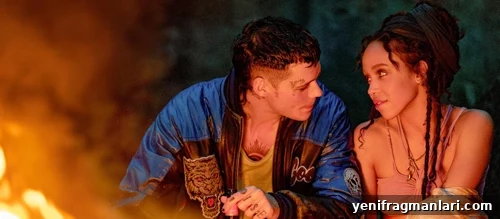
The film opens in a bleak, unnamed rehabilitation facility that resembles a prison more than a healing center. Here two damaged people find one another: Shelly, played by FKA twigs, a singer whose promising career has been derailed by a dark, looming threat; and Eric, played by Bill Skarsgård, a tattooed loner haunted by anger and self-harm rooted in mysterious childhood trauma. Their bond is built on music and shared loneliness, and for a short, fragile time they discover a kind of unity neither had experienced before. Yet Shelly’s past catches up to them.
When the couple escape the facility, they taste brief happiness before a brutal murder in their apartment ends their lives. They are suffocated and forced to watch their last breaths. Eric, however, is resurrected into a supernatural limbo where a spirit guide named Kronos, played by Sami Bouajila, tells him that to save Shelly and return to life he must destroy Vincent Roeg, portrayed by Danny Huston. Roeg is framed as an immortal crime boss who made a Faustian pact for eternal life and who sacrifices innocent souls to sustain that bargain.
Where the 1994 adaptation delivered a lean, intense revenge fantasy—Brandon Lee’s Eric methodically tracking down those responsible—this version takes a slower, more deliberate route. Sanders devotes a large portion of the film to developing Eric and Shelly’s relationship, intending to give Shelly more agency than the archetypal “dead wife.” In concept this is a reasonable adjustment, but in execution the screenplay leans on clichés and shallow emotional beats. The courtship and intimacy between the two characters occupy nearly half the runtime without accruing genuine depth. As a result, Shelly never becomes a fully realized person on screen, and viewers are not given sufficient time or reason to grieve her loss when it occurs.
Bill Skarsgård’s portrayal of Eric departs sharply from both Brandon Lee’s interpretation and the comic-book source. Skarsgård opts for a quieter, more skittish performance that often reads as underpowered for a role that requires both menace and magnetic presence. Where Lee combined dark humor with unstoppable intensity, Skarsgård’s Eric feels reserved and difficult to root for. The performance rarely convinces as either tragic anti-hero or supernatural avenger, and costuming and aesthetic choices—like the signature leather jacket—do little to establish the character as iconic.
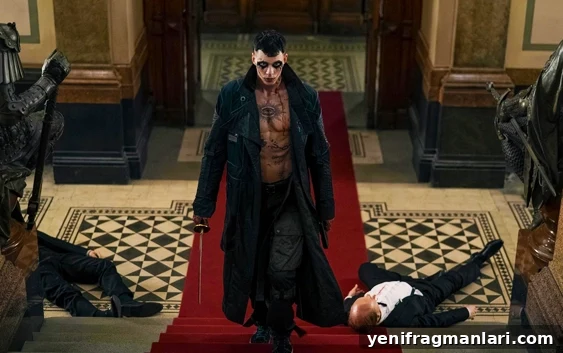
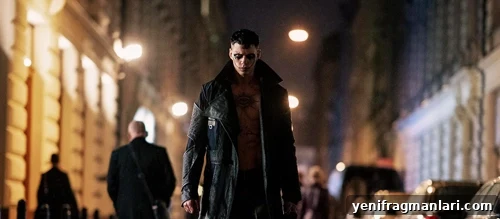
Visually and tonally, Sanders strips away the overt comic-book stylization and grunge-infused aesthetic that made the 1994 film feel like a hellish graphic novel. Cinematographer Steve Annis paints the new film in muted greys and blues; the lighting is flat and ink-like, which gives the film a bleak uniformity but robs scenes of texture and dramatic contrast. Sanders relocates the story’s seedy underworld of slums and neon gutters to sleek skyscrapers and opulent penthouses, reframing the villains as faceless representatives of capitalist corruption—figures in suits who have literally sold their souls for power. It’s a contemporary thematic choice, but the film never fully develops this socio-economic critique, and the addition of a demonic crime boss feels mismatched and underexplained.
Narratively, the film’s expanded lore and myth-making work against its emotional core. The plot introduces a supernatural hierarchy and comic-inflected backstory for Vincent Roeg and his criminal empire, yet the exposition is thin and sometimes confusing. The pacing alternates awkwardly between romantic interludes for Shelly and Eric and expository scenes of villains conducting their schemes; because the antagonists lack distinctive personalities or stakes, those sequences become tedious. The filmmakers’ attempt to blend metaphysical elements with urban crime drama produces a convolution that dilutes the moral complexity the source material explored.
A crucial shift in motivation also changes the movie’s moral center. In the comic and the 1994 film, Eric’s actions are driven by raw grief and an often ugly, unflinching hunger for vengeance. In this remake, his aim is recast as hope—the possibility of restoring life and redeeming souls. That tonal alteration transforms the story from a bleak meditation on loss, guilt, and retribution into a more accessible, less morally fraught tale. This change softens the emotional impact and undermines the unsettling honesty that gave the original its power.
Ultimately, The Crow (2024) fails to justify its reinvention. The film neither captures the visceral emotional core of the original nor offers a compelling new perspective. It is weighed down by underdeveloped lore, a miscast lead, and a visual flatness that strips the material of the mythic energy it needs. For viewers seeking the dark, gritty catharsis of the 1994 adaptation or the stark moral complexity of James O’Barr’s graphic novel, this iteration will feel limp and unnecessary. The remake attempts to resurrect a classic but, in doing so, resuscitates a story that might have been better left buried.
Score: 8/24
Rating: 1 out of 5.
Recommended reading: Revisit the 1994 film to compare approaches and to understand what made the original resonate so powerfully with audiences and comic-book readers alike.