
Andrea Riseborough possesses a commanding presence that seizes attention whenever she appears on screen. Her performances consistently defy expectations, and she resists being pigeonholed into any single type of role. With a versatile approach to character work, Riseborough continually reinvents herself, delivering performances that are quietly intense, emotionally complex, and often unsettling in the most compelling ways.
Riseborough’s onscreen career began in the mid-2000s with supporting parts in British independent films such as Venus (2006) and Happy-Go-Lucky (2008). She also built a foundation in theatre with stage productions including Inanov (2008) and The Pride (2010). Over time she moved into larger cinematic projects, appearing opposite major stars in films like Oblivion (2013) and contributing to the ensemble cast of the Oscar-winning Birdman (2014). Those early choices showcased her range and prepared audiences for the daring lead roles she would later undertake.
As critical recognition followed—particularly for supporting work—Riseborough transitioned into headline roles that highlighted her ability to carry entire films while exploring morally complex, deeply flawed, and often enigmatic characters. Below are three performances that demonstrate the breadth and intensity of her talent.
1. Nancy (2018)

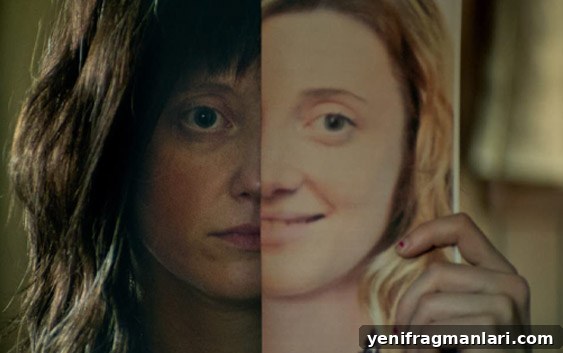
In Christiana Choe’s Nancy, Riseborough plays a woman whose fractured identity and compulsive fabrications push viewers into an uncomfortable moral territory. Nancy is a character defined by loneliness and self-deception: she invents aliases and builds elaborate hoaxes online, and when she encounters a grieving couple who lost their daughter decades earlier, she convinces herself that they might be her parents. The film’s unsettling premise requires an actress capable of rendering ambiguity without explanation—Riseborough delivers precisely that.
Her portrayal balances fragility and menace; Nancy is simultaneously pitiable and manipulative, and Riseborough never allows the performance to tip into caricature. Instead, she sustains a careful control over the role that makes the character’s delusions both convincing and heartbreakingly tragic. The film’s muted, strange atmosphere relies heavily on her ability to make us empathize with a protagonist who is unreliable and morally compromised.
Nancy demonstrates Riseborough’s talent for embodying characters who live on the margins of social reality—women whose inner turmoil is at once personal and theatrical. Her work here lingers long after the credits, inviting viewers to wrestle with questions of identity, truth, and compassion.
2. Possessor (2020)

In Brandon Cronenberg’s Possessor, Riseborough takes on a chilling, high-concept role as Tasya Vos, an operative who hijacks other people’s bodies to commit assassinations. The film’s premise is violent and disorienting; it explores identity, agency, and the loss of self. Riseborough anchors the narrative by bringing an icy precision to Tasya while also revealing the character’s internal fractures.
The role requires technical control—shifting between occupants and maintaining a throughline of intention—and Riseborough meets the challenge with a ferocity that transforms the film’s psychosexual horror into something deeply tragic. Through her, Tasya becomes more than an instrument of violence: she is a figure haunted by the erosion of personal boundaries, unable to form a stable sense of self even as she inhabits others. Riseborough’s performance gives the film its emotional core, making the speculative brutality feel intimately human.
Possessor illustrates how she can combine physical restraint and explosive intensity, crafting a character whose cold exterior conceals profound, destabilizing vulnerability.
3. To Leslie (2022)

Michael Morris’s To Leslie relies on a central performance that can weather intense emotional scrutiny. Riseborough portrays Leslie, a woman whose life has unraveled after the squandering of a past lottery windfall and the escalation of alcoholism. The part demands vulnerability and the ability to make deeply flawed choices feel human and recognizable, and Riseborough delivers a raw, empathetic portrayal.
Her Leslie is alternately charming and exasperating, someone the audience can pity but who also causes real harm to those around her—family members, strangers, and those who attempt to help. The film traces the damage of addiction and the fragile thread of redemption, and Riseborough’s performance navigates that arc with subtlety. She shows how addiction erodes dignity and relationships while retaining a painfully human core that resists easy judgment.
To Leslie confirms Riseborough’s capacity to fully inhabit a character’s disappointment and regret, making the film’s emotional stakes feel lived-in and immediate.
Across these three films, Andrea Riseborough demonstrates an extraordinary range: from ambiguous loner to intrusive operative to a weary addict seeking grace. Her choices reveal a performer willing to embrace difficult material and to risk audience comfort in service of truth. That commitment has earned her widespread respect within the industry. Her nomination for Best Actress at the Oscars in 2023 drew notable attention and conversation, reflecting both the strength of her work and the impact she has had on peers and critics alike. Now in her forties, Riseborough’s career continues to evolve, and her most compelling performances still feel ahead of her.