
Woman of the Hour (2023)
Director: Anna Kendrick
Screenwriter: Ian McDonald
Starring: Anna Kendrick, Daniel Zavatto, Nicholette Robinson, Autumn Best, Kathryn Gallagher, Pete Holmes, Tony Hale
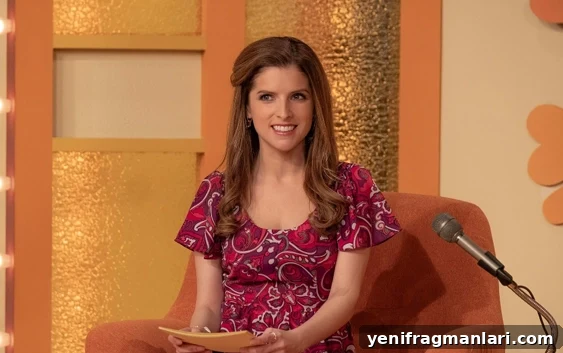
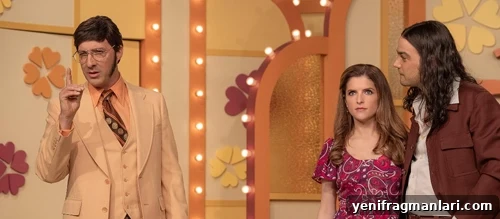
Anna Kendrick’s directorial debut, Woman of the Hour, dramatizes the chilling real-life case of Rodney Alcala and shifts the typical true crime focus away from the killer to the women whose lives were impacted by his crimes. The film opens with the unsettling encounter between Alcala (Daniel Zavatto) and Cheryl Bradshaw (Anna Kendrick) after she appears on the televised dating show The Dating Game. Cheryl, a struggling actress pressured into the appearance by her agent, hopes the exposure will boost her career, but the encounter spirals into manipulation and menace.
The film repeatedly returns to the idea of being seen versus being looked at. Alcala’s line, “Did you feel seen?” and Cheryl’s quieter reply, “I felt looked at,” encapsulate the emotional core of the story: women are often objects of attention without being treated as whole people. Kendrick frames that dynamic visually—characters are frequently captured through mirrors, camera lenses, and other reflective surfaces—emphasizing how women are framed, scrutinized, and consumed without true recognition.
Instead of indulging lurid detail, Woman of the Hour concentrates on the mechanics of charm and coercion. From the film’s opening sequence—Rodney photographing a woman in Wyoming, flattering her and drawing her trust—the audience is shown how small acts of flattery become a prelude to violence. Daniel Zavatto switches from charismatic to predatory in a single beat, which makes the moments of betrayal all the more harrowing and believable. Kendrick and screenwriter Ian McDonald take care to show how easily a friendly gaze or a compliment can mask something far darker.
Kendrick’s film is measured in its depiction of violence. Death scenes are often framed at a distance, lingered over with sunlight or empty scenery rather than close-up gore, so the horror is conveyed through absence and understatement. This restraint creates a disquieting contrast: everyday scenes—auditions, dressing rooms, casual conversations—are rendered with the same camera eye used on the killer, and that conflation exposes the ordinary ways women are objectified.
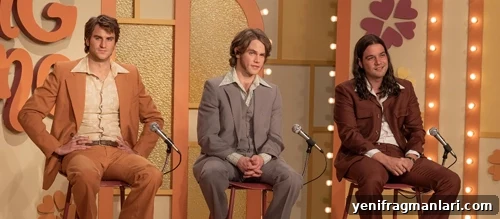
The film also highlights the role of social institutions and popular media in reinforcing harmful patterns. On the show, producers trivialize Cheryl’s agency—casually suggesting she agree to nudity despite her refusal—and the host, modeled on period television personalities, offers patronizing advice about not appearing “too smart.” These scenes are painful because they mirror real pressures women face: to downplay themselves, to appease male comfort, and to accept objectification as part of public life.
Kendrick’s performance as Cheryl is a central strength. She balances comic timing and nervous charm with moments of raw vulnerability. The smile she offers the world often conceals a deeper unease, and Kendrick communicates that duality through small facial shifts rather than grand gestures. The film also rotates attention among Alcala’s victims, allowing other actresses to give distinct, humanizing portrayals rather than reducing each woman to a shorthand role in the killer’s story.
Woman of the Hour resists the sensational, exploitative tendencies of many true crime projects. Rather than turning murder into spectacle, it interrogates why society remains fascinated with killers while too often ignoring or minimizing the experiences of victims. Kendrick’s direction and Zach Kuperstein’s cinematography pair to examine the everyday microaggressions and overt dangers women endure—how compliments are repurposed as control, how acquaintances grow possessive or violent, and how institutions prioritize entertainment value over real safety.
Throughout, the film asks viewers to confront uncomfortable truths: the casual misogyny that enables harm, the public’s appetite for macabre stories, and the personal cost borne by those who don’t fit the narrow archetypes of power. Kendrick’s debut is not only a stylistic exercise but a moral one: it urges empathy for the people behind the headlines and asks audiences to reconsider what it means to truly see someone.
As a directorial debut, Woman of the Hour is confident and purposeful. It succeeds as both a character study and a critique of cultural voyeurism, offering a humane counterpoint to the sensationalism that so often accompanies true crime narratives. The film leaves a lingering unease—not from graphic depiction, but from how ordinary interactions can be weaponized, and from how often society looks without seeing.
Score: 19/24
Rating: 3 out of 5.