


Argylle (2024)
Director: Matthew Vaughn
Screenwriter: Jason Fuchs
Starring: Bryce Dallas Howard, Sam Rockwell, Bryan Cranston, Henry Cavill, Dua Lipa, John Cena, Samuel L. Jackson, Catherine O’Hara, Sofia Boutella, Ariana DeBose
Matthew Vaughn has left a distinct mark on modern action cinema. From Kick-Ass to X-Men: First Class and the Kingsman series, his films have become synonymous with highly stylized, kinetic set pieces and a playful sensibility. That reputation helps explain how Vaughn secured an enormous reported budget—rumored to be in the hundreds of millions—for Argylle. Unfortunately, much of that money appears to have been spent on spectacle rather than sharpening the story’s core.
The premise is promising: a bestselling author of spy thrillers, Elly Conway (Bryce Dallas Howard), finds herself targeted by a shadowy intelligence network that believes her fiction is more than imagination. They think she somehow glimpses real espionage events and that her novels predict what operatives will do next. This puts Elly at the center of a contest between powerful groups who want her to reveal—or to keep writing—the next chapter in her “Argylle” series so they can anticipate their enemies’ moves. The concept of fiction bleeding into reality has rich potential; in other genres this meta approach has yielded classics, and the idea could have been an inventive twist for an action-thriller.
Vaughn’s direction retains many of the strengths that made his earlier films entertaining. His sense of rhythm in action choreography, comic timing, and affection for genre pastiche remain evident. The cast is uniformly competent, and there is a sincere attempt to explore fractured identity: Elly’s grasp on what is fictional versus real unravels, and the film intermittently mines both suspense and humor from that tension. The movie’s family-friendly rating gives the violence a lighter, more playful tone than some of Vaughn’s darker efforts; fights feel more like vigorous set pieces than brutal confrontations, and comedic beats—often involving Elly’s cat, Alfie—are staged to appeal to a broad audience.
But these strengths sit alongside significant weaknesses. The film routinely overstays its welcome. Scenes—especially action sequences—drag on long after they’ve made their point, exhausting rather than thrilling the viewer. A high-energy train fight early on is entertaining at first but becomes repetitive when the scene refuses to end. At nearly two hours and twenty minutes, the film could have benefited from stricter editing; trimming ten or fifteen minutes would sharpen momentum and reduce the sense of indulgence.
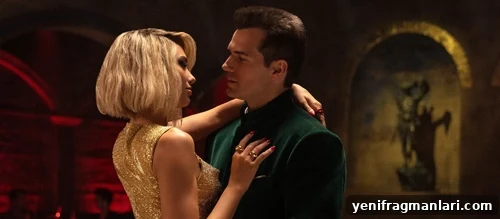
Another problem is a tonal inconsistency that grows more pronounced as the story progresses. Vaughn leans into absurdist, cartoonish visuals to underline the fictional world Elly writes about, and that stylistic choice works well when used sparingly. However, as the film progresses the supposedly “fantasy” sequences and the “real” events become indistinguishably overstylized. CGI effects are sometimes intentionally off-kilter to suggest a storybook aesthetic, but many set pieces cross the line from playful to nonsensical—vehicles fly, physics bend, and scenes increasingly resemble a parody of action rather than an emotionally engaging thriller.
This escalation undermines Elly’s character arc. The film’s emotional center is meant to be her transformation from a reserved writer into a more assertive, courageous person who faces danger despite fear. Yet when the action turns cartoonish, it robs her journey of stakes: we no longer feel threatened by the obstacles she confronts because the sequences exist to showcase visual bravado rather than genuine peril. In short, spectacle too often substitutes for meaningful drama.
Some creative choices feel self-indulgent. The film frequently gestures at cleverness—meta-commentary, genre callbacks, and flashy visual gags—without ever fully committing to a coherent thematic point. Because the film wants to be both a love letter to spy thrillers and a cheeky meditation on fiction’s relationship to reality, it sometimes ends up being neither. The climax stretches on and resolves with a flourish that reads more like an attempt at grandeur than a satisfying payoff.
That said, Argylle is not without entertainment value. Vaughn’s energy is infectious in stretches, the cast delivers solid performances, and there are genuine moments of wit and invention. For viewers seeking a glossy, fast-paced blockbuster with a playful spirit and some clever set pieces, the film will likely provide fun. For those hoping for a taut, emotionally resonant spy thriller that fully explores its intriguing premise, the result will be disappointing.
Score: 10/24
Rating: 2 out of 5.