
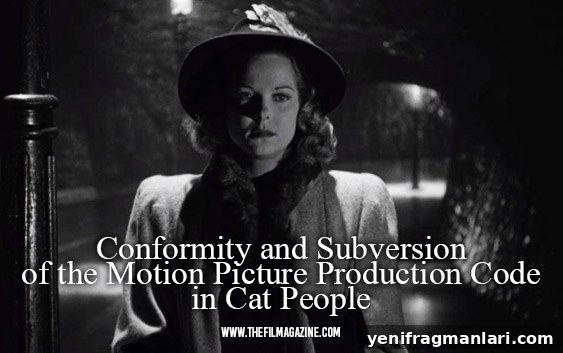
Cat People (1942): Suggestive Horror, Freudian Undertones, and the Hays Code
Cat People was Val Lewton’s first release for RKO and remains widely discussed for its refined visual style and Freudian subtext. Critics have praised Lewton’s ability to blend sophisticated cinematography with psychological themes while working within the strict censorship of classical Hollywood. Although the film’s dialogue and plot conform to the Motion Picture Production Code’s moral requirements, its imagery and symbolic language — drawing on Expressionism and psychoanalytic ideas — quietly undermine the Code’s aim of straightforward moral guidance.
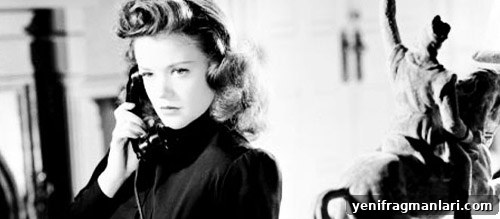
The Motion Picture Production Code, commonly called the Hays Code, served as Hollywood’s self-regulatory manual for acceptable screen content. Written in 1930 by a small group of Catholic intellectuals—among them Father Daniel Lord, Father FitzGerald Dineen, and Martin Quigley—the Code set strict rules to ensure that films would not “lower the standards of those who see it.” It regulated portrayals of sex, nudity, violence, religion, and authority, and even prescribed limits on dance and movement. The Code also demanded moral clarity: plots must not side with evil over good or leave questions of right and wrong deliberately ambiguous. Enforced more rigorously from 1934, the Code shaped how filmmakers handled potentially controversial themes, including sexuality and infidelity.
The Code’s constraints are central to Cat People in the way the film treats passion and marital fidelity. The protagonist, Irena, believes she descends from a line of Serbian witches who transform into panthers when aroused. Working as a fashion illustrator in New York, she meets an American engineer named Oliver at a zoo. Their courtship develops cautiously; the couple has not yet kissed when Irena reveals that physical intimacy might trigger her lethal transformation. From a psychoanalytic perspective, this tension dramatizes the consequences of upbringing and repression on adult sexuality. The film’s psychiatrist, Dr. Judd, explains that childhood traumas “leave a canker in the mind,” which the film then attempts to explore and treat. Oliver reassures Irena, dismisses her fears as fable, and they soon marry, thereby situating their relationship within the Code’s acceptable boundaries.
Under the Code, romantic passion was only permissible when framed as lawful, “pure” love and when sexual content was clearly confined to proper courtship or to marriage. Once Irena and Oliver marry, the film can imply a scene of passion without violating censorship, yet the story ensures that such intimacy carries serious moral consequences. In Lewton’s narrative, the passionate act—interpreted as impure by mythic and religious standards—provokes tragic, monstrous consequences that the film stages through suggestion rather than explicit spectacle.
Oliver confides his marital doubts to his colleague Alice, who, unbeknownst to Irena, recommends that Irena seek therapy with Dr. Judd. As Oliver spends more time with Alice, his attraction to her becomes apparent and he eventually announces his intention to divorce Irena. Importantly, the film’s treatment of this extramarital impulse adheres to the Code’s three rules about adultery: it is not presented as justified, it does not weaken respect for marriage, and it is not glamorized. Oliver frequently tries to repair his marriage throughout the story, and his relationship with Alice never reaches an explicitly immoral act on screen.
While the plot meets the Code’s formal requirements, the film’s symbolic imagery complicates simple moral judgments. Animals avoid Irena and function as omens; her sketch of a panther pierced by a sword foreshadows the conclusion; and religious icons from her Serbian past—such as a statue of King John who once purged her village of panther witches—frame the panther as an emblem of evil. Dialogue reinforces this interpretive frame: the zoo keeper’s allusion to the panther as a beast of Revelation and the contrast between the alleged pagan “witches” and devout villagers cast the monster in explicitly moral terms.
The film’s power rests largely in its suggestive, psychological approach to horror. As Irena’s anxiety escalates, she shadowingly pursues Alice and Oliver. One memorable sequence follows Alice walking to a bus: the camera lingers on her feet in pools of lamplight and shadow, the street sounds amplify her fear, and ordinary noises are misread as the roar of a panther. That scene exemplifies Lewton’s artistry—fear is generated by mood, sound, and suggestion rather than by onscreen violence, demonstrating how imagination can create dread without showing a creature directly.
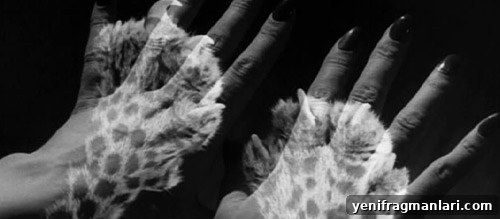
The film’s resolution further demonstrates the uneasy marriage of Code compliance and expressive filmmaking. Dr. Judd tells Irena he does not fear her—an assertion that registers both as compassionate and as a secular, rational rebuttal to the superstitions that haunt her. The climactic confrontation between human and panther is rendered through shadows and silhouetted movement rather than explicit transformation, leaving open whether Irena literally becomes a panther or whether the violence is psychological. Ultimately, she dies with a sword through her body, crawling into a panther cage in a final image that echoes the King John statue and signals the suppression of what the film’s moral language labels “evil.” The narrative closes with Oliver and Alice liberated from that threat, restoring conventional order.
Nevertheless, a feminist reading complicates the Code’s straightforward moral lens. Irena’s community and its Christian authorities labeled her dangerous for expressing sexual desire; she is told that acting on desire will turn her into a monster. Meanwhile, male figures—most notably a psychiatrist—exercise institutional power, at times invoking threats of confinement. Seen this way, the panther becomes less a literal devil than a symbol of Irena’s agency and resistance to patriarchal control. The film’s suggestive style allows audiences to interpret the panther as a projected, internalized response to repression rather than as an unambiguous supernatural condemnation.
Compared with contemporaneous monster films such as Dracula, Frankenstein, and The Mummy, which often depict clear external antagonists, Cat People offers a subtler, subjective horror. Lewton’s reliance on suggestion and Expressionist lighting invites viewers to inhabit the characters’ feelings, exposing how cultural anxieties shape our perception of good and evil. By adhering to the Hays Code on the surface while using symbolic storytelling beneath it, Lewton crafted a film that both satisfied censors and provoked thoughtful unease about the cultural assumptions underpinning American attitudes toward women, sexuality, and psychological illness.
Bibliography
Doherty, Thomas. “The Motion Picture Production Code of 1930.” Pre-Code Hollywood: Sex, Immorality, and Insurrection in American Cinema, 1930–1934, Columbia University Press, 1999, pp. 347–67.
Gilbert, Nora. “Introduction: The Joy of Censorship.” Better Left Unsaid: Victorian Novels, Hays Code Films, and the Benefits of Censorship, Stanford University Press, 2009, pp. 1–14.
Worland, Rick. “Cat People (1942): Lewton, Freud, and Suggestive Horror.” The Horror Film: An Introduction, Blackwell Publishing, 2007.