Charade (1963)
Director: Stanley Donen
Screenwriter: Peter Stone
Starring: Cary Grant, Audrey Hepburn, Walter Matthau, James Coburn, George Kennedy, Dominique Minot, Ned Glass, Jacques Marin, Paul Bonifas, Thomas Chelimsky
Released less than a month after President John F. Kennedy’s assassination, Stanley Donen’s Charade arrived at a time of seismic cultural change. The early 1960s were a hinge between eras: civil rights activism, the sexual revolution, and shifting social norms marked the end of one age and the start of another. Hollywood mirrored that transition. Although the studio system’s decline had begun decades earlier, by the mid-1960s the New Hollywood movement was reshaping the industry, and Charade sits squarely at the crossroads—both a relic of classic filmmaking and an example of what was to come.
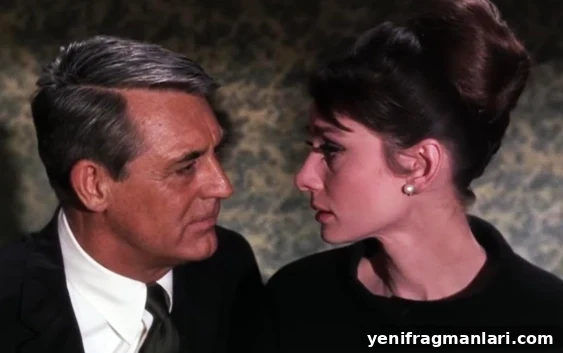
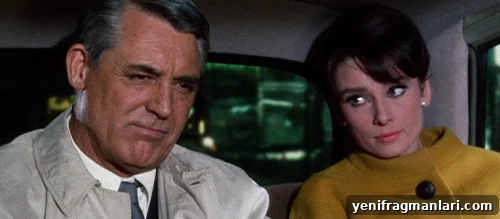
Charade pulses with the energy of old Hollywood, embodied by its two luminous stars: Cary Grant and Audrey Hepburn. The film is often called “the best Hitchcock movie Alfred Hitchcock never made,” and it’s easy to see why. It blends suspense, romantic comedy, and sly parody, paying affectionate tribute to Hitchcock’s style while leaning into its own playful sensibility. The picture occupies a unique space: part spy thriller, part romantic comedy, and part self-aware pastiche that both honors and gently mocks the conventions it borrows.
The plot centers on Audrey Hepburn’s Regina “Reggie” Lampert, who returns to Paris from a holiday in the Alps to discover her apartment emptied and her husband, Charles, dead. Reggie had planned to divorce Charles for lack of love; his murder complicates everything. At the U.S. Embassy she meets Hamilton Bartholomew (Walter Matthau), who reveals that Charles, a wartime spy, stole a large quantity of government gold and betrayed his accomplices. Those same men are now searching for the missing fortune and are convinced Reggie knows its whereabouts. Enter Cary Grant as the charming and inscrutable Peter Joshua, a handsome American who helps Reggie while provoking constant suspicion. The pair must race to uncover the truth before greed and violence overtake them.
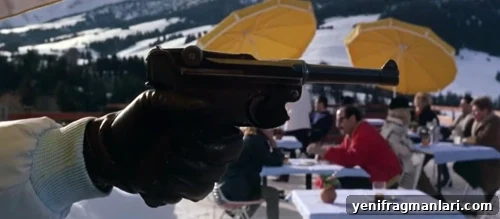
Donen and screenwriter Peter Stone manage the film’s tonal shifts with finesse. From the opening shock—Charles flung from a moving train and left bloodied on the tracks—to the deceptively lighthearted Alpine sequence where a child’s water pistol interrupts a gunshot, Charade establishes its dual identity immediately. That juxtaposition—graphic danger side by side with unexpected comedy—remains the film’s defining strength. It allows genuine suspense to coexist with witty banter and romantic chemistry without ever feeling disjointed.
Charade wears its influences plainly. It echoes Hitchcock in its visual cues and suspense architecture—the use of staircases, the play with identity and deception, the looming presence of recognizable Parisian landmarks. Yet rather than merely imitating, the film often winks at the audience. When the camera suddenly reveals Notre-Dame across the Seine while Reggie and Peter stroll the Left Bank, the actors’ exchanged look and dry line acknowledge cinematic artifice. At other moments the film nods to musical filmmaking—Donen’s own background—by referencing earlier screen moments set in Paris, combining the romance of classic musicals with the nerve of espionage stories.
There are sequences of outright horror and effective suspense: George Kennedy’s Herman Scobie found drowned in a bathtub is genuinely chilling, and the climactic theater sequence—Peter listening for the killer’s approach from beneath the stage—delivers real tension. Yet Charade always returns to its romantic core. Hepburn’s Reggie is more than a damsel in distress; she’s sharp, witty, and self-possessed. Hepburn brings intelligence and comic timing to the role, allowing Reggie to navigate the underworld of spies and liars without losing her dignity or agency. Her chemistry with Grant anchors the film and keeps its emotional stakes grounded.
Cary Grant’s performance is especially notable because Charade came near the end of his film career. At 59, Grant still projects the charm and suavity that defined his screen persona, even as the film acknowledges the considerable age gap between his character and Hepburn’s. The script plays with that gap to disarm potential awkwardness, weaving it into the film’s commentary on image and romance. Grant’s Peter is a perpetual enigma—deceptive and magnetic—and Grant’s effortless charisma makes that deception beguiling rather than off-putting.
Visually and tonally, Charade also anticipates later spy films. Its mixture of humor, stylish danger, and memorable title sequence places it in conversation with the early James Bond films. Title designer Maurice Binder’s involvement connects Charade to that emerging aesthetic, and small touches—like the mechanical hook-like hand of a villain—call to mind the theatricality of the Bond series. Still, Charade distinguishes itself by centering an elegant heroine and by focusing as much on romantic rapport as on gadgets and worldwide intrigue.
Beyond its craftsmanship, Charade’s enduring appeal lies in its seamless fusion of genres. It’s a witty romantic thriller that wears its influences proudly while charting its own course. The film can make you laugh, startle you with genuine menace, and sweep you along on a classic screen romance all at once. Remove the murder mystery and the film would still rank among the most engaging romantic comedies, thanks to Hepburn and Grant’s effortless connection.
Charade stands as a cinematic crossroad: rooted in the glamour and craftsmanship of classic Hollywood, yet pointing forward to the stylistic hybrids and genre playfulness that would define later decades. It remains required viewing for anyone interested in elegant thrills, sharp dialogue, and the unique chemistry of two of cinema’s great stars. Playful, suspenseful, and romantic, Charade is a rare film that successfully balances laughter, danger, and genuine heart.
Score: 24/24
⭐⭐⭐⭐⭐
Rating: 5 out of 5.
Recommended reading: Alfred Hitchcock, Cary Grant: Cinema’s Greatest Collaborations