
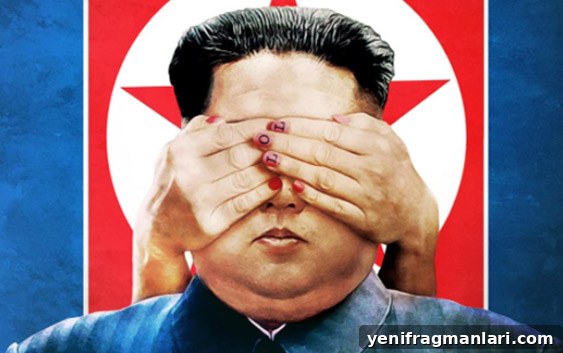
This article was written exclusively for The Film Magazine by Rory Doherty.
Assassins (2020)
Director: Ryan White
In February 2017, the eldest son of the late North Korean leader Kim Jong-il was killed in broad daylight at Kuala Lumpur International Airport. A VX nerve agent — one of the deadliest chemical weapons — was applied to his face and eyes, and he died within an hour of seeking medical help. Two young women were seen on airport CCTV handling the substance with their bare hands; when arrested days later, they appeared bewildered by the charges against them. Given the video evidence and the political profile of the victim, it is hard to accept that these women were unaware of what they had done. Could they truly have been so naive?
Ryan White’s investigative documentary Assassins sets out to explore that central impossibility. White, known for his work on high-profile court stories such as the Emmy-nominated The Case Against 8 and the investigative Netflix series The Keepers, has a clear talent for turning complex real-world cases into compelling narratives. In this film he pieces together a disturbing puzzle — one that raises uncomfortable questions about manipulation, complicity and how ordinary people can be used as instruments of political violence.
The film opens by drawing the audience into a tangled web of deceit. Friends and acquaintances of Indonesian suspect Siti Aisyah recall their shock and disbelief, framing the central mystery: how did two seemingly ordinary women come to play roles in an international assassination? The crime is presented via grainy CCTV footage, then contextualized with reporting that situates the event within North Korea’s fraught political landscape. The response of Malaysian officials, at once officious and fraught, underscores how justice in this case is entangled with diplomacy and national interest as much as it is with criminal procedure.
White raises the emotional stakes by following the parallel, tragically linked stories of Siti and the other accused woman, Vietnamese national Doan Thi Huong. Both are shown being recruited and directed by shadowy figures who promise them work, opportunity and recognition. The documentary emphasizes how their hopes and vulnerabilities were exploited: flattering messages, deceptive job offers and coercive instructions from handlers who concealed the true nature of the tasks. It’s painful to watch how the two women’s aspirations for independence and a better life are manipulated by people who treat them as expendable.
One of the film’s most unsettling contrasts is between the public footage of the crime and the intimate, often casual recordings made by the women themselves. Siti and Doan documented parts of their lives on social media — locations, activities and interactions that, if they were knowingly carrying out an assassination, would seem highly imprudent to share. These lo-fi clips lend the film a voyeuristic, anxious tone: nothing about the case is entirely transparent, and every fragment of footage raises as many questions as it answers.
Where direct footage is lacking, White employs digital reconstructions to map movements through the airport, clarifying how the events unfolded and highlighting the presence of those who orchestrated the attack from the background. These animated sequences help the viewer follow the choreography of the crime and its wider mechanics. Other visual choices are less decisive: repeated B-roll of malls and public places feels overused and occasionally blunt in its suggestion that any passerby could be caught in a similar scheme. The film clearly intends to show how ordinary urban environments can conceal malevolent intent, but that point could have been made with a lighter touch.
The documentary touches on an important cultural angle that it does not fully interrogate: the role of online prank culture and viral video economics in creating an environment conducive to exploitation. Siti and Doan were reportedly told they were participating in staged pranks that would be filmed and uploaded for views, fame and money. The idea that a regime might disguise tactical objectives as sensational online content is a chilling testament to how digital media can be weaponized. Yet White only partially pursues this line of inquiry — the film acknowledges the connection but stops short of a deeper exploration of how prank-driven social media trends can be corrupted into tools of manipulation.
Despite its occasional structural unevenness, Assassins succeeds in conveying the sorrow and moral complexity at the center of the story. The documentary’s most affecting moments come from its focus on Siti and Doan as human beings rather than mere suspects. Their confusion, fear and regret are rendered with empathy, and the film avoids turning them into one-dimensional villains. In the closing sequences, the emotional register shifts toward a quiet, melancholic reflection: Siti describes staring out a prison window and wondering if she will ever see “the sky again in all its vastness,” a line that underscores how irrevocably her view of the world has changed.
White’s film may not deliver every answer, nor does it exhaustively examine all of the broader cultural forces at play, but it does offer a sober, sympathetic portrait of how ordinary people can be manipulated into extraordinary crimes. The strength of Assassins lies in its human focus and its ability to make a complex, geopolitically charged case feel intimate and urgent.
16/24
Written by Rory Doherty
You can support Rory Doherty in the following place:
Twitter – @roryhasopinions