Wicked (2024)
Director: John M. Chu
Screenwriters: Winnie Holzman, Dana Fox
Starring: Cynthia Erivo, Ariana Grande-Butera, Jonathan Bailey, Ethan Slater, Marissa Bode, Peter Dinklage, Michelle Yeoh, Jeff Goldblum
Eighty-five years after MGM’s iconic 1939 film The Wizard of Oz, which cemented its place in film history with technicolor visuals, memorable lines and Judy Garland’s unforgettable voice, Hollywood returns to the Land of Oz with a very different project: Wicked. Based on the long-running Broadway musical and the Gregory Maguire novel that reimagines the origins of the Wicked Witch of the West, this film adaptation arrives with enormous expectations. While the movie preserves many of the stage show’s strengths—particularly its songs and its leading performances—directorial choices, visual effects and a script that largely mirrors the stage book leave the film feeling uneven and visually underexplored.
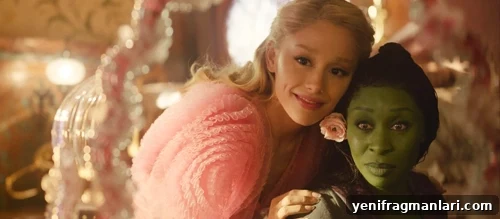
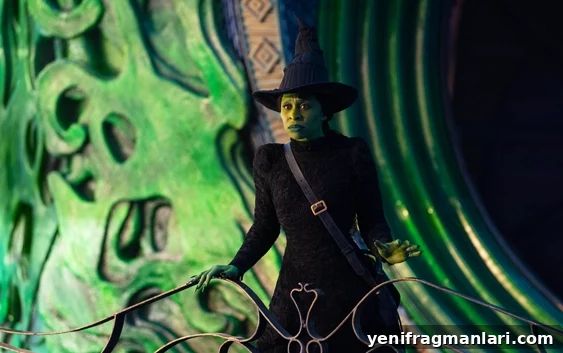
The stage musical Wicked, which opened on Broadway in 2003, famously declares, “So much happened before Dorothy dropped in,” and retells the classic tale from the perspective of Elphaba, the future Wicked Witch. The cinematic version covers the first part of a planned two-part adaptation, with the second installment scheduled for a later release. The film follows Elphaba (Cynthia Erivo), born with green skin and magical potential, and her complicated friendship with Galinda—who later becomes Glinda the Good Witch (Ariana Grande-Butera). It explores themes of prejudice, power and the cost of speaking uncomfortable truths in a world that prefers silence.
The film opens with the well-known moment of the Wicked Witch’s death—Dorothy’s bucket of water—and quickly pivots back to Elphaba’s youth to trace the events that led to that instant. Ostracized for her skin and her uncontrollable power, Elphaba grows up isolated, the result of a fraught family background and societal fear. Her only close bond is with her sister Nessarose (Marissa Bode), who uses a wheelchair. Elphaba’s arrival at Shiz University marks the beginning of major turning points: a meeting with Madame Morrible (Michelle Yeoh), confrontations with prejudice, and an unlikely friendship with the bubbly, image-conscious Galinda, whose transformation into Glinda is central to the narrative.
One of the film’s strengths is its faithful preservation of the musical’s score. With a runtime of around 161 minutes, the movie manages to include virtually every major song from the Broadway production, even restoring a larger dance sequence in “Dancing Through Life” that had been shortened in some stage runs. Fans of the musical will appreciate hearing the familiar arrangements and seeing the numbers staged on a cinematic scale, and those sequences provide many of the film’s most enjoyable moments. Ariana Grande embraces her musical-theater instincts with confident comic timing and solid vocal work, while Cynthia Erivo delivers a powerful, nuanced portrayal of Elphaba, her mezzo-soprano belt adding depth to the character’s emotional arc.
Performances across the cast are notable. Jonathan Bailey brings suavity and warmth to Fiyero, creating a believable romantic tension with Elphaba. Ethan Slater and Bowen Yang, among others, contribute strong and often funny support performances. Michelle Yeoh gives Madame Morrible a commanding presence, though the role is muted compared with some of her previous work; Jeff Goldblum’s Wizard is unsettling in a way that fits the story’s darker turns. Overall, the acting elevates material that, on paper, remains close to the stage book.
Where the film often falters is in visual execution. Director John M. Chu frequently relies on tight medium shots and close-ups, framing actors centrally and leaving large areas of the widescreen frame visually underused. This approach minimizes physical staging and dancing, which are central to many of the production numbers, and diminishes the impact of the elaborate sets and colorful design. Backgrounds are often softened to the point that the richly designed environments appear blurred and indistinct. The result is a strangely flattened visual language that relies heavily on faces rather than the full-body choreography and staging that make musical sequences soar on film.
Special effects are another mixed element. Certain digital creations—most notably the flying monkeys and a CGI portrayal of Doctor Dillamond, the goat professor played by Peter Dinklage—look inconsistent alongside the live performances. At times the visual effects read as underwhelming or unfinished, which undercuts moments that should feel magical or ominous. Lighting choices also sometimes wash out faces or reduce the depth of scenes, further contributing to a look that rarely maximizes the palette and production design the story deserves.
On the writing front, screenwriters Dana Fox and Winnie Holzman preserve the musical’s book closely, which will satisfy purists but also limits the film’s ability to expand or deepen the story for a cinematic audience. Aside from a few added scenes that emphasize the story’s animal-rights subplot, the screenplay treats dialogue largely as connective tissue between musical numbers rather than developing additional layers of character motivation or worldbuilding. The third act, in particular, concludes more quickly than the preceding acts, repeating a pacing issue that some viewers felt in the stage version.
Despite these flaws, the film works as an entry point for fans and newcomers who want a faithful cinematic rendition of the Broadway show. The songs are strong, the leads deliver memorable performances, and many of the emotions that power the stage production carry over effectively. Yet the adaptation raises a recurring question: what can a film version offer beyond a well-executed transcription of the stage experience? In this case, the answer is mixed. While the music and performances largely succeed, the direction and visual choices prevent the movie from fully capitalizing on cinema’s possibilities to expand and reimagine Oz.
Score: 12/24
Rating: 2 out of 5.