


Pearl (2022) Review
Director: Ti West
Screenwriter: Ti West, Mia Goth
Starring: Mia Goth, David Corenswet, Tandi Wright, Matthew Sunderland, Emma Jenkins-Purro, Alistar Sewell
In Ti West’s 2022 slasher prequel Pearl, Mia Goth delivers a performance that is at once mesmerizing and disturbing. The film serves as the origin story for the villain introduced in West’s earlier film X, revealing how a lonely, repressed woman in 1918 becomes a force of violent obsession. Goth co-wrote the screenplay with West, and that collaboration is evident: the character’s voice is specific, raw, and vividly imagined.
Set against the backdrop of the final months of World War I and the devastating influenza pandemic, Pearl positions its protagonist in a claustrophobic rural world. Pearl lives on a family farm, caring for her ailing father while living under the iron rule of her strict mother, Ruth. With her husband away at war, Pearl’s life is constrained by duty, illness, and boredom. Her dreams of glamour, stardom, and escape collide with a quiet, growing rage that soon erupts into murderous impulses.
Mia Goth is electric in the lead. She gives Pearl a fierce mix of vulnerability and volatility, creating a character who is heartbreaking and terrifying in equal measure. Goth finds a rich interior life for Pearl: in one moment she is tender and childlike, singing to birds and imagining herself onstage; in the next, her simmering anger explodes in intense confrontations and shocking acts. The performance avoids melodrama; even in its most extreme moments, Goth keeps Pearl believable and compelling. Her physicality—wild eyes, jagged laughter, sudden sobs—makes the character feel fully alive.
Tandi Wright matches Goth’s intensity as Ruth, Pearl’s domineering mother. Their relationship is the emotional core of the movie: scenes between them crackle with tension, resentment, and a bitter struggle for control. Matthew Sunderland, as the sick father, adds a quietly tragic presence that amplifies Pearl’s isolation. The supporting cast helps ground the film in a recognizable domestic reality, which in turn makes Pearl’s descent into violence feel all the more unsettling.
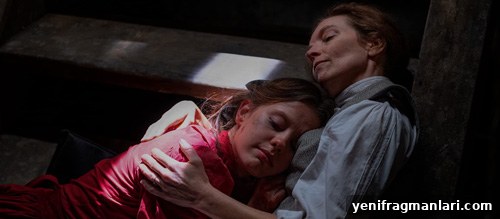
Visually, Pearl is a bold and meticulously crafted work. Ti West leans into influences from silent cinema, vaudeville, and classic Hollywood musicals. The cinematography embraces vivid colors and theatrical compositions, often reflecting Pearl’s inner fantasies. Moments that might read as grotesque in another director’s hands are staged with a kind of performative glamour here: blood and brutality are often framed like a macabre musical number, which amplifies the film’s unsettling humor and camp sensibility.
The film’s production design and costuming reinforce a period atmosphere, but West and Goth make conscious choices to stylize the era. The house, the costumes, and the frames are slightly heightened, filtered through Pearl’s ambitions and delusions. This choice creates a clear visual link between Pearl’s imagined cinematic life and the grim reality she inhabits. The film’s opening sequences, with sweeping camera movement and a soaring score, deliberately evoke classic Hollywood “I want” moments, while the story undercuts that fantasy with cruelty and desperation.
Beyond its period setting, Pearl resonates with contemporary anxieties. The film’s portrayal of illness, masks, and social isolation carries an uneasy familiarity in a post-pandemic world. That resonance is never heavy-handed; instead it provides an atmospheric undercurrent that heightens the film’s claustrophobia and instability. The result is a period piece that also reads as a commentary on how fear and confinement can warp desire and behavior.
Compared with X, Pearl is more stylized and focused on character. Where X mixes tonal shifts and a broader slasher palette, Pearl commits to a single, intense point of view. This focus pays off: the film manages to be frightening and darkly funny, as well as poignantly tragic. It reframes the familiar trope of the “woman scorned” into a complex portrait of longing, repression, and the hunger for recognition.
For viewers who enjoyed X, Pearl enriches the mythology by providing a deeper understanding of the antagonist’s origins. For newcomers, it functions as a standalone psychological horror that explores the corrosive effects of isolation and thwarted ambition. Ti West and Mia Goth have crafted a film that is visually striking, emotionally charged, and anchored by a bravura central performance.
Score: 19/24