The Last Duel (2021)
Director: Ridley Scott
Screenwriters: Nicole Holofcener, Ben Affleck, Matt Damon
Starring: Matt Damon, Adam Driver, Jodie Comer, Ben Affleck
Ridley Scott, the director behind landmark films such as Alien, Blade Runner, Thelma & Louise and Gladiator, remains one of cinema’s most influential and prolific filmmakers. His career has alternated between towering successes and more uneven efforts; for every celebrated triumph there have been projects that failed to match audience or critical expectations. In his later years Scott has continued to produce ambitious, visually striking work, and The Last Duel represents one of his more accomplished recent features.
The Last Duel dramatizes the historical events surrounding what is recorded as the last judicial duel in France in 1386. It centers on the bitter clash between Jean de Carrouges and Jacques Le Gris after Marguerite de Carrouges accuses Le Gris of assault. The film explores themes of honor, power, truth and the role of women and institutions in medieval society.
Screenwriters Matt Damon, Ben Affleck and Nicole Holofcener structure the film in a way that foregrounds perspective: the narrative is divided into distinct sections that retell events from different points of view. This Rashomon-like approach gives the script its strongest advantage, allowing the audience to experience how memory, bias and social position shape personal accounts. By presenting multiple versions of the same incidents, the film invites the viewer to weigh credibility and motive rather than accept any single testimony at face value.
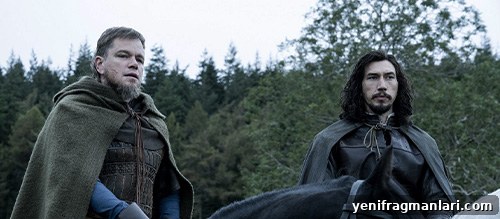
Specifically, The Last Duel is organized into four parts: the account of Jean de Carrouges (Matt Damon), the account of Jacques Le Gris (Adam Driver), the account of Marguerite de Carrouges (Jodie Comer), and finally the duel itself. This structure deepens character work and brings nuance to events that might otherwise be presented as straightforward. Even when accounts converge on a single event, each character’s internal experience and actions reveal different moral and emotional textures.
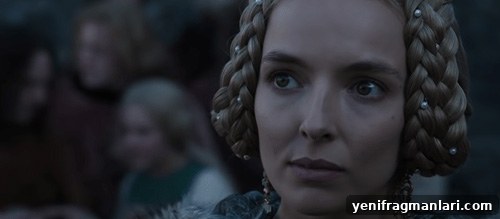
Jodie Comer delivers a striking performance as Marguerite. In what is her largest feature role to date, Comer anchors the film with emotional clarity and quiet strength, commanding every scene she inhabits. Her portrayal brings vital human dimension to the story and compels empathy for Marguerite’s struggle within a male-dominated legal and social system. Adam Driver is equally powerful, his portrayal of Jacques Le Gris offering complexity and charisma that complicate the viewer’s judgment. Driver proves once again his range and intensity, shaping a character who is both magnetic and morally ambiguous.
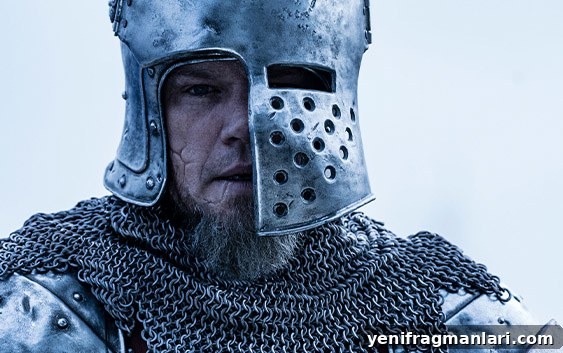
Matt Damon portrays Jean de Carrouges as proud, fierce and uncompromising. His performance captures the knight’s fierce sense of honor, though at times the intensity could have been tempered to allow subtler shades to emerge. Ben Affleck’s Count Pierre d’Alençon is forceful and imposing; Affleck commits fully to the role, though certain scenes push the character into extremes that occasionally strain credibility. These performances, strong overall, occasionally lean toward excess, but they contribute to the film’s emotional engine.
Not every supporting role is as successful. Alex Lawther’s portrayal of King Charles VI features abrupt tonal shifts that can be distracting. The king is meant to be unpredictable and afflicted, but the performance sometimes alternates between composed judgment and extravagant madness in ways that feel inconsistent rather than illuminated. These moments briefly unsettle the film’s otherwise careful balance.
Visually and technically, The Last Duel is exemplary. Ridley Scott’s direction showcases his gift for building immersive period worlds: production design, costumes, practical effects and lighting all work together to recreate a believable medieval environment. Battle sequences feel brutal and immediate; domestic and courtroom scenes are staged with attention to detail and emotional clarity. Scott’s command of cinematic scale is evident, and his ability to blend spectacle with intimate character moments helps sustain the film’s momentum.
There are, however, occasional questionable choices in pacing and tone that slightly undercut the film’s strengths. Some scenes could have benefited from tighter editing or a more restrained directorial hand. Small inconsistencies in characterization and performance leave questions about editorial decisions that might have strengthened the overall impact. Still, these flaws do not derail the movie; they are distractions rather than fatal defects.
Ultimately, The Last Duel is a compelling and thoughtful historical drama. It is not flawless, but its virtues—an intelligent script structure, strong lead performances, careful production design and Scott’s confident visual storytelling—outweigh its shortcomings. The film thoughtfully examines themes of truth, justice and agency, and it offers a powerful showcase for Jodie Comer and Adam Driver in particular.
Compared with some of Scott’s less successful recent efforts, The Last Duel feels like a return to form. While it may not achieve the iconic status of Alien or Blade Runner, it stands as one of Scott’s stronger films in this century and a notable addition to contemporary historical cinema. By the film’s end, viewers are left with a complex, resonant portrait of an era where law, reputation and violence collided—and with an appreciation for the filmmakers’ willingness to interrogate who gets to tell history’s stories.
18/24