
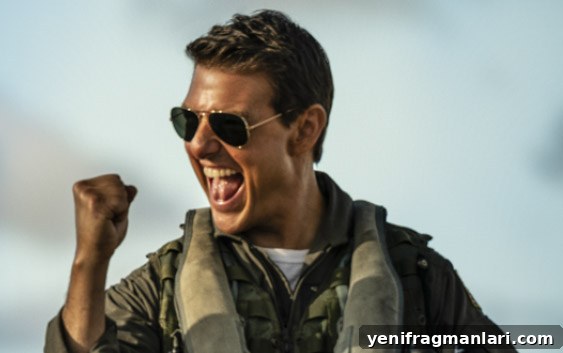
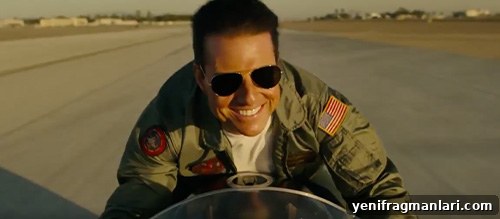
Top Gun: Maverick (2022)
Director: Joseph Kosinski
Screenwriters: Ehren Kruger, Christopher McQuarrie, Eric Warren Singer
Starring: Tom Cruise, Val Kilmer, Jennifer Connelly, Jon Hamm, Miles Teller, Glen Powell, Bashir Salahuddin, Charles Parnell, Monica Barbaro, Lewis Pullman, Jay Ellis, Danny Ramirez
Do you remember how movies felt when you were a child? Top Gun: Maverick brings back that sensation—an immediate, thrilling reminder of what cinematic spectacle can be.
Top Gun: Maverick is a triumph of classic blockbuster filmmaking. It’s grand, visually breathtaking, and emotionally resonant—an example of large-scale cinema made with craft, ambition, and heart. In an era dominated by visual effects-driven productions, this film foregrounds practical filmmaking and visceral experience in a way few recent Hollywood releases have managed.
Thirty-six years after Tony Scott’s original Top Gun cemented itself as an ’80s cultural touchstone, the sequel returns to familiar territory while expanding its emotional and technical reach. The original turned Tom Cruise and Val Kilmer into household names, embedding itself in the cultural memory of a generation with its music, fashion, and the romanticized freedom of youth. For many viewers, the first film remains a monument to young love, ambition, and exhilaration. Top Gun: Maverick aspires to—and largely succeeds at—becoming a similar landmark for modern audiences.
In this follow-up, Pete “Maverick” Mitchell (Tom Cruise) finds himself back at the Top Gun school, this time as an instructor charged with training a handpicked squad of elite pilots. Their mission: execute a nearly impossible strike against a heavily protected target, all within an unreasonably tight timeframe. Maverick must teach both flying technique and the courage to risk everything to succeed.
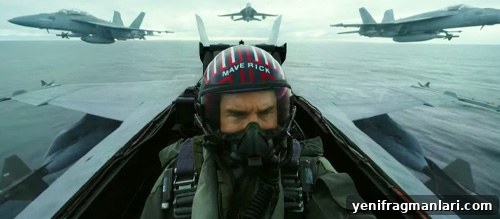
The film rewards a big-screen viewing. From the earliest sequences the movie establishes a kinetic, tactile realism—especially during the aerial sequences. Many of the stunts were filmed in real aircraft, and the result is a sensory onslaught: abrupt accelerations, tight turns, and the physical force of flight are palpable. Director Joseph Kosinski and cinematographer Claudio Miranda repeatedly place the camera inside cockpits, making the audience feel the pressures and pulls of high-speed maneuvering as intimately as the characters themselves. That practical approach sets Maverick apart from many contemporary blockbusters that rely heavily on CGI. The filmmaking feels earned and organic, and it pays off in a cinematic experience that feels both immediate and timeless.
The supporting cast brings energy and humanity to the action. Miles Teller stands out as Rooster, the son of Goose from the original film. Rooster’s arc—marked by loss, resentment, and the struggle for reconciliation—gives the sequel emotional weight. Teller balances anger and vulnerability, providing a strong counterpoint to Cruise’s steady, weathered Maverick. Glen Powell, as Hangman, delivers a charismatic, star-making performance; his confident arrogance and competitive spirit mirror the swagger of young actors poised to break out.
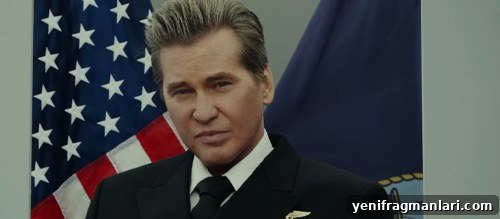
Yet the film repeatedly returns attention to the veterans: Tom Cruise and Val Kilmer. Their scenes carry emotional gravity beyond plot mechanics. Kilmer’s portrayal of Iceman—both in flashbacks and later reveals—tells a poignant story about time, mortality, and friendship. The contrast between Kilmer’s real-life battle with illness and his on-screen presence adds a haunting authenticity to his appearances. The interplay between Cruise and Kilmer reflects the film’s larger themes about aging, legacy, and the costs of a life spent at the edge.
Tom Cruise’s commitment to his craft remains a centerpiece of the production. His insistence on practical effects, theatrical-only releases, and rigorous physical performance underscores a belief in the communal power of cinema. That commitment informs the film’s tone: it’s not merely nostalgic, it’s a passionate defense of the theatrical experience. In an industry increasingly focused on streaming and home viewing, Maverick argues—through its design and delivery—that some stories are best experienced in a dark theater, surrounded by an audience feeling the same excitement.
Beyond spectacle, the film works because it balances thrills with emotional stakes. The action scenes have real jeopardy, and the characters’ relationships—between teacher and student, father and son, former rivals—provide the human center that keeps the film grounded. The director and cast respect the original while offering fresh perspectives: younger pilots confront legacy and loss, while older characters reckon with time and consequence.
Top Gun: Maverick ultimately does more than recapture a bygone aura; it refines and expands it. By blending practical filmmaking, powerful performances, and a clear affection for the theatrical experience, the film becomes a reminder of what mainstream cinema can still achieve. It delivers excitement, emotional resonance, and a palpable sense of risk that makes the spectacle feel earned rather than manufactured.
For moviegoers who crave bold, tactile cinema, Top Gun: Maverick is an essential experience. It honors its roots while staking its own claim as a modern classic, and it stands as a persuasive argument for watching certain films the way they were meant to be seen—on the big screen, with the volume up and the lights down.
Score: 22/24