Black Narcissus (1947)
Directors: Michael Powell, Emeric Pressburger
Screenwriters: Michael Powell, Emeric Pressburger
Starring: Deborah Kerr, David Farrar, Kathleen Byron, Sabu, Flora Robson, Jenny Laird, Judith Furse, Esmond Knight, Jean Simmons, May Hallatt, Eddie Whaley Jr
Black Narcissus, directed and written by the celebrated British duo Michael Powell and Emeric Pressburger, remains a landmark in cinematic craft and psychological storytelling. Released in 1947, the film demonstrates a rare combination of technical ambition, striking visual design, and intense, character-driven drama. Its influence can be traced across decades of filmmaking; directors intrigued by theatrical intensity, psychological unease, and bold visual composition still cite Powell and Pressburger’s work today.
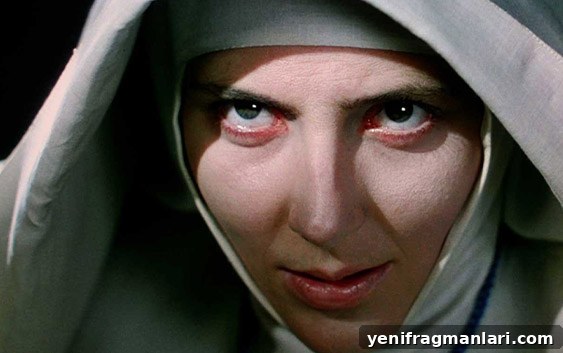
The story follows Sister Clodagh (Deborah Kerr) and a small order of Anglican nuns who establish a convent, school, and medical dispensary in a disused palace on a Himalayan ridge. Tasked with providing education, healthcare, and spiritual guidance to the local community, the nuns confront practical challenges and escalating psychological strain. Clodagh, the determined and conscientious superior, carries the weight of responsibility; Ruth (Kathleen Byron), a troubled and emotionally volatile sister, becomes the center of the film’s mounting tension.
Powell and Pressburger adapt Rumer Godden’s novel with a keen sense of atmosphere. The filmmakers use the palace setting—a former ruler’s pleasure house adorned with erotic murals and exotic ornamentation—as a powerful metaphor for temptation and cultural dislocation. Isolated on the ridge, surrounded by unfamiliar customs and dramatic landscape, the sisters are pushed into confrontation with desire, memory, and faith. The film’s psychological drama is often implied rather than explicit, relying on suggestion and charged performances to convey inner conflict.
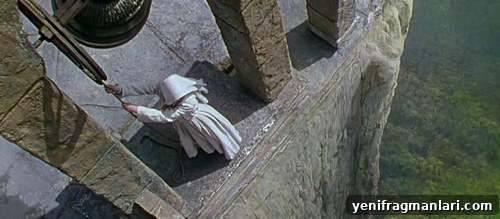
Visually, Black Narcissus is unforgettable. Cinematographer Jack Cardiff won an Academy Award for his luminous, painterly photography. Cardiff’s use of color, light, and shadow heightens the film’s emotional stakes and gives it a theatrical, almost expressionistic mood. Production designer Alfred Junge and matte artist W. Percy Day created evocative sets and backdrops that blend studio craft with the illusion of vast, perilous Himalayan cliffs. Notable sequences—such as the bell tower on the cliffside—remain some of the most striking images in classic British cinema.
At the heart of the film are the central performances. Deborah Kerr’s Clodagh is composed, resolute, and haunted by memories of a different life; her restraint and moral certainty are tested as events spiral. Kathleen Byron’s Ruth provides a fierce counterpoint: impulsive, emotionally raw, and increasingly unmoored. The interplay between the two women—order versus chaos, duty versus desire—drives the narrative toward its tragic, operatic climax. David Farrar’s Mr. Dean, the English agent and local administrator, embodies a kind of dangerous charisma that unnerves the convent and catalyzes conflicts; his presence is deliberately provocative in a story about repression and longing.
The film’s sound design and Brian Easdale’s unsettling score contribute to the mounting unease. Music and ambient sound accentuate the sisters’ isolation and underscore the film’s descent into psychological crisis. When Ruth’s fragile balance collapses, the film moves into a tense, almost nightmarish final act that blends melodrama, horror, and tragedy. Kathleen Byron’s facial expressions and the staging of the climax produce a sustained emotional punch that lingers long after the credits.
Black Narcissus is a product of its time in ways that modern viewers may find dated or problematic. Some portrayals and moments—intended as theatrical or emblematic—read as orientalist or insensitive by contemporary standards. Despite these issues, the film’s formal achievements and emotional intensity remain powerful. Its exploration of faith, repression, desire, and cultural friction still resonates, and its influence on later filmmakers is clear: it helped open cinematic possibilities for psychological realism married to bold visual invention.
For first-time viewers, Black Narcissus offers a richly staged, emotionally charged experience. The film rewards attention to performance, cinematography, and design, and it stands as one of Powell and Pressburger’s darker, more unsettling successes. The balance of beauty and menace, restraint and explosion, makes it an essential study in how atmosphere and craft can deepen a dramatic story.
Score: 19/24