
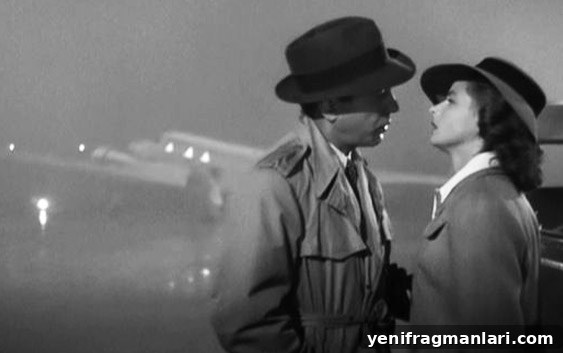

Casablanca (1942)
Director: Michael Curtiz
Screenwriters: Julius J. Epstein, Philip G. Epstein, Howard Koch
Starring: Humphrey Bogart, Ingrid Bergman, Paul Henreid, Claude Rains, Conrad Veidt, Peter Lorre, Dooley Wilson, Sydney Greenstreet
Casablanca is widely regarded as one of the crowning achievements of Hollywood’s Golden Age. Directed by Michael Curtiz, the film remains a cultural touchstone: a tightly written, emotionally resonant wartime romance that pairs unforgettable performances with a score and visual style that continue to influence filmmakers and delight audiences. Often cited among the greatest films ever made, Casablanca blends moral complexity, stylish production design, and a timeless love story into a single, enduring work.
Set in the Moroccan city of Casablanca during World War II, the story follows Rick Blaine (Humphrey Bogart), the cynical proprietor of an upscale nightclub who must confront his past when Ilsa Lund (Ingrid Bergman) reappears in his life. Ilsa has arrived with Victor Laszlo (Paul Henreid), a resistance leader hunted by the Nazis. The couple seeks transit papers to escape Europe via Lisbon and then to the United States, and their quest rekindles Rick and Ilsa’s old romance while forcing Rick to choose between personal desire and a higher moral duty. The film turns the crowded, transient atmosphere of Casablanca into a pressure cooker where loyalties, love, and politics collide.
From a contemporary perspective, the influence of Curtiz’s direction and the screenplay is unmistakable. Many cinematic techniques and motifs audiences now accept as classic were refined or popularized in Casablanca—from economy of dialogue to memorable, compact scenes that reveal character and theme simultaneously. The film’s opening sequences establish a mood of urgency and displacement that has been echoed in countless later works. Its dialogue is famously quotable, while its plot—love caught in the sweep of history—remains a blueprint for romantic dramas and wartime stories that followed.
The film’s visual design is a major reason it endures. Shot in black and white, Casablanca uses light and shadow, fog and rain, to heighten emotion and atmosphere. Iconic moments, such as the airport scenes, use mist and backlighting to create a soft, romantic palette that aligns perfectly with the story’s themes of longing and farewell. The bustling bar scenes and crowded streets provide texture and scale; Rick’s Café serves as a microcosm of exile and worldly negotiation, populated by characters from many nations and walks of life. Costume and set details—like Rick’s distinctive white dinner jacket—contribute to the film’s lasting visual identity, reflecting a level of craftsmanship associated with the Golden Age studio system.
Performances are central to the film’s power. Bogart’s weary, restrained Rick and Bergman’s luminous, conflicted Ilsa deliver a chemistry that has become the benchmark for cinematic romance. Supporting players—Claude Rains as the morally complex Captain Renault, Paul Henreid as the determined Laszlo, and Dooley Wilson as the soulful Sam—add depth and warmth, making the ensemble feel both lived-in and dramatic. The score and musical motifs, particularly the recurring usage of the song “As Time Goes By,” weave through the narrative and anchor its emotional beats.
Beyond its craft and performances, Casablanca endures because it captures a set of ideals and anxieties tied to a specific historical moment while remaining emotionally immediate for modern viewers. The United States is presented as a beacon of refuge, and the film explores themes of sacrifice, idealism, and the moral choices that wartime forces upon ordinary people. These themes, combined with the film’s elegant storytelling and careful production, help explain why it is frequently cited as a foundational work for both filmmakers and film lovers.
Over the decades, Casablanca has been referenced, parodied, and paid tribute to across genres—from musicals and romantic comedies to animated cartoons—testifying to its pervasive influence on narrative and image. Whether examined for screenplay construction, performance, cinematography, or cultural significance, the film remains a key study in classic Hollywood filmmaking and continues to reward repeated viewings.
24/24