
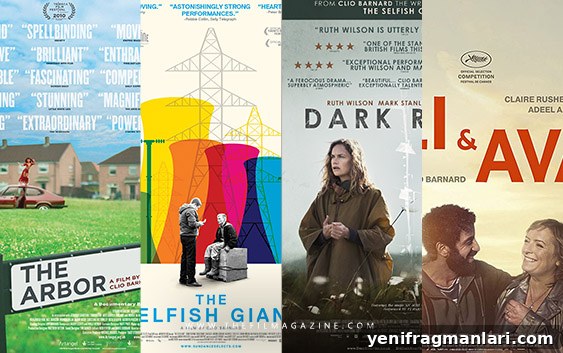
Born into an artistic family in West Yorkshire and earning early acclaim for her short films and her distinctive feature debut The Arbor, Clio Barnard has rapidly established herself as one of Britain’s most notable independent directors. Her work, rooted in the landscapes and communities of northern England, has consistently been praised for its authenticity and emotional clarity.
Barnard has deliberately kept her projects local and creative, resisting the compromises often demanded by larger productions. Her three feature films released by 2020 earned her recognition among critics and placed her on lists highlighting outstanding directors of the decade. Her voice is unmistakable: intimate, socially engaged and formally inventive.
Bradford and its surrounding areas serve as Barnard’s creative home. Three of her four features were developed, workshopped and filmed there, and she spends significant time developing projects in close collaboration with the communities her films portray. That collaborative process gives her characters and their experiences a deep sense of veracity; the people on screen feel lived-in, complex and wholly believable.
Barnard’s career trajectory has impressed many observers, and she is often celebrated as a leading figure among contemporary British filmmakers. Below is a concise, ranked overview of her feature films, reflecting critical reception and cultural impact.
4. Dark River (2017)
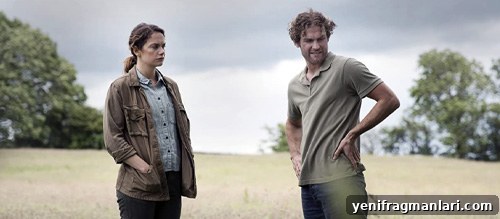
Dark River Review
Dark River follows estranged siblings who clash over the future of their late father’s failing farm. For Alice, returning home after years away proves far more harrowing than it is for her volatile brother Joe, because Alice must confront the trauma of past abuse that Joe has never fully acknowledged.
Set against a backdrop of rural hardship, the film joins several mid-2010s dramas that explore life in agricultural communities, portraying manual labour, isolation and an industry in decline. Barnard adds a distinctive Gothic strain to the story: Alice is haunted by grief and the vivid, lingering pain of her past, sometimes manifesting as an almost spectral presence of her recently deceased father. Adriano Goldman’s cinematography, with its half-light and mist, enhances this atmosphere of unease and heightens the film’s dreamlike, nightmarish quality.
Ruth Wilson and Mark Stanley deliver raw, affecting performances as the siblings at the film’s center. Their fraught relationship is revealed in layers, and the performances make that complexity feel immediate and painful, exposing the emotional architecture that underpins the family’s dynamic.
3. The Arbor (2010)

The Arbor Review
The Arbor is an inventive, experimental documentary about Bradford playwright Andrea Dunbar and the impact of her brief but significant career. Rather than adopting a conventional talking-head approach, Barnard challenges documentary norms by blending performance and recorded testimony in a strikingly original form.
Barnard stages scenes with actors portraying Dunbar and residents of the Buttershaw estate, then overlays those performances with recorded voices of the real people recounting their memories. The result is at once jarring and illuminating: it foregrounds the constructed nature of documentary storytelling while also bringing viewers closer to the subject’s lived reality.
The Arbor suggests that documentaries cannot provide a single, complete truth, but they can present an honest, resonant perspective that conveys emotional truth. By involving those who knew Dunbar intimately, the film captures a nuanced portrait that feels both personal and culturally significant.
2. Ali & Ava (2021)
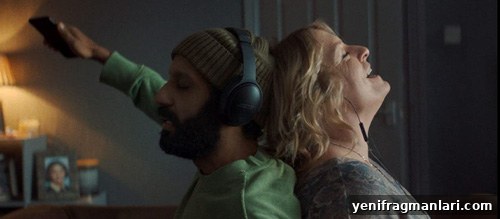
Ali & Ava Review
Ali & Ava tells the story of an unexpected and tender relationship that develops between Ali, an Asian DJ, and Ava, a white school assistant. Both characters face significant life changes, and their tentative bond gradually deepens into a compassionate, hopeful romance.
The film resists reducing its setting to a backdrop of hardship or spectacle. Barnard avoids sensationalism when depicting poverty and prejudice, instead portraying these realities with restraint and respect. Tension arises in part from Ava’s adult son, who is overprotective and unsure about someone from a different community entering his mother’s life. That conflict provides dramatic stakes, but the heart of the film is the gentle connection and mutual healing between the two leads.
Ali & Ava is warm and musical in tone, buoyed by sensitive performances from its leads. It celebrates small moments of intimacy and compassion and offers a hopeful, humane view of connection across cultural and generational divides.
1. The Selfish Giant (2013)
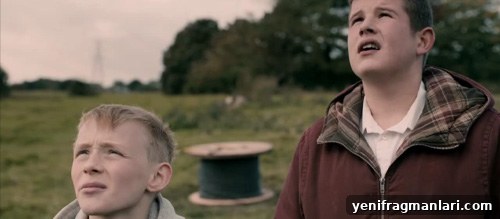
The Selfish Giant Review
The Selfish Giant follows two best friends from impoverished families who spend their days collecting scrap metal to sell, hoping to earn enough to change their circumstances. The film captures the rhythms of childhood, friendship and hardship with an unflinching, yet deeply empathetic eye.
Barnard’s collaborative, community-based approach is evident in the film’s naturalistic performances. The central relationship between the boys, played by Conner Chapman and Shaun Thomas, feels wholly authentic—a bond of loyalty and vulnerability that anchors the story. Their lives are shaped by absent parents, fractured family structures and an unpredictable future, and Barnard presents these conditions without moralizing, allowing the viewer to witness the characters’ dignity and desperation.
The Selfish Giant functions as a modern fable, with moral ambiguity and a harsh critique of figures who exploit vulnerable children. It lingers like a story passed down through generations: simple in premise but rich in emotional truth. For many viewers, it represents Barnard’s most resonant and universally themed achievement.
Clio Barnard’s films consistently combine formal daring with deep community engagement, producing work that feels both local in detail and universal in theme. Her films invite empathy and reflection and mark her as one of the most compelling voices in contemporary British cinema. Which of Barnard’s films resonates most with you?