
Comfort and Joy (1984)
Director: Bill Forsyth
Screenwriter: Bill Forsyth
Starring: Bill Paterson, Eleanor David
Bill Forsyth’s Comfort and Joy remains one of the most distinctive entries in modern Scottish cinema. Released in 1984, the film showcases Forsyth’s ability to blend local color, dry humor, and offbeat characters into a satirical take on the gangster genre. In doing so he created a work that is both unmistakably Scottish and refreshingly original, adding texture to the nation’s filmic identity during the 1980s.
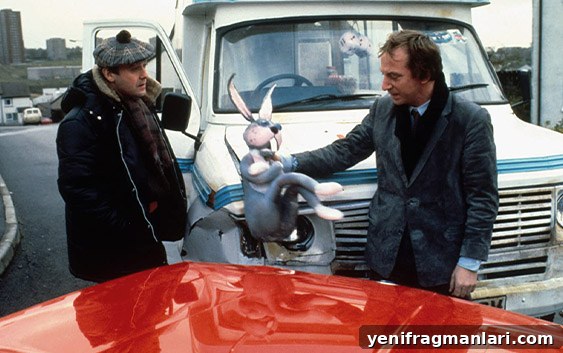
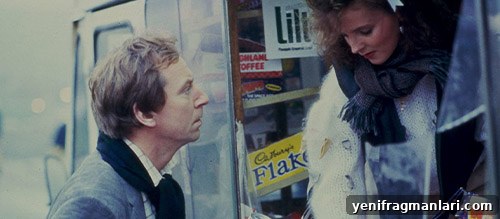
The story follows Alan “Dicky” Bird (Bill Paterson), a popular local radio DJ whose personal life unravels after a breakup with his long-term partner, played by Eleanor David. Dicky’s ordinary life is soon pulled into an unlikely conflict between two rival ice cream vendors in Glasgow — Mr. Bunny and Mr. McCool — a turf war that Forsyth uses as the film’s central conceit. What could be a straightforward crime comedy becomes a gentle satire about small-town power struggles, celebrity culture, and the absurd lengths people will go to protect territory and reputation.
Bill Paterson delivers a quietly charismatic performance as Dicky. His naturalism is the film’s anchor: Paterson plays the character with a charm that never tips into caricature, making Dicky’s bewilderment, awkwardness, and occasional moral clarity feel sincere. Particularly memorable are the scenes set in the radio booth, where Paterson’s timing and warmth convincingly sell Dicky’s public persona and private fragility.
Forsyth’s direction is subtle and assured. He stages the Ice Cream Wars with a deliberately low-key sensibility, turning common gangster tropes into sources of comic unease rather than violent spectacle. The film’s tone is largely whimsical, punctuated by moments of darker irony, and Forsyth balances these shifts with an eye for detail: the local radio jingles, idiosyncratic secondary characters, and the small rituals of Glasgow life all contribute to a fully realized setting. This specificity is one of the film’s strengths, helping it feel lived-in and authentic rather than merely anecdotal.
The screenplay — also by Forsyth — is a mix of witty dialogue, recurring visual gags, and situational humor. Many of the film’s funniest beats come from escalating absurdity: Dicky’s car repeatedly suffers misfortune, misunderstandings multiply, and the escalating rivalry between the two ice cream families becomes ever more surreal. Forsyth’s writing often subverts expectations, borrowing from crime film language while defanging its worst excesses, which gives the picture a uniquely comedic rhythm.
That said, the script is not without flaws. Several narrative threads are introduced and never fully resolved. Dicky’s breakup and his tentative romantic interest in Charlotte (one of Mr. Bunny’s sellers) are important emotional threads early on, but they lose momentum as the film shifts focus to the community conflict. Some running gags and subplots are allowed to fizzle rather than pay off, leaving a handful of unanswered questions by the conclusion. These lapses prevent the film from achieving complete narrative cohesion, though they rarely undermine the overall enjoyment.
Visually and aurally, the film favors understated choices. Forsyth does not rely on flashy camerawork or a bombastic score; instead, he uses simple compositions, observational camerawork, and carefully chosen music cues to maintain a steady comic tempo. The result is a film that feels intimate and human-scaled, anchored in people and place rather than cinematic spectacle.
For viewers familiar with Forsyth’s earlier work, such as Gregory’s Girl, Comfort and Joy offers a complementary view of his interests: an empathy for ordinary characters, an affection for local eccentricities, and a knack for blending humor with melancholy. The film’s comic reframing of a gangland conflict through the lens of ice cream vending is emblematic of Forsyth’s gift for finding the extraordinary in the everyday.
Despite its occasional narrative loose ends, Comfort and Joy remains a memorable piece of Scottish cinema thanks to its distinct tone, committed performances, and the director’s confident blend of satire and pathos. It stands as an essential viewing for anyone interested in Forsyth’s work, in character-driven British comedy, or in films that use regional specificity to explore broader human themes.
20/24