
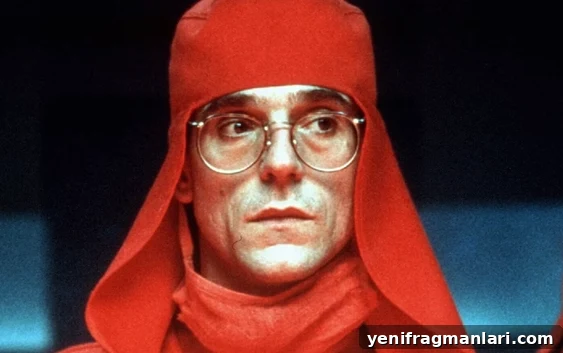

Dead Ringers (1988)
Director: David Cronenberg
Screenwriters: David Cronenberg, Norman Snider
Starring: Jeremy Irons, Geneviève Bujold, Heidi von Palleske, Barbara Gordon, Shirley Douglas, Stephen Lack, Nick Nichols, Damir Andrei, Miriam Newhouse, David Hughes, Richard W. Farrell, Jonathan Haley, Nicholas Haley
David Cronenberg’s 1988 psychological horror film Dead Ringers remains a potent and unsettling work whose influence can still be seen in contemporary genre cinema. It probes taboo territory and ventures into the darkest corners of identity, obsession and intimacy, creating a film that invites psychoanalytic readings while continuing to shock and fascinate viewers decades after its release.
The story follows brilliant gynecologist twins Elliot and Beverly Mantle, both played by Jeremy Irons. Initially a remarkably successful professional pairing, the brothers’ lives unravel as Beverly becomes romantically involved with famous actress Claire, played by Geneviève Bujold, and Elliot grows increasingly consumed by the urge to re-synchronize their lives and maintain their entwined identity. Their shared obsession leads them to ignore medical ethics and to push the boundaries of both medicine and morality.
A striking title sequence—featuring Renaissance-style anatomical drawings against a bold red backdrop—immediately establishes the film’s clinical yet Gothic mood. Howard Shore’s atmospheric score complements this visual tone, lending a disturbing elegance to a story that is morally grotesque. The combination of visual restraint and musical tension sets the stage for a slow descent into psychological collapse.
At the core of the film is Jeremy Irons’ extraordinary performance. He manages to differentiate two physically identical men with subtle shifts in posture, speech and demeanor, rendering them alternately sympathetic, repellent, tragic and monstrous. Even when the twins converge psychologically in the final act, Irons’ control of their roles within scenes and his placement within the frame keep their distinct identities clear and unsettling. The balance collapses when Beverly, perhaps for the first time, keeps his affair with Claire secret from Elliot, uttering the line, “I don’t want to tell you about it. I want to keep it for myself,” which destabilizes their codependent dynamic.
The film adapts the novel Twins by Bari Wood and Jack Geasland but also draws loose inspiration from real-life cases of twin gynecologists in the mid-20th century who struggled with addiction and mental illness. While Cronenberg’s narrative is not a direct biography, echoes of those real events add a layer of uncomfortable verisimilitude to the Mantles’ decline.
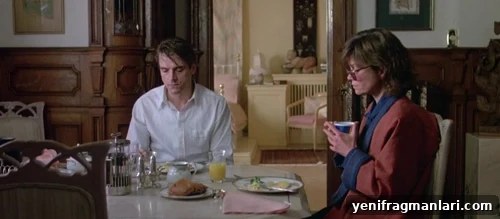
The film examines consent, deception and the ethics of intimate relationships. The Mantles’ practice of impersonating one another to pursue a shared partner raises questions about autonomy and violation; Cronenberg treats this behavior not as the setup for a romantic comedy but as a disturbing symptom of deeper pathology. The brothers’ actions highlight how manipulation and secrecy can warp intimacy into exploitation.
Compared with some of Cronenberg’s more graphic body-horror films, Dead Ringers contains less overt physical mutilation, but the movie is no less unsettling. Surgical instruments are eroticized, and the line between medical procedure and sexual gratification becomes dangerously blurred. The brothers invent crude devices that resemble torture implements more than medical tools, and much of the film’s horror comes from what is implied rather than shown. This restraint often makes the film’s darker suggestions more effective and chilling.
Visually and thematically, the film leans toward the Gothic. The piercing scarlet surgical gowns and austere clinical sets evoke a heightened, almost theatrical atmosphere. Peter Suschitzky’s cinematography favors high-contrast lighting and a cool, clinical palette that emphasizes the Mantles’ emotional detachment and the escalating numbness that accompanies their obsessions. The aesthetic choices reinforce the film’s central conflict between outward competence and inward collapse.
Cronenberg frequently returns to ideas about interiority, the body and the aesthetics of medical intervention. Lines of dialogue that celebrate internal beauty and anatomical curiosity resurface across his work, reflecting a consistent thematic interest in the body’s inner life and the cultural meanings we project onto it. In Dead Ringers, that fascination morphs into a tragic allegory about identity, codependency and self-destruction.
Though some supporting characters receive less development than the central trio, the film’s tight focus on the Mantle twins and Claire produces an intense, claustrophobic drama. The result is one of Cronenberg’s richest and most layered films: stylish, disturbing and emotionally complex. If the Mantles are difficult to empathize with, Jeremy Irons’ nuanced dual performance gives the film its beating heart, while Cronenberg’s singular directorial voice makes the viewing experience both beautiful and deeply unsettling.
Score: 21/24
Rating: ★★★★ (4 out of 5)