
Gladiator II (2024)
Director: Ridley Scott
Screenwriters: David Scarpa, Peter Craig
Starring: Paul Mescal, Pedro Pascal, Denzel Washington, Connie Nielsen, Joseph Quinn, Fred Hechinger, Derek Jacobi, Tim McInnerny, Lior Raz, Alexander Karim, Rory McCann, Alec Utgoff, Matt Lucas, Peter Mensah, Yuval Gonen
Twenty-four years after Ridley Scott’s original epic reshaped modern sword-and-sandal cinema, Gladiator II returns to the Roman world with a fresh cast and ambitious spectacle. The first film earned five Academy Awards and became a cultural touchstone; this sequel aims to recapture the scale, intensity and moral urgency of that landmark while telling a largely new story set around 200 A.D.
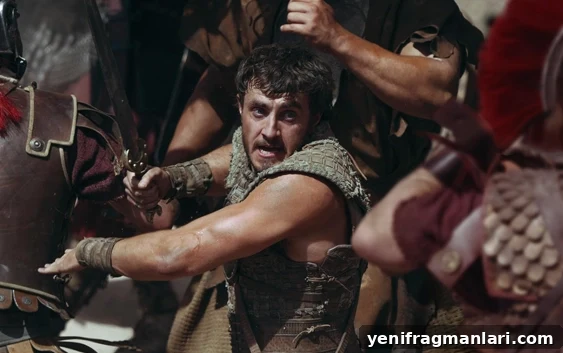
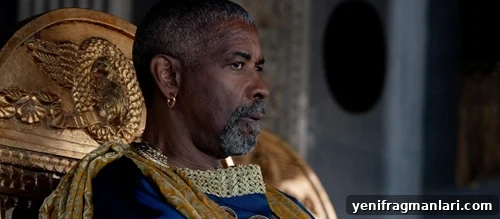
The plot follows Lucius, played by Paul Mescal, now a prince living quietly in exile in North Africa with his wife. When the Roman Empire’s appetite for conquest sweeps across the region, Lucius and his companions are captured and forced into servitude as gladiators. Their fate soon entangles them with volatile twin emperors Geta and Caracalla and the calculating arms dealer Macrinus, portrayed by Denzel Washington, who uses charisma and cunning to pursue ultimate influence. Pedro Pascal appears as General Acacius, an honorable yet conflicted military leader who becomes a focal point of Lucius’s struggle and vengeance.
Ridley Scott’s approach to historical storytelling remains unapologetically cinematic rather than strictly factual. The film draws on real names and episodes from the era—brother emperors who briefly shared power, staged naval shows in the Colosseum, and a decadent elite—yet prioritizes character, drama and spectacle over textbook accuracy. This is clearly a film that uses history as a canvas for human conflict rather than a documentary recreation.
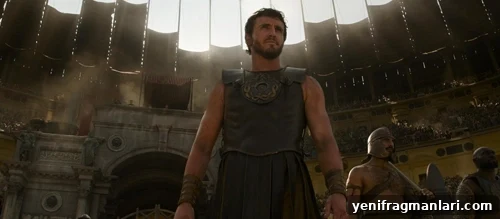
Visually, the movie delivers the muscular set pieces Scott is known for. Large-scale battles, sieges and arena spectacles are assembled from extensive multi-camera coverage and modern visual effects. While contemporary CGI is used to expand the film’s scope, the sequences retain a tactile quality: exploding coastal assaults, chaotic arena brawls, and unsettling encounters with animals create constant physical jeopardy. Importantly, these action moments are crafted to reveal character—each fight teaches us something about who the fighters are and what they value.
Paul Mescal’s Lucius may not yet reach the iconic status of the original Maximus, but Mescal brings natural charisma and credible combat presence. He anchors the film’s emotional arc and holds his own amid striking supporting turns. Joseph Quinn and Fred Hechinger give vividly unhinged performances as the twin emperors, while Denzel Washington commands the screen as a magnetic and dangerous antagonist. Connie Nielsen returns as Lucilla, contributing depth to the family and political dynamics even when the plot adheres to familiar threads about conspiracy and power struggles.
The film expands the gladiatorial world beyond dusty provincial barracks into the heart of Rome. The capital’s well-funded training stables are designed to satisfy the tastes of a wealthy, pleasure-seeking elite who demand ever-more elaborate and brutal entertainments. These sequences contrast opulent spectator rituals with the brutal reality faced by the fighters, underlining social and moral divides without becoming preachy.
Screenwriters David Scarpa and Peter Craig build momentum around an original storyline that explores ambition, loyalty and survival within a decaying empire. The script occasionally leans on familiar sequel beats and nods to the original film’s iconography, but largely strives to stand on its own merits. Where it stumbles is in places where characters could use deeper development; nonetheless, the narrative drive and the film’s thematic clarity keep the audience engaged.
Composer Harry Gregson-Williams takes the musical helm, preserving tonal continuity with sweeping, dramatic cues that amplify action and underscore emotional beats. While Hans Zimmer’s absence may be felt by some, Gregson-Williams supplies a robust and cinematic score that supports the film’s epic ambitions and occasionally echoes motifs that fans of the first film will recognize.
Ultimately, Gladiator II is crafted for viewers who crave grand-scale filmmaking and visceral historical drama. It delivers spectacle, committed performances and richly realized production design. The movie is not an especially subtle meditation on empire, nor is it a flawless screenplay, but its energy, variety of set-piece sequences and strong central performances make it an entertaining and worthy return to the Colosseum. Fans of large-scale, character-driven historical epics will find much to admire, and the film leaves open the possibility of further returns to this world.
Score: 19/24
Rating: 3 out of 5.
Recommended reading: Ridley Scott movies ranked and other retrospective pieces on Scott’s career provide useful context for appreciating how Gladiator II fits within his body of work and the modern revival of large-scale historical filmmaking.