

Whiplash — Ten Years On: A Dark Ode to Ambition
It has been ten years since Damien Chazelle’s explosive jazz drama first hit screens, leaving many viewers exhilarated and unsettled in equal measure.
Whiplash follows Miles Teller as Andrew Neiman, an aspiring jazz drummer at the prestigious Shaffer Conservatory. When Neiman is selected for the school’s top jazz ensemble, he enters a brutal psychological battle with the group’s mercurial conductor, Terence Fletcher, portrayed by J.K. Simmons in a performance that oscillates between charisma and intimidation. Backed by a frantic jazz soundtrack and intense drum sequences, the film might seem like an underdog story on the surface, but it deliberately resists that comforting framing.
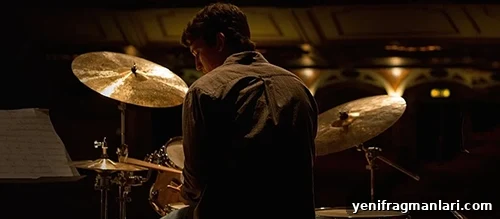
Rather than celebrating a straightforward rise to success, Whiplash interrogates the human cost of obsession. The plot follows familiar beats — a young talent striving for recognition and a demanding mentor who pushes him to extremes — but the film’s focus is less on triumph and more on sacrifice. Neiman does become a technically superior drummer by the end, but Chazelle’s interest lies in the question of what that improvement cost him emotionally, physically, and morally. The film challenges the romantic idea that greatness is worth any price.
“There are no two words more harmful in the dictionary than ‘good job’.”
From the moment Fletcher appears, dressed in black and radiating control, he dominates the space and the people around him. Even viewers unfamiliar with jazz feel the pressure he exerts. Early cues in the script and Simmons’ magnetic performance warn that staying in Fletcher’s favor is crucial — and dangerous. Fletcher’s methods escalate quickly into verbal abuse, intimidation, and humiliation. His belief that true excellence requires relentless pressure becomes both a teaching philosophy and a form of cruelty.
Yet the film refuses to paint Fletcher as a one-dimensional villain. Chazelle offers glimpses of humanity in quieter moments, complicating the audience’s response to him. Fletcher genuinely believes that suffering breeds brilliance; to him, ruthless techniques are justified by the musical heights they might reach. That ambiguity is central to the film’s moral core: the audience can both condemn his tactics and recognize that, in the film’s world, those tactics produce results. This tension fuels debates about whether Whiplash glamorizes self-destruction in pursuit of art.
“Because I want to be great.”
“And you’re not?”
“I want to be one of the greats.”
Neiman proves to be a willing disciple. He idolizes jazz legends, immerses himself in practice, and adopts a worldview that equates suffering with artistic legitimacy. He breaks off a promising relationship, clashes with his father, and increasingly isolates himself in pursuit of perfection. The film repeatedly references the myth of the tortured genius — most notably through stories about Charlie Parker — to rationalize extreme behavior. Whether those anecdotes are accurate or merely rationalizations, they become a dangerous scripture for both teacher and student.
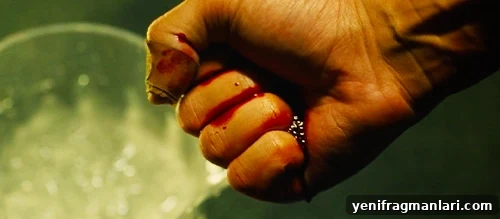
The film spares no detail of the toll this ideology takes. We witness Neiman’s physical injuries, his exhaustion, and moments of near-collapse, captured in visceral images of sweat, trembling hands, and bleeding fingers. Equally important is the psychological erosion: Neiman evolves from an eager, slightly awkward student into someone hardened, aggressive, and unable to recognize the harm he inflicts on himself and others. The movie asks whether the final achievement can justify the sacrifices demanded along the way.
The climax is a high-intensity, twenty-minute sequence in which Neiman turns Fletcher’s final attempt at control into his own triumph. On one level it reads as a classic victory: Neiman nails the elusive “Caravan” arrangement and earns Fletcher’s grudging respect. The scene is exhilarating, visceral, and cathartic. But the film punctures that triumph with a sharp counterpoint: Neiman’s father, watching through a narrow window, looks on with a mixture of awe and horror. His face communicates a grim realization — this is not a victory he can celebrate.
The movie’s final ambiguity rests on a confession Fletcher makes earlier: though he has shaped many musicians, he “never had a Charlie Parker.” Whether Neiman becomes Fletcher’s Parker is left unresolved, and that uncertainty is the point. The film suggests that while Fletcher and Neiman validate each other’s conviction that great art requires great suffering, outside observers — like Neiman’s father and the audience — see the damage more clearly. Rather than offering a tidy endorsement of self-sacrifice, Whiplash leaves viewers to judge whether the cost of artistic greatness is ever justified.
Written by Sadbh Boylan