
Judas and the Black Messiah (2021)
Director: Shaka King
Screenwriters: Shaka King, Will Berson
Starring: Daniel Kaluuya, LaKeith Stanfield, Dominique Fishback, Jesse Plemons
“You can murder a revolutionary, but you can’t murder a revolution.” That line, delivered by Daniel Kaluuya as Fred Hampton, encapsulates the urgency and tragedy at the heart of Judas and the Black Messiah. Shaka King’s film retells the remarkable and devastating true story of the Illinois chapter of the Black Panther Party and the FBI’s efforts to undermine it by turning one of its members into an informant.
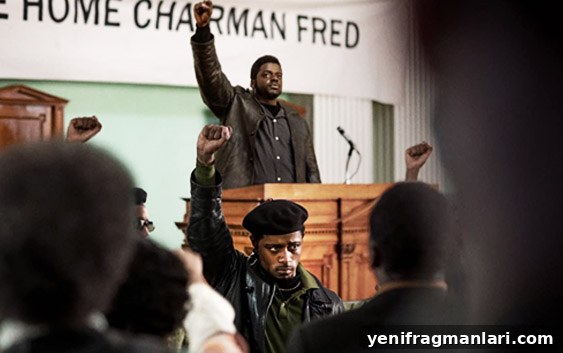
The film follows William O’Neal, known as Bill (LaKeith Stanfield), who avoids prison by agreeing to infiltrate the Panthers as an informant for the FBI. He slowly gains access to the organization and moves closer to its charismatic leader, Chairman Fred Hampton. Hampton, played with magnetic force by Daniel Kaluuya, is portrayed as a powerful orator and organizer who inspired broad community work and posed a threat, in the eyes of federal authorities, to the status quo.
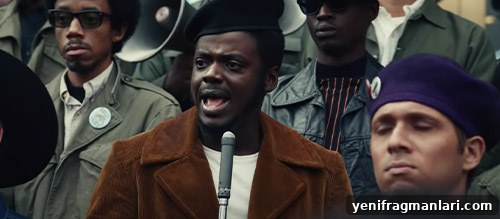
Shaka King balances historical drama with the tension of a crime thriller. The film’s score—stark piano and jittery jazz percussion interrupted by loud brass—creates an audiovisual pulse that underscores the sense of impending conflict. The Black Panthers are shown as disciplined and communal, often wearing black berets and referring to one another as “comrades.” The police and federal agents, represented in blue uniforms and bureaucratic machinery, frame the Panthers as adversaries in a political struggle that often looked like open warfare from both perspectives.
One of the film’s strengths is its effort to broaden public perception of the Black Panther Party beyond violent stereotypes. Judas and the Black Messiah highlights their community programs: free breakfast initiatives, youth activities, and political education that grounded their activism. Fred Hampton’s leadership is shown as collaborative and inclusive; the film hints at his skill in building coalitions across racial and cultural lines, though it does not linger long enough on the full scope of those political efforts.
Kaluuya’s performance as Hampton is the film’s emotional center. He embodies a steady, quiet confidence and oratorical brilliance that clarify why Hampton emerged as such a galvanizing figure. His quieter scenes—moments of tenderness and counsel shared with poet and speechwriter Deborah Johnson (Dominique Fishback)—reveal a human side that deepens the tragedy of what transpires. Fishback brings intelligence and presence to Deborah, but the script gives her limited space to develop beyond her relationship with Hampton.
LaKeith Stanfield matches Kaluuya scene for scene with a volatile, complicated portrayal of William O’Neal. He does not play a simple villain; instead, Stanfield exposes O’Neal’s internal conflicts, fear, and occasional flashes of loyalty. The tension between these two leads—Hampton’s principled leadership and O’Neal’s fragile compromises—drives much of the film’s dramatic power.
Visually and tonally, the film is gripping. A mid-film firefight is staged with visceral intensity, providing a reminder that political struggle in this era was not merely rhetorical. The aesthetic choices—retro production design, period costumes, and a soundtrack that marries menace with melody—give the movie a cinematic energy that keeps the story urgent and immediate.
Still, the film leaves some questions partially explored. The screenplay often skims the surface of Hampton’s broader politics and the full context of the Black Panther movement. Deborah Johnson’s character invites a deeper exploration than the film affords, and William O’Neal’s motivations are sometimes presented as psychological shorthand rather than fully unpacked rationales. These limitations don’t undermine the film’s impact, but they do suggest there is more history and complexity to be discovered by viewers interested in the deeper political currents at play.
Judas and the Black Messiah is both shocking and stylish. It brings a vital, painful chapter of American history into cinematic focus and gives two commanding performances that anchor the film’s moral and emotional stakes. The movie mourns a revolutionary while reminding audiences that the issues Hampton and the Panthers confronted—inequality, policing, and political repression—remain relevant. As a piece of filmmaking, it is likely to be remembered for its urgency, its acting, and its insistence that stories like this be seen and understood.
17/24