
Mud (2013)
Director: Jeff Nichols
Screenwriter: Jeff Nichols
Starring: Matthew McConaughey, Reese Witherspoon, Tye Sheridan, Jacob Lofland, Michael Shannon, Sarah Paulson
Mud is a coming-of-age film that balances stark realism with quiet beauty. Jeff Nichols delivers a restrained, atmospheric story that showcases strong performances—especially from Matthew McConaughey during a period often called the “McConaissance”—and impressive work from the young cast. Working successfully with children and animals, Nichols draws authentic, nuanced performances from Tye Sheridan and Jacob Lofland, both of whom earned recognition for their roles. The result is a film that is thoughtful, emotionally resonant, and worth watching for its craftsmanship and heart.
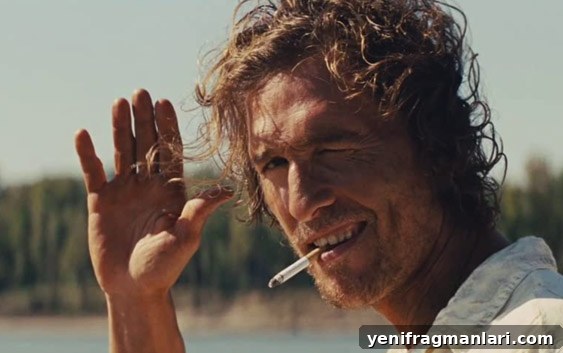
Set along the banks of the Mississippi, the story begins when two boys discover a stranded boat lodged in a tree. That intriguing image sets the tone for an unfolding tale of love, danger, and the messy business of growing up. Inside the boat lives Mud (Matthew McConaughey), a fugitive with a mission: to reunite with Juniper (Reese Witherspoon), the woman he still loves. Mud is both charismatic and damaged, a drifter whose weary charm and quiet intensity make him captivating to the teenage protagonists.
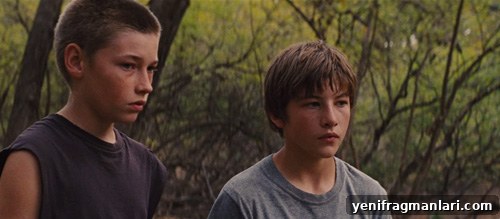
Ellis (Tye Sheridan) and Neckbone (Jacob Lofland) are on the cusp of adolescence, attempting to navigate an adult world that often makes little sense to them. Neckbone is pragmatic and skeptical, motivated by practical rewards—he helps only if he gets something in return, like the boat. Ellis, by contrast, is wide-eyed and emotionally open; he becomes completely absorbed by Mud and the romantic ideal that Mud represents. Sheridan’s performance as Ellis captures the volatile mixture of hope, confusion, and desperation that defines adolescence. His emotions simmer under the surface and break free at moments of compelling intensity.
Much of Mud is about belief—belief in love, belief in heroes, and belief in change. Ellis is dealing with his own fragile family life: his parents are separating, and he clings to black-and-white ideas of right and wrong as a way to make sense of the world. Mud, with his outlaw status and single-minded devotion to Juniper, becomes a kind of heroic figure for Ellis—a living proof that love can be powerful enough to drive someone to extraordinary choices. Juniper herself, portrayed by Reese Witherspoon, is deliberately kept at a distance. She functions more as an idea or a dream than a fully explored character, which suits the story’s focus: Ellis’s perception of adults and his yearning for something larger than his present life.
The narrative is strongest when it traces Ellis’s transformation. Watching him move from naive observer to someone forced to confront uncomfortable truths anchors the film. His realization that he cannot fix every broken thing—especially those belonging to adults—drives the emotional core of the movie. Sheridan’s eventual outburst is one of the film’s most arresting moments, raw and deeply felt.
After a deliberate, slow-building first half, the film erupts into a long, intense climax that borrows the tension and scale of a Western. In this sequence Mud reveals the depth of his loyalty to the boys, and his actions seal the influence he has on their lives. The confrontation is physical and moral, underscoring the themes of loyalty, sacrifice, and the limits of heroism.
Some viewers may notice metaphors linking women and snakes that appear in the film; while such imagery can be read as problematic, Nichols handles these motifs with care. The story centers on boys becoming men, and female characters are presented largely through the lens of those boys’ experiences. That choice reflects the film’s intimate perspective: it tracks how young men absorb, misunderstand, and eventually reevaluate the models of adulthood available to them. The adult male role models in the film are imperfect, which helps explain Ellis’s insistence on believing in love and hope despite repeated disappointments.
Visually, Mud is striking. The Arkansas delta setting functions almost as another character—vast waterways, blinding light, and wide, isolating landscapes give the film a sense of place that is both beautiful and oppressive. The cinematography captures how the environment shapes the lives of people who live on the edges: their hardships, their constrained opportunities, and the way the open water paradoxically traps them. This landscape elevates the film’s mood, amplifying the emotional stakes and the characters’ sense of being hemmed in by circumstance.
The film’s themes—love, loyalty, disillusionment, and coming of age—are familiar, but strong direction, a thoughtful script, and committed performances make Mud feel fresh. It’s a film about the transition from childhood to adulthood, about the fragile and dangerous nature of hero-worship, and about the small, defining moments that force boys to choose who they will become.
Score: 20/24