
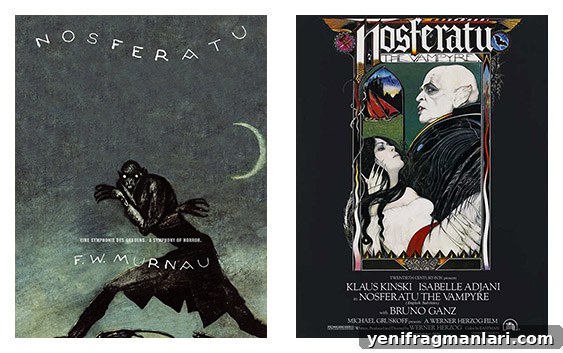
Nosferatu vs. Nosferatu the Vampyre: Murnau and Herzog’s Vampire Visions
The horror genre has produced more remakes than almost any other, and Bram Stoker’s 1897 novel Dracula has been adapted for the screen countless times. Among those adaptations, F. W. Murnau’s silent Nosferatu, released in Germany in March 1922, remains one of the most influential and instantly recognisable films in horror history. Though the Stoker estate successfully sued to have the film destroyed, Nosferatu survived through hidden prints and clandestine distribution, ultimately becoming a foundational text for vampire cinema and popular culture.
Taking on a classic like Murnau’s film is a risky endeavour—if you remake a masterpiece, you need a reason and a fresh perspective. Werner Herzog accepted that challenge 57 years later and crafted Nosferatu the Vampyre, a film that both honours its predecessor and reinterprets the vampire legend for a later generation.
Both films trace their lineage back to Stoker’s novel. They follow roughly the same arc: an aristocratic vampire arrives from faraway lands by ship and preys upon people connected to the solicitor who enabled his move. Characters’ names and roles shift—Dracula becomes Count Orlok in Murnau’s version, and Harker, Mina, and others are altered or reimagined—but the core narrative beats remain intact. The question remains: which of these adaptations holds up best today? Comparing Murnau’s unauthorised silent masterpiece with Herzog’s colour and sound reinterpretation reveals two very different artistic responses to the same myth.
Murnau’s Nosferatu is remarkable on many levels. Screenwriter Henrik Galeen, trying to avoid legal trouble, changed key names—Dracula became Count Orlok, Harker became Hutter, Mina became Ellen—but the Stoker estate still pursued and won a copyright lawsuit, ordering the film’s destruction. Fortunately, some prints survived abroad, allowing the film to re-emerge and secure its place in film history.
Beyond its fraught legal history, Nosferatu introduced elements that have since become staples of vampire lore. Arguably most significant is the idea that vampires are vulnerable to daylight—a departure from Stoker’s Dracula, who preferred nocturnal activity but was not explicitly destroyed by sunlight. Galeen and Murnau changed the ending and introduced daylight as a lethal force, a creative choice that reshaped the myth in popular imagination.
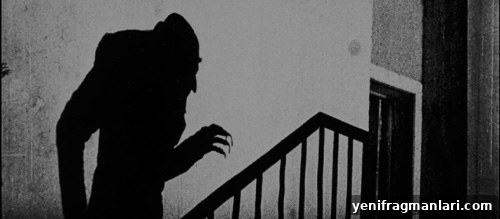
Murnau also gave cinema two of its most enduring images: Count Orlok rising eerily from his coffin and the chilling shadow of the vampire climbing a staircase. Max Schreck’s unsettling physicality created a creature both uncanny and animalistic. Technically, the film often feels modern—sharp action/reaction editing and deftly staged sequences, like the tavern scene where villagers respond to Hutter’s hurried departure, demonstrate an advanced cinematic language for the era.
The film’s subtexts are rich and frequently discussed. Made in inter-war Germany, Nosferatu reflects anxieties about contagion, invasion, and cultural otherness. Themes of plague and theft—whether of blood, virtue, or faith—can be read as metaphors for social fears and the marginalised identities of some of the film’s creators. The vampire’s foreignness and the horror it brings intersect with the era’s xenophobic and anti-Semitic currents, making the film a potent cultural artefact of its time.
Over half a century later, Werner Herzog—an admirer of Murnau—revisited the story with Nosferatu the Vampyre. With Bram Stoker’s novel now in the public domain, Herzog was free to reintroduce canonical names and to blend fidelity to the novel with homage to Murnau. The result is a hybrid: both a remake and a new adaptation that stands on its own artistically.
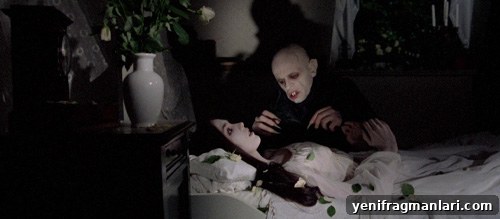
Herzog’s film retains many of Murnau’s scenes in a similar order, yet reinterprets them through his distinctive cinematic sensibility. Herzog blends gothic flourishes with a vérité approach: when the narrative steps away from the supernatural, the camera observes with documentary restraint. That realism extends to his treatment of local Romani culture and superstitions, which are given more authentic attention and woven into the atmosphere surrounding Jonathan Harker’s journey.
Visually and sonically, Nosferatu the Vampyre feels grander. Herzog shot on location in mist-shrouded mountains and medieval towns, using natural landscapes to amplify the film’s sense of place. The orchestral score and choral textures contribute to a sweeping, melancholic tone. Klaus Kinski’s Dracula is ravaged, breathy, and neurotic—a different kind of horror than Schreck’s inhuman stillness, but memorable in its own right. Herzog’s Count often assumes a rodent-like, pestilential quality, reinforced by real rats used in scenes where the vampire’s influence spreads to foreign lands.
Herzog gives new agency to female characters—Isabelle Adjani’s Lucy (standing in for Mina in many respects) becomes more proactive, taking on traits and responsibilities that more closely resemble the novel’s Van Helsing and Harker dynamics as Jonathan Harker’s sanity frays. Herzog’s sceptical, often spiritual outlook informs the film’s themes, notably in lines that question faith and the human capacity to accept uncomfortable truths.
Importantly, Herzog extends Murnau’s divergence from Stoker by deepening the film’s bleak conclusion. Without spoiling details, Herzog implies that evil’s eradication may be illusory, adding a darker coda to the vampire tale that lingers uneasily after the credits roll.
Both films were shaped by very different historical and artistic circumstances. Murnau’s Nosferatu remains the iconic original—an unauthorised but monumental piece of silent cinema whose survival against legal and historical pressure is itself part of its legend. Herzog’s Nosferatu the Vampyre, meanwhile, is a worthy descendant: a reverent yet original reinterpretation that expands thematic depth while acknowledging the visuals and innovations of those who came before. Together, they form a compelling dialogue across decades about myth, cinema, and the enduring shape of the vampire in modern culture.