

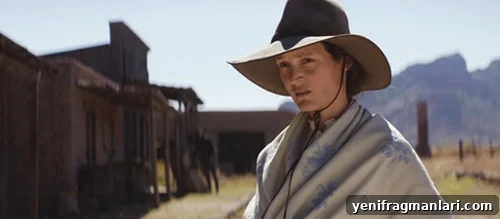
The Dead Don’t Hurt (2024)
Director: Viggo Mortensen
Screenwriter: Viggo Mortensen
Starring: Vicky Krieps, Viggo Mortensen, Solly McLeod, Garret Dillahunt, Danny Huston
Viggo Mortensen’s The Dead Don’t Hurt is a Western that wears its influences openly while staking out its own emotional territory. The film recalls the visual and thematic sensibilities of classic directors such as John Ford — the kind of filmmakers who shaped the genre by balancing wide, cinematic horizons with intimate human drama. Mortensen’s second feature as director is confident and deliberate: it blends sweeping landscapes, measured pacing, and close character study to create a thoughtful reimagining of frontier storytelling.
Shot largely in the rugged terrains of Durango, Mexico, the film benefits from the lens of cinematographer Marcel Zyskind, whose compositions emphasize both the vastness of the frontier and the small, private worlds the characters build within it. Mortensen’s screenplay favors a non-linear structure, moving between moments before, during, and after the central relationship, which helps the film reveal its emotional stakes gradually and with growing resonance.
At its core the film follows Olsen (Viggo Mortensen), a taciturn Danish immigrant and army veteran, and Vivienne (Vicky Krieps), a spirited florist from a French-Canadian background. They meet on the docks of San Francisco and form an unlikely partnership that evolves into a tender marriage and family life in a secluded valley outside a small Midwestern town. Their home is modest and sheltered from the town’s dusty saloon, petty criminals, and a controlling local establishment, but the peace they create is fragile and constantly threatened by forces both personal and historical.
Vivienne is a bright, independent presence — defiant against the period’s restrictive expectations for women and unafraid to speak her mind. Mortensen’s script allows her to be complex: she is both nurturing and formidable, and her courage anchors much of the film’s emotional momentum. Early on the film discloses Vivienne’s death, a choice that shifts the mood from mystery to elegy and casts every subsequent scene in a light of remembrance and foreshadowing. Knowing the outcome, the audience watches her actions and words with added poignancy, sensing how small gestures and conversations accumulate into a life fully lived.
Olsen, by contrast, embodies a quieter traditionalism. He is disciplined, morally driven, and burdened by duty. When the Civil War calls him to join the Union army, he leaves his wife and young son behind to fight — a decision that propels the film into themes of honor, sacrifice, and the search for retribution. Mortensen plays Olsen with an understated intensity; his chemistry with Krieps feels lived-in and convincing, and their scenes together provide the film’s emotional core.
The movie resists the genre’s most familiar action beats. Instead of depicting lead characters who turn every conflict into a gunfight, Mortensen favors restraint and interiority. Olsen and Vivienne are ordinary people whose resilience and shared understanding define them more than any display of violence. That choice gives the film a human scale: it is less about mythic heroism and more about how two people strive to keep a fragile life intact in a harsh landscape.
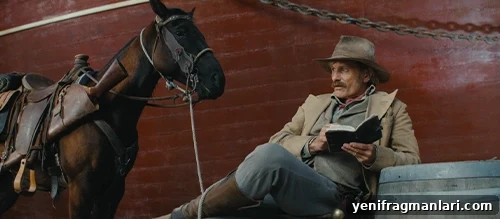
Mortensen’s direction occasionally lets scenes breathe longer than necessary; some stretches feel deliberately languid, and the non-linear timeline can require attentive viewing to follow. Still, the film largely succeeds in reassembling its pieces so that emotional logic replaces strict chronological clarity. Flashbacks and memory sequences deepen our understanding of Vivienne’s past and the antagonists who threaten her life, especially the film’s portrayal of Weston Jeffries (Solly McLeod), a cruel and unpredictable presence whose actions precipitate the story’s darkest turns.
Vicky Krieps brings a layered strength to Vivienne, avoiding stock archetypes and offering instead a portrait of resilience. Her performance is central to the film’s appeal, giving the story a heroine who is both vulnerable and unflinching. Mortensen’s Olsen complements her well: together they portray a partnership that feels real, tender, and occasionally wry, with small, revealing moments of shared humor and mutual understanding.
Musically and tonally, Mortensen’s contributions—he also composed the score—are subtle, underscoring mood rather than pushing the melodrama. The result is a Western that privileges atmosphere and character over spectacle, one that rewards viewers who appreciate deliberate storytelling and emotional nuance. The film is not a radical overhaul of the genre, but it is an artful variation that highlights quieter kinds of bravery.
While not strictly a manifesto on gender, The Dead Don’t Hurt does center a strong female lead in a genre that has often sidelined women’s perspectives. By doing so it broadens the emotional scope of the Western, showing how love, loss, and personal resolve can be just as compelling as any showdown.
Score: 18/24
Rating:
Rating: 3 out of 5.
Written by Patrick Hayes