
In the Heat of the Night (1967)
Director: Norman Jewison
Screenwriters: Stirling Silliphant
Starring: Sidney Poitier, Rod Steiger, Warren Oates, Quentin Dean
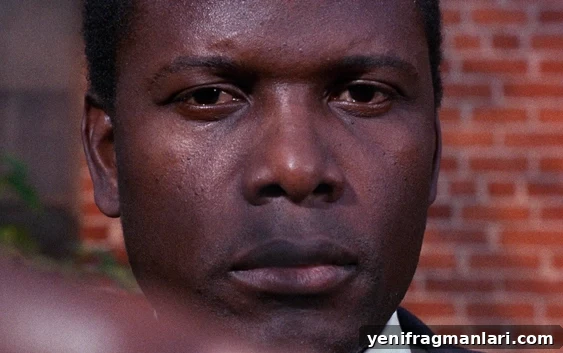
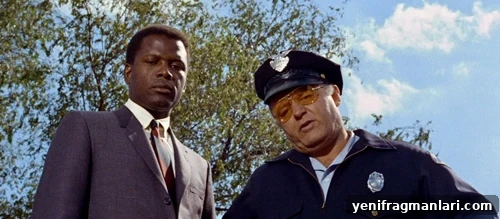
The sultry, mosquito-laden night in Sparta, Mississippi, sets the scene for a tense and revealing crime drama. A local detective, Sam Woods (Warren Oates), discovers industrialist Philip Colbert dead on his property. At the same time, Virgil Tibbs (Sidney Poitier) arrives by train after visiting his mother. Tibbs is clearly an out-of-towner with money in his wallet and no obvious motive, but the social climate of 1960s Mississippi quickly frames him as suspect. Because he is Black, the local officers do not hesitate to arrest him without the evidence they would otherwise require. This arrest launches the film’s examination of both a murder mystery and the racial hierarchy of the American South.
Released at the height of the Civil Rights era, In the Heat of the Night operates on multiple levels. On the surface it is a taut, well-crafted police procedural and an odd-couple partnership narrative: the urbane Northern detective versus the rough-hewn Southern police chief. Beneath that, though, the film is an urgent social drama. It captures the tensions of a transitional America where segregation laws were being contested and national debates about equality were unavoidable. Virgil Tibbs, a competent and respected detective from Philadelphia, becomes an instrument through which the story exposes the everyday humiliations and institutional prejudice that Black Americans faced in the Deep South.
At the Sparta police station, Chief Gillespie (Rod Steiger) initially takes pride in what he believes is a straightforward arrest. That pride dissolves when it becomes clear they have detained a professional detective rather than a drifter. Gillespie’s reaction shifts from suspicion to cautious pragmatism, and when his own superiors suggest allowing Tibbs to assist with the investigation, the chief and the detective find themselves forced into collaboration. Their uneasy alliance develops into mutual respect, and their evolving relationship drives much of the film’s dramatic and emotional momentum.
The film’s portrayal of the town amplifies the social gulf: in a community where Black residents are seen performing menial labor and presumed to occupy a fixed social status, the idea of a Black man who commands authority and expects respect is both foreign and threatening. Scenes that highlight this tension—conversations in small rooms, hostile stares, and public insults—create a layered portrait of everyday racism that underpins the crime narrative. By weaving these social dynamics into the investigation, the film shows how prejudice obstructs justice and distorts truth.
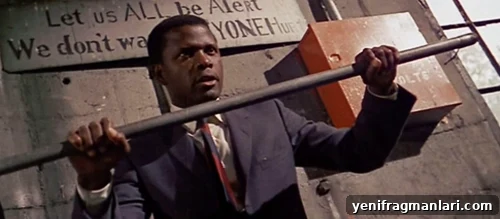
Compared with later, more visceral explorations of racial violence and systemic oppression, such as films that adopted a raw, confrontational approach to injustice, In the Heat of the Night can feel restrained. It shares more in common with classic mainstream dramas like To Kill a Mockingbird and with other Sidney Poitier vehicles that sought to introduce themes of racial equality to broad audiences. However, its restraint does not diminish its importance. The movie was written and shot during the same era it depicts, and in a Hollywood less willing to confront such topics bluntly. As a result, its careful balance between commercial appeal and social critique helped open doors for more explicit films that followed.
Norman Jewison’s direction emphasizes atmosphere and steady pacing. Long takes, deliberate camera movement, and nocturnal lighting produce a feeling of tension and unease appropriate to both mystery and moral inquiry. The plot’s twists and red herrings are anchored by a strong central mystery and well-timed reveals, while supporting characters—among them a vulnerable young woman and a variety of town figures—populate the story world with believable texture.
Rod Steiger’s Chief Gillespie is an imperfect protagonist: gruff, skeptical, and shaped by his times. He is neither a moral paragon nor a caricature; his slow moral growth and willingness to revise his assumptions make him compelling and relatable. Sidney Poitier’s Virgil Tibbs, by contrast, displays remarkable composure and dignity. Tibbs’s calm professionalism and inner strength create a striking counterpoint to the hostility he faces. A pivotal moment arrives when Tibbs responds physically to an insult from a wealthy local: that brief eruption of anger humanizes him, offering a powerful reminder of the personal toll of sustained humiliation.
Critically acclaimed on release, the film earned numerous awards and nominations, including recognition at the Academy Awards. Its enduring strengths—taut storytelling, nuanced performances, and a willingness to interrogate social injustice within a mainstream format—have secured its position in film history. More than a period piece, In the Heat of the Night remains a compelling detective thriller and a resonant exploration of race, authority, and integrity.
Score: 23/24