
The Russo brothers pulled off a staggering feat with Avengers: Endgame, assembling dozens of heroes, weaving a time-travel story that revisits earlier films, and staging an epic battle that decides the fate of the world. Balancing fan service with emotional weight, juggling humor and sorrow, and providing meaningful conclusions to character arcs that span more than a decade—all established by different writers and directors—was an almost impossible task. That they achieved it so effectively is a testament to Kevin Feige, the Russos, and the wider Marvel Cinematic Universe, which have raised the bar for large-scale event filmmaking.
What stands out about Endgame is how it depends on the history of the MCU while still functioning as its own chapter. Calling it simply “Infinity War 2” would undersell its ambitions: the film gives new directions to familiar characters. Thor confronts failure and depression; Tony Stark faces a fresh moral dilemma about sacrifice and legacy; and Steve Rogers, Captain America, undergoes perhaps the most compelling transformation of all.

I’ve never been a huge fan of Captain America. Early on, the character felt more like a symbol than a person: an almost flawless moral compass who always puts the needs of many before his own. As a narrative foil to Tony Stark, that steadfast virtue made sense, but it also made the character less interesting to viewers who prefer morally complex heroes. In Captain America: The First Avenger, Steve Rogers is introduced as scrawny, determined, and brave—the classic origin of a man transformed by the Super Soldier Serum. Even with the serum, though, he remains essentially human, yet different in tone from other MCU figures. When he emerges in The Avengers as a man out of time, his old-fashioned righteousness functions as a counterbalance. For some viewers, however, that solidity can feel one-dimensional compared with the flawed, emotionally messy characters that populate the rest of the franchise.
In Endgame, that perception shifts. The film gives Captain America room to grow beyond the archetype. Instead of relying solely on strength and a black-and-white moral code, Steve operates with more nuance and cunning. A memorable callback to Captain America: The Winter Soldier finds him infiltrating an elevator full of undercover HYDRA agents—not by loudly confronting them, but by pretending to be one of them to achieve his goals. He even deploys a low, almost comic tactic in a battle by hitting himself (from another timeline) in the groin—an underhanded moment that reveals a willingness to bend the rules when necessary.
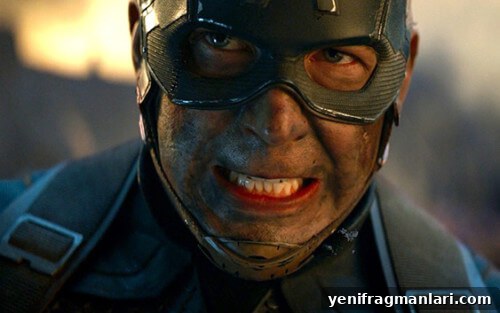
The final battle in Endgame gives Cap some of the most iconic imagery in the film. He is tenacious and resolute when the odds are overwhelming; watching him stagger to his feet again and again is genuinely stirring. The long-anticipated moment that was hinted at in earlier films finally pays off when he lifts Mjolnir, proving himself “worthy” and turning the tide, however briefly. The sight of a battered, bloodied Captain America clinging to a broken shield is one of the movie’s defining images, and Chris Evans delivers the emotional and physical performance needed to sell those moments.
Yet the most affecting achievement in Endgame isn’t just the spectacle—it’s the humanization of Steve Rogers. Small scenes seed his emotional resolution long before the finale. After the snap, he facilitates a support group for survivors of the Vanishing, wearing an ordinary plaid shirt and using his own experience of returning to a changed world to help others cope. That image—Steve quietly guiding people through grief—reveals a softer, more reflective side that contrasts with the battlefield commander audiences have known.
The film’s time-travel sequences deepen Steve’s personal stakes. When he and Tony travel to 1970, Steve glimpses Peggy Carter through a window, painfully close but unreachable because of the mission’s constraints. That moment crystallizes everything he has sacrificed. At the end of the film, Steve makes the choice to return to the past and live the life he was denied, growing old with Peggy and finally stepping away from the shield. The aged Steve who appears at the close of the story passes the mantle of Captain America to Sam Wilson (the Falcon), signaling a new chapter for the character and the universe.
These quieter human moments—Steve choosing love and a life over endless duty, the passing of a legacy—are where the character becomes most compelling. He stops being an abstract emblem of virtue and becomes a man who loved, lost, adapted, and ultimately chose peace. That shift is what makes Endgame an emotionally satisfying farewell.
I still wouldn’t call myself a lifelong Captain America fan, but the Russos succeeded in turning the character into someone I care about. They gave Steve Rogers a definitive ending that honors his history while making him feel grounded and human alongside the imperfect, relatable heroes of the MCU. Avengers: Endgame serves as a fitting and moving send-off to the first Avenger, and for that it deserves praise.