
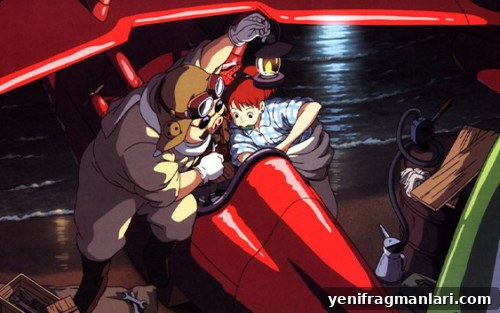
Porco Rosso (1992)
Director: Hayao Miyazaki
Screenwriter: Hayao Miyazaki
Starring: Shūichirō Moriyama, Akio Ōtsuka, Tokiko Kato, Tsunehiko Kamijō, Sanshi Katsura, Akemi Okamura
Porco Rosso is an unusual and quietly enchanting film from Studio Ghibli co-founder Hayao Miyazaki. It imagines an inter-war Mediterranean populated by colorful pilots, sky pirates, privateers and freelance mercenaries, all flying charming, characterful aircraft. Against that playful backdrop, Miyazaki asks serious questions about honor, identity and the lingering costs of conflict.
Miyazaki adapted his own manga to tell the story of Marco Pagot, better known as Porco Rosso (voiced by Shūichirō Moriyama). Porco is a celebrated pilot with an infamous appearance: literally pig-faced, world-weary, cynical and witty. He takes on any job if the price is right, which has earned him both renown and enemies. When a sudden defeat in the air leaves him without his dependable plane, Porco must rely on a small circle of friends and allies to reclaim his aircraft and, more importantly, his dignity.
On the surface, Porco Rosso is one of Miyazaki’s wittiest films, packed with sharp one-liners and buoyed by a buoyant, storybook color palette. Yet beneath its warm animation and comic banter is a clear social conscience. The film critiques the arms trade and the motivations of those who profit from conflict. Miyazaki’s curt moral distinction — “War profiteers are villains. Bounty hunters are just stupid” — underlines the director’s skepticism toward those who manufacture or exploit violence for gain.
The film also offers a rarer political focus for Miyazaki: it points a critical eye at Italian fascism in the inter-war period rather than defaulting to Germany as the sole antagonist. This choice roots Porco Rosso more firmly in a version of our own history, where the aftermath of World War I and the rise of authoritarian politics leave deep, complicated traces on individuals and societies.
Under its sunny skies, the film explores darker themes: greed, ego and the ways former soldiers adapt to peacetime. When war ends, many who once fought don’t simply retire; they search for new outlets for their skills and ambitions, often with mixed motives. At its heart, the film becomes a character study of two insecure men trying to outdo each other. Porco is stubborn and salty, but his rival, the brash American ace Donald Curtis, escalates their feud into increasingly petty one-upmanship. That rivalry, while amusing at first, ultimately exposes deeper flaws in both men.
One of the film’s greatest achievements is its portrayal of flight. Miyazaki and his animators capture the dreamlike freedom of flying with a delicate, hand-drawn grace that rivals even modern CG productions. Moments when Porco soars above the sea feel liberated and poetic; the animation conveys weight, wind and exhilaration with an economy of line and color that remains deeply affecting.
The film is not flawless. Its handling of gender and young characters is uneven. It’s encouraging to see an all-female group of aeronautical engineers presented with competence and pride, yet Miyazaki stumbles with the portrayal of the seventeen-year-old Fio (Akemi Okamura). Fio’s infatuation with the middle-aged Porco and scenes that depict her being ogled or treated as a prize feel uncomfortable in a movie many consider family-friendly. Those moments complicate the film’s otherwise progressive qualities and invite a critical eye.
Despite these misgivings, Porco Rosso remains a vibrant, affectionate and thought-provoking adventure. It balances rousing aerial sequences with wry satire, melancholy reflection and genuine warmth. The film’s humor, visual charm and moral curiosity are classic Miyazaki: whimsical on the surface, quietly serious underneath.
19/24