
The Souvenir: Part II (2021)
Director: Joanna Hogg
Screenwriter: Joanna Hogg
Starring: Honor Swinton Byrne, Tilda Swinton, Charlie Heaton, Jaygann Ayeh, Richard Ayoade
Joanna Hogg’s cinema has always felt deeply personal, and with her 2019 film The Souvenir she dissected the early days of her career and a devastating personal loss with a quiet, daring intelligence. That film was intimate enough to crack a heart with a single glance, and it shifted tone with a fearless sense of self-awareness. With The Souvenir: Part II, Hogg does something rarer still: she takes an already remarkable work and refines its vision into a richer, more self-reflective continuation about art, grief and discovery.
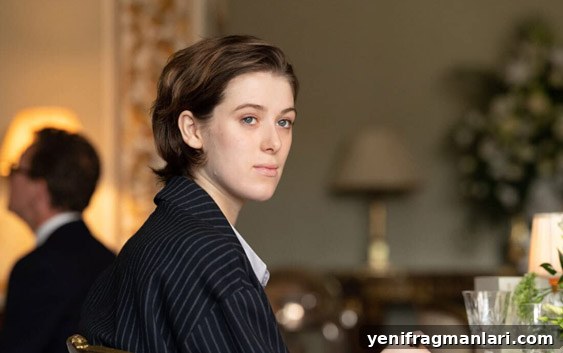
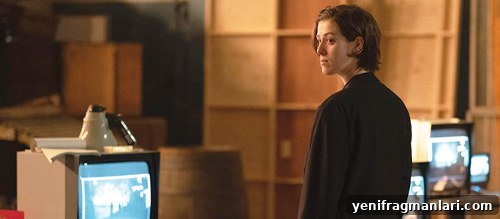
Like its predecessor, Part II follows Julie (Honor Swinton Byrne) through film school as she attempts to transform painful, private experience into a cinematic project. The central tension of the film is Julie’s struggle to separate artistic necessity from memory: how do you honour lived truth while shaping it into art? Julie faces criticism for a perceived lack of direction in her film and must confront the ways her memories and emotions complicate her creative choices. The film reads as an oblique mirror of Hogg’s own early filmmaking—echoes of her short film Caprice and even the making of the original Souvenir are felt throughout—but it remains resolutely Julie’s story: a quest to understand the enigmatic figure of Anthony and to reach a fragile peace with his self-destructive choices.
Honor Swinton Byrne holds the film aloft with a performance that is both restrained and devastating. As Julie she moves seamlessly between ordinary, conversational moments and sudden floods of grief; her face—especially her eyes—carries most of the film’s emotional freight. Julie frequently withdraws from the immediacy of her surroundings to relive, to feel and to reckon with loss, and Swinton Byrne makes those interior departures feel inevitable and wholly believable. Anthony’s absence haunts the film like a shadow, and the actress’s capacity to translate that lingering sorrow into small, precise gestures is one of the movie’s abiding strengths.
That sorrow informs virtually every creative choice in The Souvenir: Part II. The poetic title cards that punctuated the first film are largely absent here—where the original offered a series of verbal interludes, this sequel allows silence and atmosphere to carry the burden. Intimacy is often undercut by a distracting mundanity: an orgasm photographed as a passenger hears only passing cars; the mechanical hum of engines emphasizes Julie’s disconnection from her partner, her environment and herself. In a striking scene with Charlie Heaton, a brief, meaningless sexual encounter ends with a moment of physical messiness that reads like an allegory—his face stained, lifting toward the camera as if extracting something from Julie. It’s a blunt, unsettling image that interrogates male roles in women’s lives and resonates with the autobiographical undercurrents of Hogg’s work.
Throughout the film, Julie’s interactions with men are laced with frustration and disappointment. Whether they are careless lovers or critical collaborators, the men around Julie force her to defend herself in ways that exacerbate her grief. Even characters portrayed as supportive—Jaygann Ayeh’s Marland, for example—reveal masculine traits that inadvertently diminish her experience. A single raised voice or an offhand dismissal carries weight when someone is already fragile. At home, Julie’s father William offers a particular kind of passive support that reads as minimization: when Julie’s film or her mother’s pottery becomes important to them, his casual dismissal—calling the pottery “silly,” for instance—underscores a deeper lack of understanding and amplifies Julie’s sense of isolation.

It is in the evolving depiction of these relationships that The Souvenir: Part II shifts its centre of gravity. The sequel gradually reveals itself as not only a study of grief but also a tender, complicated portrait of the bond between mother and daughter. Tilda Swinton’s Rosalind is quieter here than some of her more flamboyant roles, but the restraint only heightens her impact. As Rosalind grows more present in Julie’s life, she becomes a source of empathy and quiet strength—an emotional anchor who understands loss in ways others cannot. Given the autobiographical elements threading the film, these moments of maternal solidarity feel vital: Rosalind’s combination of love, support and perceptiveness culminates in one of the film’s most powerful sequences, when she attends Julie’s short-film premiere, composed and elegantly dressed, her anticipation and pride obvious in small, controlled gestures.
Rosalind emerges as the person best equipped to relate to Julie’s sorrow. While many male figures in the film are loud, awkwardly confident or oblivious—Richard Ayoade’s Patrick providing a dose of comic arrogance—Rosalind occupies a gentler, steadier moral centre. She becomes Julie’s confidante and the emotional interlocutor through whom the film resolves much of its tension.
Stylistically, Hogg continues to deploy a disciplined visual language. Some of the film’s most affecting moments are almost still tableaux: people in large, luminous rooms, the camera lingering as the light shifts across faces. The director’s authorial touches are still present—shards of formalism that contextualize the action while allowing the emotional core to breathe. A standout montage toward the end of the film works as both a formal flourish and a cathartic release; it echoes classic cinematic sequences in its construction and may prove overwhelming for viewers who remain open to its emotions.
The Souvenir: Part II is a rare sequel that deepens rather than dilutes its source. Joanna Hogg has mined her subject with rare honesty and artistic rigor, producing a film that feels both intensely personal and universally resonant. The result is cinema that honors grief without exploiting it, that finds art in the act of remembering and that positions a young woman’s creative awakening at the centre of its narrative. For many viewers, the film will offer scenes of such quiet power that their effects linger long after the credits roll.
24/24