
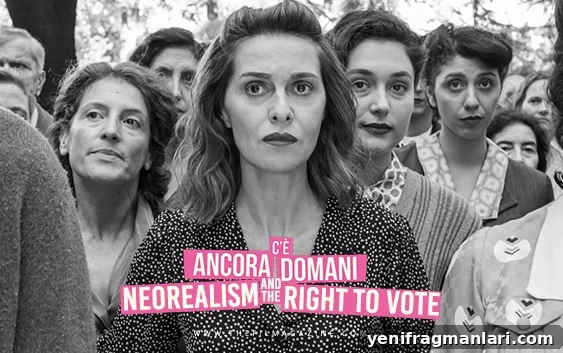
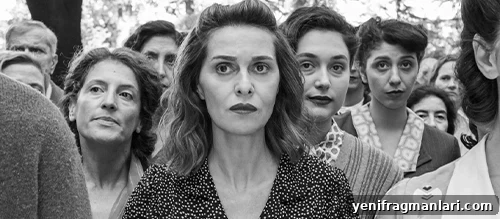
In a year shaped by consequential elections, the right to vote feels especially urgent. Paola Cortellesi’s 2023 directorial debut, C’è Ancora Domani (There’s Still Tomorrow), brings that urgency to the foreground by dramatizing the struggle Italian women faced as they won and exercised the vote for the first time. The film sensitively charts their journey toward a public voice and the tensions that arose as women tried to reconcile long-standing private responsibilities with emerging civic duties. Best known for her roles in contemporary Italian comedies, Cortellesi reinterprets elements of classic Italian neorealism for a modern audience, blending period authenticity with contemporary cinematic language.
Set in Rome in 1946, C’è Ancora Domani follows Delia, played by Cortellesi, in the days preceding the pivotal election for the Constituent Assembly. Italians would choose between preserving the monarchy or founding a parliamentary republic — a decision shaped by the devastation of the Second World War and the urgent need for reconstruction and reform. On June 2 and 3, 1946, the nation voted in what became the first national election to include women, bringing millions of previously excluded citizens onto the political stage for the first time.
Cortellesi tells an intimate, everyday story of a working-class family in a struggling Roman suburb, drawing on the hallmarks of neorealism to convey authenticity. Italian neorealism emerged after the war as filmmakers sought to depict the real conditions facing ordinary people: economic hardship, ruined cities, and social dislocation. These films often focused on working-class protagonists and used real locations and nonprofessional actors to emphasize truth over artifice. Under the fascist regime, cultural production had been tightly controlled and censored; the collapse of that regime allowed filmmakers to expose social neglect and question authoritarian narratives. Cortellesi echoes that impulse, bringing personal experience and historical context together to illuminate a critical moment in Italy’s democratic rebirth.
Delia sustains her family through a patchwork of jobs: she nurses for a wealthy household, does sewing work, and washes laundry for better-off clients. She returns each evening to a modest apartment where her wages are tracked by Ivano, her abusive husband. Days are shaped by exhausting routines: work, market visits, small moments of camaraderie with other women, and the relentless maintenance of domestic space. The film captures how that cycle traps many women of the era, even as the possibility of political participation looms on the horizon.
Shot in black and white, Cortellesi’s film immediately conveys historical texture. The working-class focus — a close, compassionate study of one household — recalls later films that took inspiration from neorealist principles. Yet Cortellesi does not simply recreate the style of the 1940s. She intentionally merges classical and contemporary elements to make the story resonate today: domestic abuse is sometimes choreographed like a dance, scenes are scored with modern-sounding jazz, and moments of youthful rebellion are accompanied by unexpected musical choices. These decisions underline the film’s effort to speak across generations while remaining grounded in a specific historical moment.
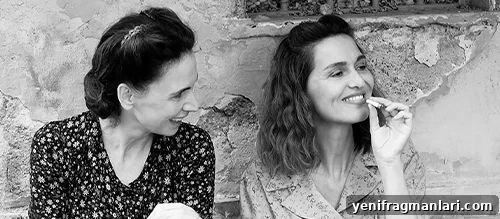
The political backdrop — the imminent 1946 election — heightens the film’s emotional stakes. That election signaled a redefinition of women’s roles in public life and, soon after, changes in citizenship rights. Cortellesi uses this context to invite viewers to reflect on both historical progress and the unfinished work of gender equality. While the film embraces neorealist textures, it resists being a pastiche; instead, it draws on the tradition to ask contemporary questions about power, agency, and family.
The mother-daughter relationship at the center of the film is carefully observed. Marcella, Delia’s eldest, is thrust into adult expectations early: she leaves school, speaks in the local dialect, and faces limitations that confine her socially and linguistically. Her engagement to Giulio, the son of a prosperous bar owner, begins tenderly but turns controlling and menacing. As Giulio’s temper reveals itself, Delia recognizes echoes of her own marriage and takes steps — including seeking help from William, an American soldier in the area — to protect her daughter and break destructive patterns.
Cortellesi has said the film draws on real stories from women she knows, aiming to illuminate both change and continuity across generations. Through Delia and Marcella, the narrative traces how abusive dynamics can persist unless challenged, and how political enfranchisement intersects with intimate freedom. The film’s title, There’s Still Tomorrow, works on multiple levels: it marks the literal urgency of Delia’s attempt to vote despite personal obstacles, and it offers a cautious optimism about progress and the possibility of a fairer future.
By blending neorealist sensibilities with modern filmmaking choices, C’è Ancora Domani provides a moving portrait of resilience. It honors ordinary women’s experiences while insisting those experiences belong at the center of national history. Cortellesi’s film reminds viewers that historical moments of change are made up of small, often painful personal reckonings — and that the call for equality remains both urgent and ongoing.
Recommended for you: Where to Start with Italian Neorealism
Written by Jenson Davenport
You can follow Jenson Davenport on Letterboxd: /jensoon.