
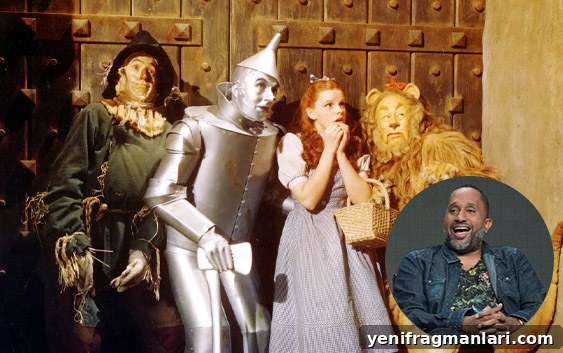
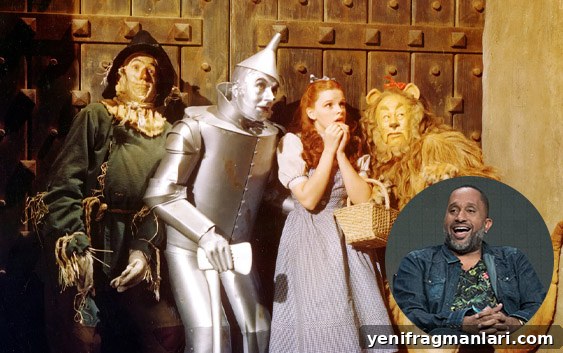
Warner Bros. is moving forward with a remake of the Golden Age classic The Wizard of Oz (1939), and Kenya Barris, creator of the acclaimed series Black-ish, has been tapped to write, direct, and produce the new reimagining.
Sources indicate this project will be a contemporary reimagining of the iconic 1939 film that starred Judy Garland as Dorothy Gale, a young girl who is swept away to a fantastical land of witches, talking companions, and magical challenges. While details remain limited at this early stage, the creative team is being assembled under Barris’s production banner, Khalabo Ink Society, with Sheila Walcott attached as an executive producer on behalf of Warner Bros.
Kenya Barris is best known for creating Black-ish, a series praised for its blend of comedy and social commentary. Over the past several years he has expanded into feature films and studio collaborations, earning writing credits on titles such as Girls Trip, Shaft, The Witches, Coming 2 America, and Cheaper by the Dozen. Those projects have produced a range of critical and audience responses, and many fans of the original Wizard of Oz will be watching closely to see how Barris approaches such a beloved property.
As a director, Barris is preparing to make his feature debut with the 2022 comedy You People, a project he co-wrote with Jonah Hill. That film examines modern cultural clashes, societal expectations, and generational differences, and features a cast that includes Eddie Murphy, David Duchovny, and Julia Louis-Dreyfuss. Barris’s experience across television and feature writing, together with his interest in contemporary social themes, suggests the new Wizard of Oz could blend modern sensibilities with the classic story’s timeless elements.
Remaking a film as iconic and culturally significant as The Wizard of Oz is a complex undertaking. The original 1939 production has endured for generations due to its memorable performances, technicolor visuals, musical score, and emotional resonance. Any modern adaptation must negotiate fans’ nostalgia and the original’s legacy while finding a fresh point of view that justifies revisiting the material. Producers and creatives often face the challenge of balancing faithfulness to core themes—identity, courage, friendship, and the search for home—with contemporary storytelling techniques and diverse representation.
Early reactions to news of the remake are mixed: some audiences are optimistic about a new director bringing contemporary relevance and new perspectives to Dorothy’s journey, while others are cautious because previous high-profile reimaginings in the industry have sometimes failed to capture what made their originals special. Given Barris’s background in socially conscious comedy and character-driven storytelling, observers are curious to see whether he will emphasize new themes, update character dynamics, or preserve the original’s musical and fantastical spirit.
Warner Bros.’ decision to develop a fresh interpretation follows a broader trend in Hollywood of reexamining classic properties through modern lenses. When done thoughtfully, such projects can introduce classic stories to new generations and expand their cultural significance. Conversely, rushed or purely commercial remakes risk alienating long-time fans and diluting the original work’s impact. The involvement of an experienced production team and a clear creative vision will be essential to the remake’s reception and success.
At this stage, specific production details — including casting, musical approach, visual design, and a production timeline — have not been announced. As the project moves forward, more concrete information about creative choices, collaborators, and release plans is likely to be revealed. For now, the announcement marks an important development: a major studio entrusting a contemporary storyteller with one of cinema’s most enduring titles.
Kenya Barris’s role as writer, director, and producer places him at the center of the creative direction for this new Wizard of Oz. His past work suggests an interest in blending humor with social commentary, and the remake will be an early indicator of how those sensibilities translate to a family-oriented, fantastical musical adaptation. Whether the film will lean into the original’s musical legacy, reinterpret key characters, or take a wholly new narrative approach remains to be seen.
Fans and observers will be watching for official announcements about casting, composers, and design teams in the months ahead. The balance between honoring the original 1939 film and offering a distinct, modern perspective will determine how this new Wizard of Oz is received by critics and audiences alike.