
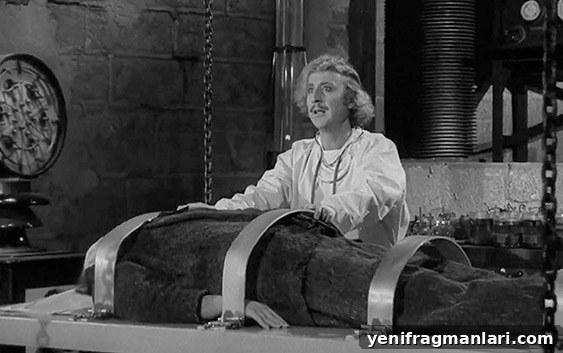
Young Frankenstein (1974)
Director: Mel Brooks
Screenwriters: Mel Brooks, Gene Wilder
Starring: Gene Wilder, Teri Garr, Cloris Leachman, Marty Feldman, Peter Boyle, Gene Hackman
Mel Brooks’s 1974 comedy Young Frankenstein, co-written with Gene Wilder, remains one of cinema’s most affectionate and enduring parodies of classic horror. Built as an overt tribute to Mary Shelley’s novel and, more directly, to the 1930s–40s film adaptations, the movie balances reverence and satire in a way few spoofs have managed. It became both a critical and commercial success on release, earning Brooks and Wilder an Academy Award nomination for Best Adapted Screenplay and cementing the film’s reputation as a high point in Brooks’s directing career.
What sets Young Frankenstein apart is its craftsmanship. Brooks and Wilder adopt period film techniques—shooting in black and white, using wipes and fades, and even employing old-fashioned title cards—to recreate the atmosphere of vintage horror while layering in modern comedic beats. The result feels like a loving pastiche rather than simply a string of pop-culture gags. Even viewers unfamiliar with every reference can enjoy the pacing, the visual style, and the smartly written humor.
Critics and audiences have kept the film in high regard for decades. It frequently appears on lists of the funniest films ever made and is widely cited as one of the best examples of genre parody. Contemporary retrospectives have praised the film’s technical polish and the way its production values amplify the comedy: the carefully composed shots and deliberate mimicry of classic cinematography allow the absurd moments to land with greater contrast and impact.
The cast is a major reason the film still works so well. Gene Wilder delivers a memorable lead performance as Dr. Frederick Frankenstein—equal parts nervous energy and inspired physical comedy—creating a protagonist who is both unmistakably Wilder and sympathetic in his own odd way. Peter Boyle’s performance as the Monster captures the tragicomic heart of the role; his physicality and timing evoke the 1930s originals while remaining distinct. Marty Feldman brings unpredictable comic spark as Igor, and Cloris Leachman and Teri Garr provide excellent supporting work, offering sharp contrasts and laugh-out-loud moments. Even a brief cameo from Gene Hackman stands out for its boldness and humor.
One sequence that has entered comedy lore is the film’s rendition of “Puttin’ On the Ritz,” a scene that blends showmanship, absurdity, and exuberant choreography. It’s a perfect example of how Brooks and his cast can take a whimsical detour and make it feel integral to the film’s tone rather than an unrelated gag. That blend of theatricality and cinematic parody is part of what keeps the film fresh and replayable.
More than just a string of gags, Young Frankenstein demonstrates how parody can be an act of appreciation. Brooks and Wilder clearly loved the material they were spoofing, and their affection shows in every frame—from the set design and lighting to the carefully constructed comic beats. This respect for the source material elevates the film above many lesser spoofs that rely on cheap contemporary references or repetitive punchlines.
Nearly fifty years after its release, the film still reads as both a loving homage to classic horror and a standout example of American comedy filmmaking. It holds up due to its strong performances, meticulous production design, and well-crafted screenplay. For fans of vintage horror, classic comedies, or simply smart satire, Young Frankenstein remains essential viewing. Alongside Brooks’s Blazing Saddles, it also represents the peak of a particularly fertile period in his career and stands as an early showcase for Gene Wilder’s distinctive comic talent.
20/24