
Memories of Murder (2003)
Director: Bong Joon-ho
Screenwriters: Bong Joon-ho, Shim Sung-bo
Starring: Song Kang-ho, Kim Sang-kyung, Kim Roe-ha, Song Jae-ho, Byeon Hie-bong, Ko Seo-hie, Park No-shik, Park Hae-il
Memories of Murder stands as one of Bong Joon-ho’s most accomplished early works: a taut, darkly comic crime thriller rooted in a real-life investigation. Long before international acclaim for The Host and the award-winning Parasite, Bong crafted this finely tuned blend of police procedural and social critique. Newly remastered in 4K, the film’s atmosphere—its rain-soaked landscapes, shadowed roadways, and damp interrogation rooms—feels sharper and more immediate than ever, offering audiences a chance to revisit or discover a modern classic of Korean cinema.
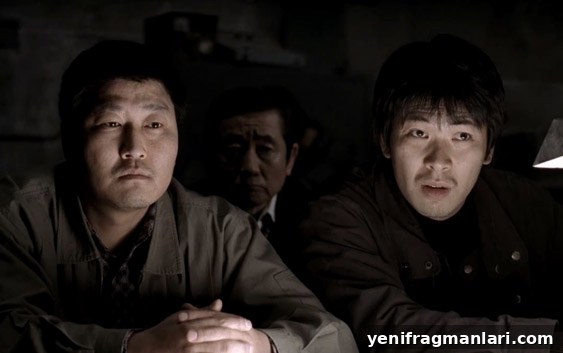
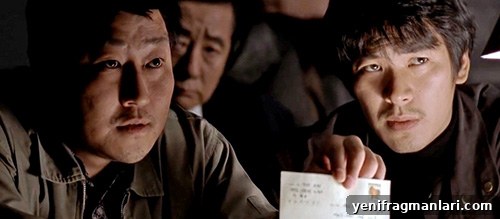
The story reimagines the investigation into the Hwaseong serial murders (1986–1991), following a squad of detectives who struggle to catch a cunning and elusive killer. The three central investigators could not be more different: Detective Park (Song Kang-ho) is brash and impulsive, trusting instincts that often lead him astray; Detective Cho (Kim Roe-ha) is brutal, quick to use torture in pursuit of confessions; and Detective Seo (Kim Sang-kyung) is a methodical, big-city officer committed to procedure. Under intense media scrutiny and political pressure, the team resorts to desperate measures as evidence remains scarce and the murderer continues to strike.
The film opens with a grim discovery—an anonymous victim found in a drainage pipe—and soon establishes a chilling pattern. Subsequent murders reveal similarities in the way victims were bound and assaulted, and the investigators begin to suspect they face a serial offender. Clues are fragmentary: attacks happen during rainstorms, a particular radio song is requested before incidents, and the victims share other small, haunting details. These thin threads force the detectives into speculative reasoning and sometimes damaging assumptions.
Bong Joon-ho balances bleak subject matter with a strain of macabre humor that feels uniquely his. He finds dark comedy in the characters’ interactions and the clumsy operation of local policing. Scenes that could be purely grim are punctuated by absurdity—the chaotic arrival of technicians at a crime scene, the destruction of vital footprints by a passing tractor, and the strange normalcy of suspects and investigators sharing a meal between bouts of interrogation. These moments humanize the characters while amplifying the tragedy of their failures.
Set in the turbulent 1980s, the film also operates as a critique of authoritarian systems and institutional incompetence. Senior officials and political pressures distort the investigation; quick fixes and public-relations results matter more to the leadership than thorough, patient detective work. Riots and state response create interruptions—blackouts and troop deployments compromise evidence gathering and stretch police resources—underscoring how public unrest and government heavy-handedness can hamper justice and obscure truth.
The cast delivers uniformly strong performances, with Song Kang-ho as the emotional core. His portrayal of Detective Park is at once comic and heartbreaking: a man who leans on instinct and bluster because it is the only way he knows to confront chaos. Kim Sang-kyung’s Detective Seo provides a moral counterpoint, increasingly frustrated as procedural rigor proves insufficient. As the case grows colder and the pressure mounts, both men—along with their colleagues—become visibly worn, haunted by what they cannot fix. The film’s final sequences, laden with rain and lingering images, leave a lasting sense of unresolved sorrow.
Memories of Murder remains powerful for its careful tone, blending suspense and satire while interrogating institutional failure and human fallibility. It marks an early demonstration of Bong Joon-ho’s command of large themes and tonal shifts, skills that would later define his international successes. This 4K restoration makes the film’s cinematography and atmospheric detail sing, deepening appreciation for its meticulous craft and emotional weight.
For viewers interested in exceptional Korean crime dramas, landmark works of modern cinema, or the early art of a director who would go on to reshape global filmmaking, Memories of Murder is essential viewing. Its combination of investigative tension, black humor, and social critique keeps it compelling and relevant decades after its release.
24/24
Recommended for you: Bong Joon-ho Films Ranked