
The Others (2001)
Director: Alejandro Amenábar
Screenwriter: Alejandro Amenábar
Starring: Nicole Kidman, Christopher Eccleston, Fionnula Flanagan, Alakina Mann, James Bentley, Eric Sykes, Elaine Cassidy
The horror genre continually evolves, yet it often returns to timeless anxieties that never go away. Alejandro Amenábar’s 2001 film The Others is a modern gothic thriller that taps into those enduring fears. Combining austere visuals, a central performance by Nicole Kidman, and a carefully constructed twist, the film remains compelling and unsettling more than two decades after its release.
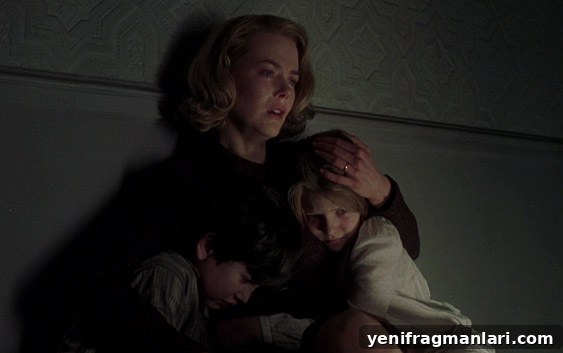
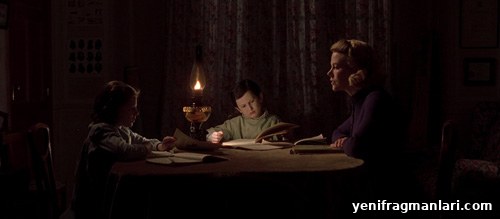
Set in 1945 on the Channel Islands following the end of the Nazi occupation, the story centers on Grace Stewart (Nicole Kidman), who lives in near-total isolation in a large manor house with her two light-sensitive children. Their condition forces the household to remain in darkness, and Grace clings tightly to her faith and routine while awaiting news of her husband’s return from the war. When three new servants arrive unexpectedly, a series of unexplained occurrences begins to disturb the fragile order of the household. As Grace confronts footsteps, disappearing curtains, and other unaccountable events, the film quietly builds a mounting sense of dread.
Amenábar’s direction pays clear homage to the suspenseful restraint of mid-century thrillers, particularly the films of Alfred Hitchcock. Rather than relying on graphic violence or constant jump scares, The Others revives classic techniques of suggestion and atmosphere. The film’s scares come from what is hidden—shifting shadows, the creak of a staircase, a piano that seems to play itself—forcing the audience to imagine the terror alongside the characters. This restraint proves powerful: the unknown becomes the primary vehicle of fear.
Light itself is a thematic and practical antagonist in the film. Because the children suffer severe photosensitivity, sunlight is not a refuge but a threat. One of the film’s most unnerving sequences occurs when Grace wakes to find every curtain in the house removed and sunlight flooding the rooms. Instead of relief, this revelation heightens panic. The inability to simply wait for morning or switch on a light sustains an underlying anxiety that persists throughout the story.
Cinematographer Javier Aguirresarobe paints the film in muted greens and blues, alternating with candlelit warmth to build a cohesive gothic palette. Though much of the action unfolds in darkness, the camera remains precise and deliberate, often lingering on everyday details until they become ominous. Amenábar, who also composed the score, balances eerie, foreboding passages with occasional whimsical, almost childlike themes. These lighter musical moments provide brief relief from the tension and emphasize the vulnerability of the children at the center of the tale.
Beyond its style, The Others engages with deeper questions about belief, mortality, and doubt. Grace’s rigid faith is tested as events undermine the comforts of certainty. Amenábar examines how confronting the unknown can shake foundational beliefs—what happens when religious answers feel insufficient, or when grief and loss render familiar explanations hollow? The film uses the ghost story to probe those anxieties, asking whether peace is possible after death or whether some souls remain trapped in a liminal state.
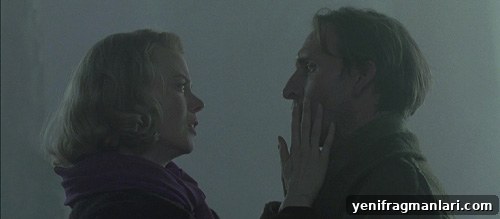
The film rests on Nicole Kidman’s performance, which anchors every emotional turn. Kidman portrays Grace with a controlled, almost formal physicality—rigid posture, precise gestures—that slowly unravels as the narrative tightens. Her gradual emergence of vulnerability and fear makes Grace a fully human protagonist rather than a mere archetype. Christopher Eccleston, in a smaller but notable role as Grace’s husband, brings a subdued intensity and a sense of haunted loneliness to his appearances, enhancing the film’s themes of loss and the lingering effects of war.
The third act arrives swiftly, delivering a revelation that forces viewers to reassess everything that came before. The twist is both inevitable and devastating: once revealed, it invites repeat viewings that reward close attention to the film’s careful clues. Knowing the ending does not diminish the emotional impact; instead, it deepens appreciation for the film’s craftsmanship.
Amenábar has spoken about his upbringing in a religious environment and the film’s interest in the limits of certainty. The Others is not merely a ghost story but a meditation on doubt—on what remains of faith when faced with inexplicable events. Ultimately, the film suggests that accepting uncertainty can bring a kind of release, even as it confronts the fear of what comes after death.
Score: 23/24
Written by Margaret Roarty
You can support Margaret Roarty:
Twitter – @ManicMezzo
Podcast Instagram – @justmythoughtsonitpod
Podcast Twitter – @thoughtsonitpod
Listen to Just My Thoughts on It – Anchor