Hymn of Hate (2018)
Director: Matt Kennard
Screenwriter: Matt Kennard
Starring: Russell Tovey, Thomas Turgoose, Andrew Knott
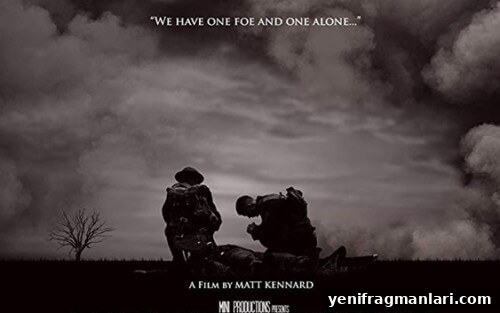
Hymn of Hate opens with a hushed swell of wind and a black screen that allows the credits to settle before anything else. A deep, deliberately composed war score guides the camera as it tracks across a field, revealing two young soldiers making their way toward the crest of a hill. Dialogue is sparse: nearly half a minute passes before a single line is uttered. That restraint invites the viewer to absorb the mood and the details—sound design, composition, costume—and to lean into the mounting sense of unease. When one character asks, “Why would he send us out now?” the film frames an early question about leadership, duty and the precariousness of orders in wartime.
The score rises and, after another measured pause, the two men drop to a kneeling position as tension spikes. A quick, economical cut thrusts the audience into the moment, establishing the film’s ability to move from quiet observation to acute urgency in an instant. That dynamic—stillness interrupted by danger—distills a wartime experience built on uncertainty, fear and split-second decisions.
This confident opening signals the hand of Matt Kennard, directing his first short with a composure beyond a typical debut. Kennard’s staging, pacing and control over each visual and aural element defines the film’s nine-odd minutes, and his choices repeatedly reward careful viewing. The result is short-form storytelling that feels fully formed: economical without being sparse, intimate without losing thematic scope.
The film benefits enormously from its central performances. Russell Tovey and Thomas Turgoose bring grounded, lived-in work to their roles, while Andrew Knott rounds out the cast with a reliable presence. Each actor is given space within the frame to let small gestures and silences speak as loudly as words. Their interactions with a wounded German soldier they encounter create a compact but powerful exploration of common humanity amid conflict. That brief, fragile connection becomes the film’s emotional center, revealing how individuals on opposing sides can recognize shared vulnerability and dignity.
Beyond its emotional core, the short performs thoughtful social commentary. It interrogates hierarchy and class—how rank and orders shape who lives and who dies—and it nudges viewers to consider contemporary resonances, such as nationalism and racial prejudice, without resorting to heavy-handed polemic. The film’s strength lies in its ability to suggest rather than lecture: visual cues and character choices invite reflection on how societies organize themselves in war and peace.
Production values support the material with authenticity. Wardrobe and production design feel lived-in and appropriate to the era, and the cinematography leans into natural textures and muted palettes that underscore the film’s somber mood. In-camera choices and restrained editing help maintain a truthful atmosphere that never tips into melodrama. Every element—from the choice of lenses to the sound of grass underfoot—works to keep the viewer rooted in the scene’s emotional and moral stakes.
Most compelling is the film’s insistence on empathy. Rather than relying on spectacle or contrived sentiment, it cultivates a quiet compassion through character work and careful storytelling. The result is a moving, humane portrait of a few moments shared by individuals on opposite sides of a larger conflict. Kennard and his cast and crew treat their subject with respect and maturity, and the film reads as a thoughtful tribute to lives affected by war.
Hymn of Hate is an effective, affecting short that honors the gravity of its subject while offering a measured meditation on connection and consequence. As a debut from a director with a clear sensibility—and with strong performances from a talented cast—it stands as a respectful and emotionally resonant piece of filmmaking.
Score: 20/24