
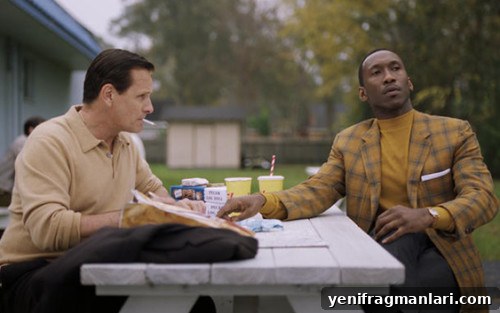
When I binge-watch Best Picture nominees, I’m trying to understand what elevates a film from good to great. Not every nominee must reinvent cinema, but each should offer something distinct or emotionally true. Green Book contains excellent performances from Mahershala Ali and Viggo Mortensen, yet those strengths are often undermined by larger problems in the script and tone. In a year when films like Black Panther and BlacKkKlansman confronted race and identity head-on, Green Book feels misaligned and poorly timed.
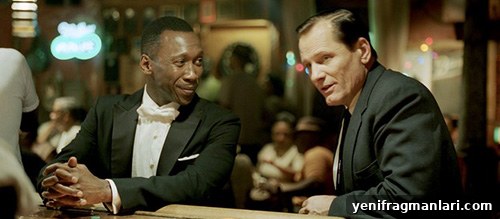
Mahershala Ali (left), Viggo Mortensen (right).
Green Book sets out to be a story about connection and transformation: Dr. Don Shirley (Mahershala Ali), an accomplished pianist, hires Tony Lip (Viggo Mortensen) as his driver for a concert tour through the American South. The film intends to depict two men from very different backgrounds who learn from one another and, in the process, confront the racism of the era. At its best, that premise can yield a moving character study. In practice, this film often settles for sentimental convenience instead of sustained, honest engagement with the racial realities it dramatizes.
Early scenes establish Tony and his family as casually racist—using slurs and behaving in ways meant to “protect” their sense of normalcy. By the end, the family warmly invites Dr. Shirley to Christmas dinner, and readers are meant to accept this as proof of real change. That trajectory is appealing on a human level, but it also feels rushed and reductive. The film sometimes shortcuts difficult conversations in favor of tidy reconciliations that avoid the deeper work required to reckon with systemic prejudice.
One striking example is a sequence involving fried chicken. Tony insists that because Dr. Shirley is Black, he must have tried fried chicken before. When Dr. Shirley objects and points out that race has nothing to do with culinary preference, Tony persists—and then shoves a piece of chicken into Dr. Shirley’s face to end the argument. Rather than using this moment to probe the absurdity and harm of stereotyping, the film moves on to a montage of the two men sharing the meal, scored to feel-good music. That tonal pivot deflates the possibility of a substantive exchange about stereotypes and leaves the viewer unsure of what point the film intended to make.
The film’s tendency to treat Tony’s racism as simple ignorance rather than culpability is another problem. Tony is repeatedly framed as “not smart” about race, as if that explanation is enough to absolve him. This approach risks excusing persistent casual racism by attributing it to a lack of awareness rather than confronting the choices and behaviors that perpetuate inequality. A more searching script would have pushed Tony harder, allowing for genuine accountability rather than sentimental forgiveness.
Another persistent issue is the film’s narrative focus. While Green Book centers around both men, the story often reads as Tony’s journey first and Dr. Shirley’s second. That choice feels ironic because the larger arc—an African-American virtuoso navigating a hostile, segregated South—seems like it should belong to Dr. Shirley. The film provides some glimpses into Shirley’s loneliness and isolation, but it rarely explores his motives in depth. Why did he choose this tour? What did he hope to accomplish or confront? The screenplay hints at backstory but doesn’t follow through, leaving Dr. Shirley’s inner life underdeveloped at the same time the film relies on him as the catalyst for Tony’s growth.
Mahershala Ali gives a restrained and nuanced performance that suggests greater complexity than the script allows. Viggo Mortensen is convincing as Tony’s gruff exterior softens over time. The music and several conversational scenes are genuinely enjoyable, and there are moments of warmth and humor that work. Yet those elements feel like pieces of a better movie rather than components of a cohesive whole.
Ultimately, Green Book succeeds on the level of craft and performance but disappoints as a serious exploration of race and reconciliation. It is, in many respects, textbook Oscar-bait: amiable, well-acted, and safe. Those qualities can carry a film, but when they obscure the film’s moral and historical contradictions, the result feels hollow. For a Best Picture contender, the film’s failure to fully confront its themes or give Dr. Shirley the central voice his story merits makes it difficult to justify its place among the year’s most meaningful films.
In short, Green Book contains rewarding performances and pleasant moments, but it often sacrifices complexity for comfort. It attempts to advocate for unity, but that ideal is undercut when the movie avoids the harder conversations that genuine progress requires. As a result, it reads as a film content to play it safe rather than to challenge its audience—and that’s a significant limitation for a movie occupying the Best Picture conversation.