
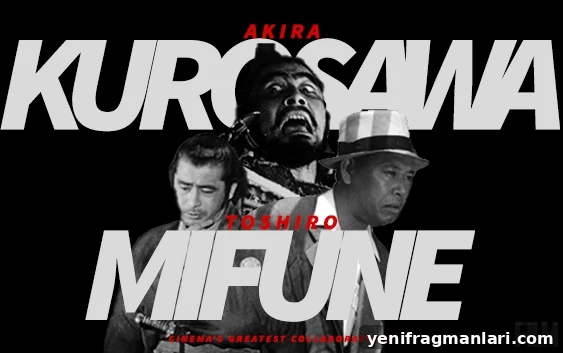
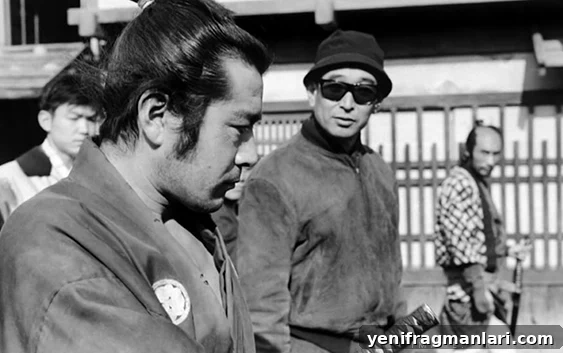
Few creative pairings in mid-20th century cinema are as instantly recognisable as director Akira Kurosawa and actor Toshiro Mifune. Over eighteen years and sixteen films, the two crafted a body of work that remains fundamental to Japanese and world cinema. Their collaborations spanned genres—from gritty crime dramas and tender romantic pieces to Shakespearean adaptations, folklore-infused tales, and stirring jidaigeki samurai epics—each project benefiting from a unique, intense creative energy.
Both men entered the film industry during World War II in different capacities—Kurosawa directing propaganda pieces and Mifune serving in the aerial photography division of the armed forces—before finding lasting homes at Toho Studios. Mifune was discovered through a “New Face” casting call after failing to secure his preferred job as a camera operator, while Kurosawa worked his way up from assistant director under Kajirō Yamamoto to become a respected writer-director. Together they formed a partnership that would define their careers.
Kurosawa placed enormous value on a robust screenplay and often worked with a close team—writers, cinematographers, and a trusted inner circle—who refined scripts much like a modern writers’ room. The “Kurosawa-gumi” included collaborators such as Ryūzō Kikushima, Shinobu Hashimoto, cinematographer Asakazu Nakai and script supervisor Teruyo Nogami. Kurosawa’s exacting approach to story and structure combined with Mifune’s explosive presence produced films that were meticulously planned yet electrified by spontaneous, visceral performances.
Their first meeting reportedly made a powerful impression on Kurosawa, who described Mifune as a young man “reeling around the room in a violent frenzy,” a raw force that immediately captured his attention. Mifune’s intense stare, booming voice and fearless commitment made him unforgettable even within large ensemble casts. Kurosawa often constructed vivid sequences to showcase what Mifune could do, allowing a sometimes uncontainable star to inform the director’s visual imagination while still fitting within Kurosawa’s strict creative vision.
The partnership was not without tension. Both men prepared rigorously and sometimes clashed, but that friction yielded remarkable results. After a difficult and much-delayed shoot on Red Beard (1965), the collaboration ended and the two men went their separate ways. Mifune continued to work successfully in Japan and internationally, while Kurosawa experienced a prolonged creative and personal struggle before a modest resurgence around Kagemusha (1980). Neither repeated the sustained heights of their joint work.
Selecting a few films to represent the Kurosawa–Mifune catalogue is challenging, so a seasonal approach highlights one collaboration from different stages of their partnership: early “spring,” a mid-career “summer,” an “autumn” example, and finally a late “winter.” These selections illustrate the range and depth of their collaboration.
Spring: Stray Dog (1949)
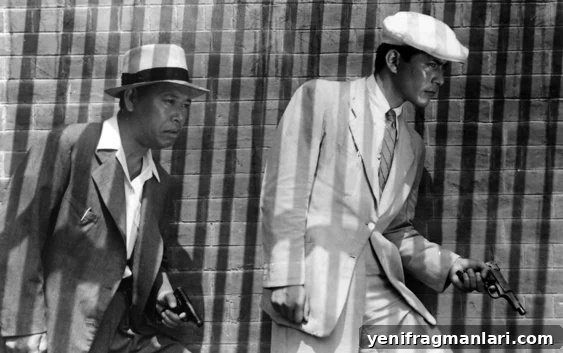
In Stray Dog, Mifune steps away from his frequent portrayal of Yakuza heavies to play Detective Murakami, a young policeman who loses his gun on crowded transport and spirals into desperation trying to recover it. This role allowed Mifune to reveal vulnerability and insecurity alongside the explosive energy he was known for. The film is an intense urban drama that exposes the humiliation and moral strain of a cop who must confront his own inadequacies while pursuing a thief through postwar Tokyo’s underworld.
Murakami’s repeated failures—chasing witnesses, being outmaneuvered by petty criminals, and ultimately relying on the steadier Detective Sato—allow Mifune to show range: from raw frustration to fragile humanity. One of the film’s most affecting scenes finds a weary detective confiding in a sex worker who, moved by pity, supplies crucial information. That mixture of pathos and social realism marks Stray Dog as one of the finest early Kurosawa–Mifune collaborations.
Summer: Throne of Blood (1957)
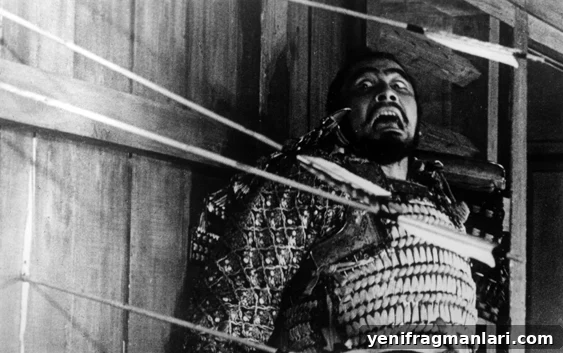
Throne of Blood is Kurosawa’s moody reimagining of Shakespeare’s Macbeth, transposed to a stylised, atmospheric feudal Japan. Mifune embodies the volatile Lord Washizu, a charismatic leader whose simmering instability gradually erupts into unmoored madness. Drawing on Noh theatre aesthetics and Japanese folklore, the film replaces the witches with an ominous forest spirit and uses stark, theatrical visuals to heighten the tale’s supernatural dread.
Kurosawa’s commitment to realism sometimes verged on recklessness—Mifune was famously shot at with real arrows in the film’s climactic sequence—illustrating the intensity both director and actor brought to their work. Kurosawa trusted Mifune to build his own performances from a raw kernel of instinct; the director would set the framework and allow Mifune license to develop his character, a dynamic that produced electrifying results.
Autumn: The Bad Sleep Well (1960)
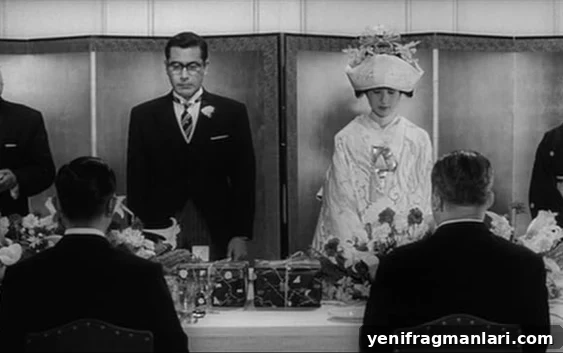
In The Bad Sleep Well, Mifune plays Kōichi Nishi, a restrained and inscrutable avenger who infiltrates a corrupt construction firm to exact revenge for a family tragedy. Far from his usual explosive persona, here he is calm, measured and unnerving in his reserve. The film allowed Kurosawa to explore corporate malfeasance in postwar Japan with a darker, more politically charged edge, and Mifune’s controlled performance anchors the narrative’s slow-burning intensity.
The Bad Sleep Well marked Kurosawa’s move to independent production and a willingness to tackle social critique more directly. Its noirish structure, moral urgency and Mifune’s coldly efficient presence make this film one of the director’s most politically engaged and thematically complex works.
Winter: Yojimbo (1961)
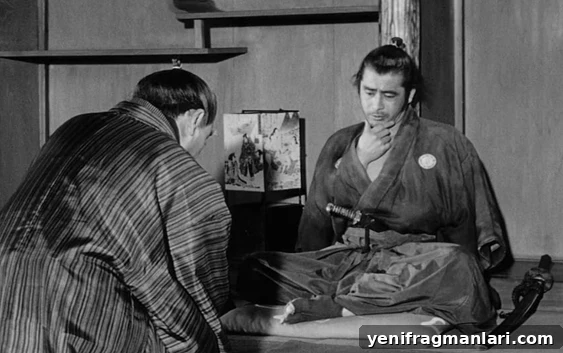
Yojimbo introduced a nameless rōnin—shabby, laconic, and deceptively languid—who manipulates rival gangs into destroying one another. The film’s mixture of sly humour, stylised violence, and kinetic staging made it hugely influential worldwide and spawned the sequel Sanjuro as well as inspiring international reinterpretations. Mifune’s ability to switch instantly from droll indifference to explosive ferocity gives the character depth and unpredictability.
Kurosawa called Yojimbo a film he wanted audiences to enjoy; it represents a lighter, more entertaining side of his filmmaking while simultaneously shaping future action cinema. The final showdown—Sanjuro standing alone in a windswept street against a gang—remains one of cinema’s most enduring images of a lone hero’s sudden, devastating competence.
Across decades and genres, Kurosawa and Mifune pushed one another to extremes of craft and imagination. Their partnership combined meticulous directorial planning with an actor’s fierce spontaneity. Though their relationship eventually fractured and they spent long periods apart, both men recognised the significance of their collaboration. Late in life, Kurosawa summed up their shared legacy: “When I look back on each and every film, I couldn’t have made them without you. You gave so much of yourself. Thank you, my friend.”