

It’s difficult to name another film that has exerted such quiet, pervasive influence as Blade Runner. Although its initial release in 1982 brought mixed reviews and modest box-office returns, the film steadily infiltrated the cultural consciousness. Ridley Scott’s proto-cyberpunk neo-noir, starring Harrison Ford as Rick Deckard — a blade runner in 2019 charged with hunting four rogue humanoid replicants — met resistance at first, but ultimately became a touchstone for visual style, thematic depth, and speculative imagination.
After multiple versions (the original theatrical cut, the Director’s Cut, and the Final Cut), Blade Runner is now much closer to Scott’s intended adaptation of Philip K. Dick’s Do Androids Dream of Electric Sheep? The film’s neon skyline, Vangelis’s haunting synth score, Syd Mead’s visionary design, and the ever-present rain and fog create a dreamlike urban landscape that lingers long after viewing. Its influence extended to Denis Villeneuve’s 2017 sequel, Blade Runner 2049, which won Roger Deakins his first cinematography Oscar and earned acclaim for its visuals and design, further cementing the franchise’s legacy.
Blade Runner is rich with iconic images, memorable lines, and subtle touches that reward repeated viewing. This list highlights ten of the film’s most powerful moments — scenes that capture its themes, visuals, and emotional core.
Follow @thefilmagazine on X (Twitter).
10. A Hard Copy
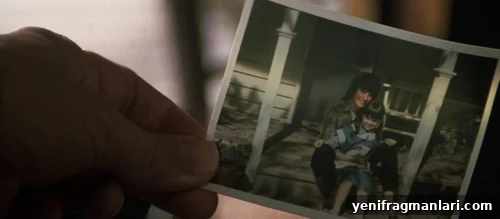
A small but crucial moment reveals how Blade Runner imagines near-future technology. Deckard asks a computer to scan and manipulate a photograph — tracking left and right, zooming in and out — until a previously invisible tattoo becomes visible from unexpected angles. The brief exchange and the mechanical sounds are woven into Vangelis’s soundtrack, and the sequence quietly reinforces the film’s core idea: perception is malleable, and technology can alter the apparent facts of a single image. The scene advances Deckard’s investigation while underscoring the film’s postmodern theme that reality and illusion blur in a world of shifting viewpoints.
9. Gotta Shoot Straight
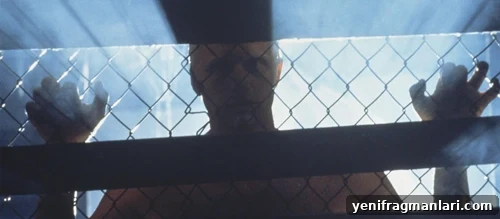
The final chase between Deckard and Roy Batty through the dilapidated Bradbury building is startlingly anti-Hollywood. Instead of spectacle, the sequence delivers tense, intimate beats: Deckard terrified and wounded, Batty oscillating between rage and existential pain. The ruined, Gothic interiors give the pursuit a tragic gravity. Batty, nearing the end of his built-in lifespan, alternates violent outbursts with moments of near-childlike fury and despair. Their confrontation becomes less a battle of bullets than a clash of mortality and meaning, culminating in a rooftop finale that feels almost Shakespearian in its emotional stakes.
8. Spinner Flight
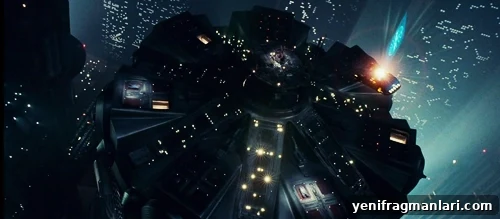
Blade Runner is often described as a deliberate, unhurried film, and Scott frequently pauses to let the world of 2019 Los Angeles breathe. The spinner flight that carries Deckard to the police station is a perfect example: practical effects, layered miniatures, and meticulous lighting create a moment of pure cinematic wonder. The descent and the cityscape that surrounds it are less about narrative momentum than establishing atmosphere — a fully realized, towering, rain-drenched metropolis that has influenced generations of filmmakers, architects, and artists. This sequence helped define the look of cyberpunk urban design for decades to come.
7. What’s a Tortoise?
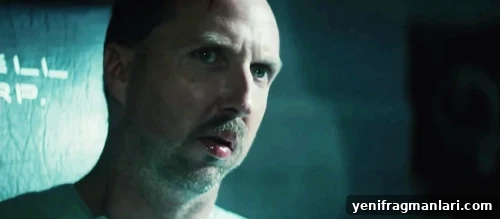
Inside the Tyrell Corporation, the Voigt-Kampff test introduces us to the replicant-detection procedure and to Leon, whose increasingly agitated responses escalate into violence. The test’s dialogue — including a question about tortoises versus turtles — subtly introduces a central theme: things that are different can nonetheless appear indistinguishable. The scene uses tight noir lighting and a clinical atmosphere to set the film’s moral and philosophical stakes: boundaries between human and machine are porous, and apparent certainties soon erode.
6. Crashing Glass
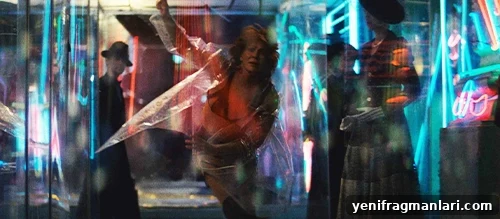
Deckard’s pursuit of Zhora culminates in a dazzling, tragic tableau. After a breathless chase through crowded streets, Zhora crashes through glass in slow motion, neon and color exploding around her as Deckard fires. Her motionless body is framed among shards that reflect the city’s lights, a haunting, elegiac image that contrasts with other deaths in the film. Scott stages her demise with beauty and cruelty intertwined, suggesting that the city’s brilliance is also its judgment.
5. Hades Landscape
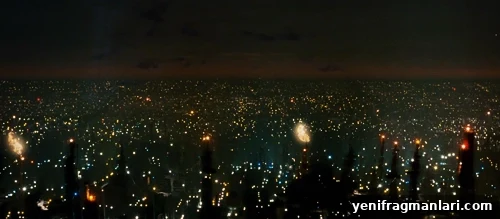
The film opens with a vast, hellish industrial vista: towers of fire and smoke under a sky pierced by structures and light. The creative team called it the Hades Landscape — an underworld of mass industrialization where progress is achieved through combustion and ruin. That opening image transcends mere establishing shot; it announces the world’s moral and environmental cost and sets the tone for the film’s view of technological advancement as both awe-inspiring and devastating.
4. Memories of Green

Added footage in later cuts — notably a unicorn dream sequence — and the quiet final image of Gaff’s origami unicorn transform the film’s interpretive landscape. The unicorn suggests that Deckard’s dreams, and by extension his memories, may be implanted, pointing to the possibility that Deckard himself is a replicant. This subtle implication reorients the entire story: if Deckard is not fully human, his actions and guilt are seen in a different light. The paper unicorn has become an enduring icon of the film’s uneasy blend of dream and reality.
3. To Meet One’s Maker
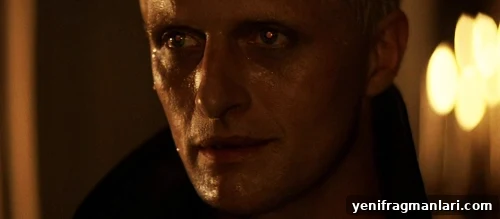
Batty’s confrontation with Eldon Tyrell interweaves theology and tragedy. Having outwitted Sebastian at chess, Batty demands more life from his creator, only to hear that his lifespan was fixed. The exchange echoes Frankensteinian themes: a being created by man confronts its maker and lashes out at the injustice of a manufactured mortality. Batty’s anguished demand, “I want more life, Father,” is both a plea and an indictment, exposing the terrifying, deeply human desire to resist death.
2. Blush Response
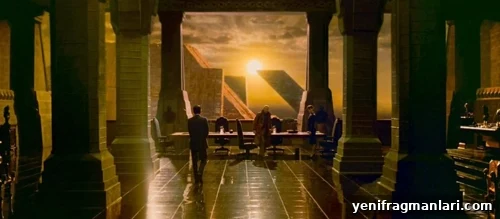
In a pivotal scene inside Tyrell’s office, Deckard is asked to administer a Voigt-Kampff test. Tyrell redirects the test toward Rachel, and the results reveal she is a replicant who has been implanted with human memories to stabilize her emotions. The disclosure that an artificial being can possess convincing, lived memories raises the film’s central question: what defines humanness? Is it biology, experience, or something else entirely? The scene’s luminous surroundings and sharp dialogue make this revelation unforgettable.
1. Tears in Rain
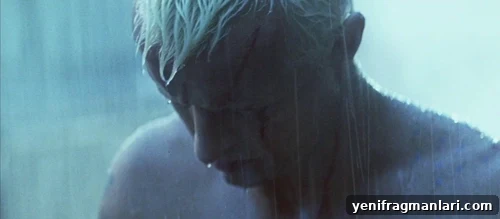
The film’s most searing and celebrated moment is Batty’s final monologue on the rooftop. After pursuing Deckard to the edge of death, Batty saves him in an act of mercy. Shirtless, rain-soaked, clutching a white dove, Rutger Hauer delivers a short, devastating speech about memories and loss. The famous line — that his memories “will be lost in time, like tears in rain” — reframes the entire narrative. Blade Runner stops being a simple tale of man versus machine and becomes a story about mortality, empathy, and the desperate, universal wish to extend life and meaning. In those final seconds, Batty’s humanity — whether biological or manufactured — shines through.
Which Blade Runner moments resonate with you most? Do you prefer the Final Cut’s ambiguity or the original theatrical cut with voiceover? Share your thoughts and revisit these scenes to discover new layers in one of cinema’s most influential works.