
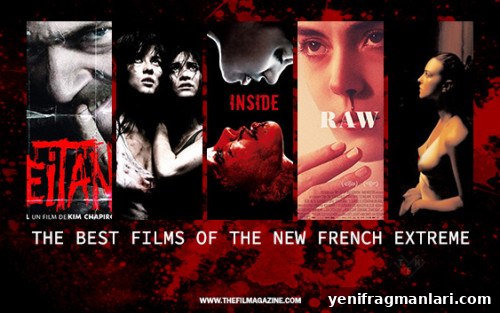
If you don’t have endless hours to hunt through film blogs, websites and a stack of monthly magazines, it’s easy to miss the recent wave of French horror — often called the new wave of French extreme cinema. Yet this movement has produced some of the most original, challenging and influential horror films of the last two decades. Stylish, visceral and frequently brutal, many of these titles are standalone works rather than franchise entries, and several filmmakers have gone on to larger international projects.
This curated list highlights the best French horror and extreme films you should watch if you appreciate intelligent, uncompromising genre cinema. Be warned: these movies are intense and not recommended for the faint of heart. Keywords for this guide include French horror films, French extreme cinema, best French horror movies and must-see French horror.
Irreversible
Gaspar Noé’s Irreversible shocked and polarized audiences when it premiered in 2002. Told in reverse chronological order, the film traces a brutal assault on Alex (Monica Bellucci) and the destructive revenge pursued by her partner (Vincent Cassel). Noé’s bold narrative choice and long, disorienting takes force the viewer into an uncompromising experience: the reverse structure subverts conventional empathy-building yet creates a harrowing emotional arc. Bellucci delivers a powerful, solemn performance, while Cassel brings raw intensity. The film’s most notorious sequence, an extended single-take assault, is widely regarded as one of the most disturbing scenes in modern cinema. Irreversible remains a defining example of French extreme filmmaking — artistically daring and deeply unsettling.
Haute Tension (Switchblade Romance)
Alexandre Aja’s Haute Tension, released internationally as Switchblade Romance, helped establish Aja as a major voice in contemporary horror. The story follows Alex (Marie-Josée Croze) and her friend Marie (Cécile de France) as a seemingly ordinary visit to a family home becomes a night of relentless violence when a killer appears. The film’s practical gore effects — crafted with contributions from genre veterans — are inventive and viscerally effective, delivering some of the most memorable on-screen deaths of recent years. While a late twist raises questions and invites debate, the film’s tension, pacing and moments of shocking brutality make it a standout of early-2000s French horror.
Sheitan (Satan)
Sheitan is a darkly comic and disturbing outing centered on Eve (Roxane Mesquida), who leads three clubgoers back to an isolated country house where unsettling family dynamics and a menacing housekeeper (Vincent Cassel) unsettle the night. The film blends conventional thriller beats with folktale and religious undertones, occasionally leaning into metaphor and symbolism. Its narrative can feel formulaic, but Vincent Cassel’s magnetic performance helps elevate the material, making Sheitan an entertaining and troubling experience of contemporary French horror.
Another difficult, thought-provoking entry in the French scene comes from Marina De Van, who wrote, directed and stars in a slow-burning, body-horror drama. Her film examines self-harm and bodily obsession as the protagonist injures herself while renovating a house, setting off a disturbing psychological journey. With deliberate pacing and unsettling, visceral imagery, this work channels a Cronenberg-like focus on the body and transformation, making it compelling arthouse horror for viewers who appreciate challenging themes and intense visual language.
Trouble Every Day
Directed by Claire Denis, Trouble Every Day is an elegiac, haunting take on the cannibal subgenre. The film follows Shane (Vincent Gallo) and his new wife on an ill-fated trip to Paris and the dangerous impulses that resurface when Shane visits a research lab from his past. Rather than straightforward shock tactics, Trouble Every Day relies on atmosphere, mood and troubling imagery to rework familiar themes into a contemplative, artful exploration of desire and monstrosity. Its influence is evident across later French extreme films that blend arthouse aesthetics with visceral horror.
Martyrs
Pascal Laugier’s Martyrs (2008) is arguably the most notorious film on this list. Combining intense psychological themes with graphic depictions of torture, Martyrs follows Lucie (Mylène Jampanoï) and Anna (Morjana Alaoui) as they pursue vengeance against those who abused Lucie as a child. The film’s stark cinematography, committed performances and uncompromising storytelling divide audiences — some praise its ambition and emotional cruelty, while others are repelled by its brutality. Martyrs is a central title in the French extreme canon and exemplifies the movement’s willingness to push boundaries in the service of challenging ideas.
Frontier(s)
Xavier Gens’s Frontier(s) uses a rural, isolated setting to trap a group of fugitives and escalate tension into violent chaos. When a robbery goes wrong, the criminals retreat to the countryside to lie low, only to discover a terrifying local reality. The film captures claustrophobia and escalating dread, driven by strong performances and an atmosphere of menace. While it leans on some familiar horror tropes, Frontier(s) is relentless and unafraid to shock, marking Gens as another French director who moved into international genre work.
Inside
Inside (À l’intérieur) is a tightly wound home-invasion thriller that earned acclaim beyond the extreme-horror circuit. The 2007 film centers on Sarah (Alysson Paradis), a pregnant widow recovering from a car crash, whose quiet night is shattered when a stranger (Béatrice Dalle) knocks on her door. What follows is a brutal, escalating siege that keeps viewers in near-constant tension. The two female leads deliver intense, believable performances that sell the film’s extraordinary premise. Although the final act stretches plausibility, the atmosphere, pacing and sustained dread make Inside one of the standout French horror films of its era.
Baise-Moi
Baise-Moi remains one of the most controversial entries in French cinema. The film follows Nadine (Raffaëla Anderson) and Manu (Karen Lancaume) — two women who, after suffering abuse, embark on a violent, transgressive spree across France. Its raw, handheld aesthetic, explicit content and use of non-simulated sexual scenes provoked heated debate on artistic freedom and censorship. Baise-Moi’s rough production values and uncompromising approach make it a provocative, polarizing work that continues to generate discussion about realism, exploitation and intent in extreme filmmaking.
Raw
Julia Ducournau’s Raw (2016) is the most recent film here and a rare modern triumph that blends body horror with coming-of-age themes. The story follows Justine (Garance Marillier), a lifelong vegetarian who enters veterinary school and, after a hazing ritual, develops an overwhelming appetite for flesh. Raw renews the cannibal motif through a sharp exploration of desire, identity and adolescence, with strong performances and assured direction. It balances metaphor and shock, making it both a powerful commentary on transformation and one of the most acclaimed French horror films in recent years.
If you’re exploring French horror films and French extreme cinema, these titles offer a compelling cross-section: from arthouse dread to outright transgression, they showcase why France remains influential in global horror. Vive la France!