

John Carpenter’s 1982 film The Thing, the second adaptation of J. W. Campbell’s 1938 novella “Who Goes There?”, is widely regarded as one of the greatest science-fiction and horror films ever made.
Set at an isolated Antarctic research station with a shape-shifting alien in their midst, the film is a masterclass in suspense, paranoia, and practical effects work by Rob Bottin.
Although its initial reception was mixed—partly because it premiered shortly after the far friendlier-minded E.T. the Extra-Terrestrial—The Thing has since become a landmark in filmmaking, admired by critics, filmmakers, and genre fans alike.
To mark the film’s 40th anniversary, here are the 10 Best Moments from The Thing, highlighting the scenes that best capture the movie’s dread, ingenuity, and technical achievement.
10. “Well then we’re wrong!”
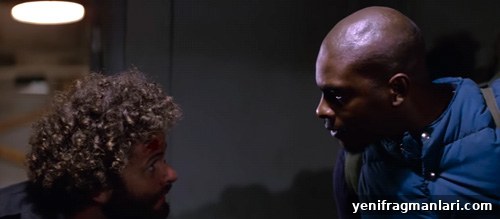
This quiet exchange mid-film encapsulates the growing paranoia and the breakdown of trust among the team. Believing MacReady (Kurt Russell) could be an imitation, the others lock him outside and agree that if he tries to force his way in they will shoot him. When conscience intervenes, it’s answered with chilling finality.
“Childs! What if we’re wrong about him?”
“Well then we’re wrong!”
The line shows how the group’s survival instinct has displaced morality: better to risk killing an innocent person than to let a potential impostor inside. It’s a small moment, but it reveals everything about how fear corrodes human bonds.
9. Spaceship Discovery
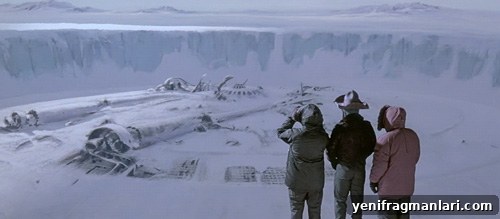
The film opens with a mysterious object hurtling toward Earth, then moves forward to the discovery of a half-excavated alien ship buried in the ice. The high-angle shot emphasizes the ship’s scale, the matte painting provides atmospheric detail, and the scene plants an ancient, primeval fear: this is not just advanced technology, it’s an older, uncanny terror.
The reveal plays against expectations and grows our unease gradually, making the discovery all the more effective.
8. Bennings
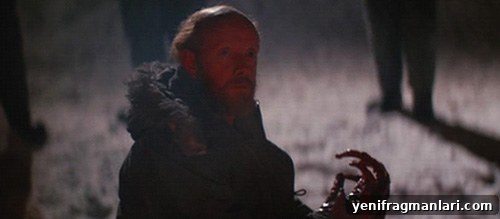
After Bennings investigates the wrapped corpse they found earlier, the scene unfolds in a horrifying and inexorable way: blood soaks the table, tentacles ensnare him, and he returns outside transformed, his arms half-assimilated. His howl—raw and animal—culminates in his being set on fire, the first human casualty at the camp.
Carpenter stages this sequence with chilling economy, using sound and movement to signal that the thing has already begun to infiltrate their ranks. The moment confirms nobody is safe.
7. Blair and the Radios
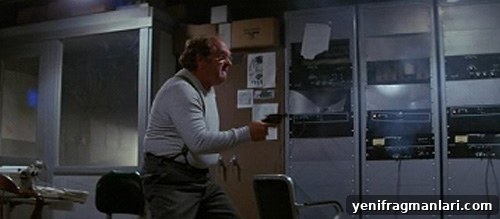
Blair, having run simulations and concluded the threat is existential, lashes out—smashing radios, disabling helicopters and tractors—to ensure the thing cannot leave the station. Wilford Brimley plays the role with the tense edge of a man who might be right and might have already broken under the strain.
The scene blurs the lines between sanity and obsession. Blair’s argument is logical: if the thing escapes, humanity is doomed. His extreme actions, however, force the others to confront how far fear will push them.
6. Helicopter Dog Chase
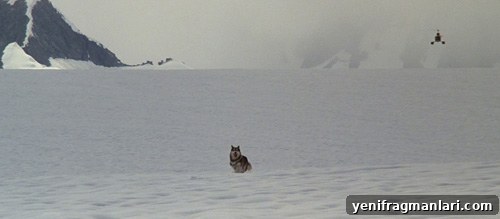
The film’s opening sequence—a Norwegian helicopter furiously chasing a dog across the snow—immediately injects chaos into the story. The frantic chase, gunfire, and the frightened dog being pursued create instant tension and mystery: why the violence, and how does it connect to the American base?
The contrast between this sudden, brutal assault and the relative calm of the outpost deepens the sense that something foreign and lethal is unfolding just beyond their horizon.
5. Norwegian Camp
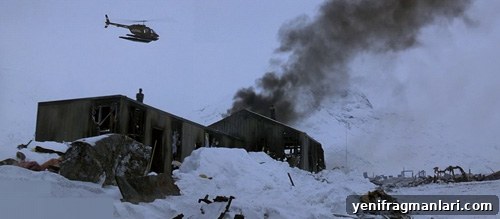
Arriving at the scorched remains of the Norwegian camp, the team finds devastation: torn structures, thick smoke, and a body frozen in a desperate, self-inflicted state. Ennio Morricone’s unsettling score amplifies the desolation.
Discovering a block of ice with a mangled, two-faced imitation inside makes clear that this was no ordinary tragedy. The scene establishes the film’s central dread: something unimaginably wrong has invaded and left chaos in its wake.
4. Blowing It All Up
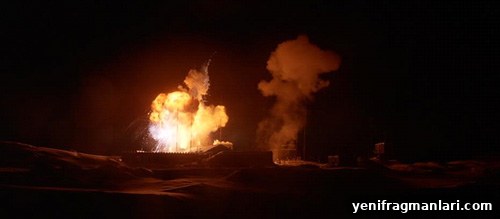
The climax sees the remaining survivors decide to destroy the base to prevent the thing from reaching civilization. MacReady’s final act—throwing dynamite at a towering, writhing monstrosity—trades hope of rescue for absolute containment.
The explosion is both visually striking and thematically resonant: a defiant, tragic gesture against the paranoia and betrayal the creature engenders. The film’s ambiguous final moments—MacReady and Childs alone, exhausted and uncertain—leave audiences debating who, if anyone, remains human.
3. Dog Kennels
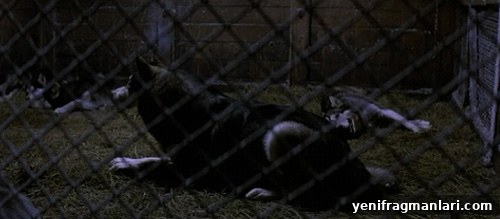
The rescued dog lies quietly in its kennel, then suddenly convulses; blood pours from its face and its body unfolds into a nightmare of tentacles, a flower-like maw, and gigantic claws. The flamethrower becomes a desperate tool to stop the creature’s escape.
This sequence is a masterful blend of visceral body horror and psychological terror: the thing has imitated a creature we trust implicitly, and if an animal can deceive us, so too can a human. The scene’s brutality and ingenuity make it one of the film’s most unforgettable moments.
2. Defibrillator Scene
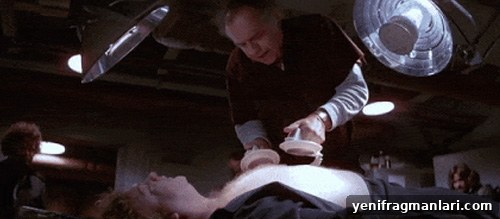
During a moment of panic, Norris collapses and the team attempts to revive him. Their efforts go horribly wrong when his chest opens into a maw of teeth that bites Copper’s hands, tearing them away in a spray of blood. Something bursts from Norris’s torso, then splits and grows spider-like legs to scuttle away.
The scene shocks both visually and conceptually: the creature can divide, adapt, and strategize. Carpenter times the reveal to exploit our diverted attention, making the horror both surprising and deeply unsettling.
1. Blood Test
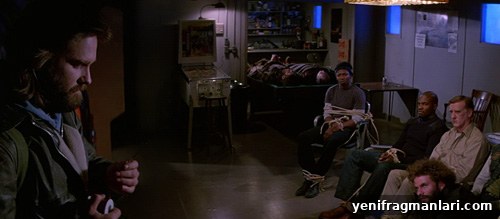
Many cite the defibrillator moment as the film’s peak, but the blood test edges it out through sheer suspense. Bound and tense, the crew sits through a procedure that will reveal whether any member is an imitation. Each sample is touched with a hot wire; if the blood moves to protect itself, that person is infected.
The scene stretches time and anxiety to the breaking point. The dingy lighting, the accusing glances, and the long, quiet minutes before the eruption of violence create a pressure-cooker atmosphere. When the test finally breaks into body-horror chaos, the payoff is devastating.
The blood test distills everything that makes The Thing powerful: paranoia, mistrust, technical craft, and a willingness to explore fear at a fundamental human level.
Which moments from The Thing do you find most memorable or impactful? Share your thoughts below. Follow The Film Magazine on social media for more curated movie lists and film analysis.