
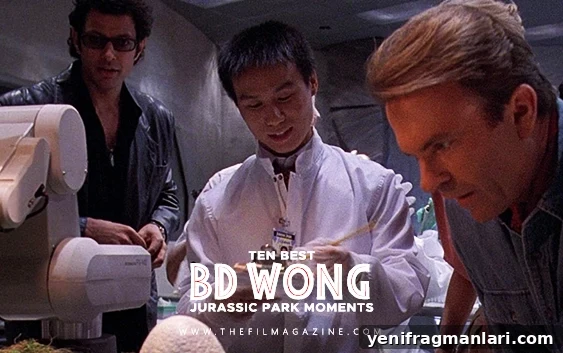
Jurassic Park (1993) introduced a world where humans and dinosaurs collide, and where the struggle between control and chaos drives every scene. In that world, the lines between species blur and the scientists who think they are masters of nature often appear foolish. Among them, Dr Henry Wu stands out—brief in appearance but huge in consequence.
Although BD Wong’s Dr Wu only appears for a few scenes in the original film, the impact of his work reverberates across the entire franchise. As Dr Ian Malcolm observes, the scientist’s involvement is always central: “Not him. Not him. It’s always him.” Wu’s choices, his arrogance and blind spots, set the course for the tragedies and ethical dilemmas that follow.
Dr Wu is a brilliant geneticist whose ambition outstrips his humility. He is the archetypal “dumb genius”: highly knowledgeable, yet unwilling or unable to accept lessons from nature. He dismisses biological complications such as unexpected sex changes in amphibians and parthenogenesis in some reptiles, assuming they won’t undermine his plans. That hubris makes him one of the most consequential supporting characters in modern cinema; without Dr Wu, there simply is no Jurassic Park.
The character is expanded considerably in the Jurassic World trilogy—Jurassic World (2015), Fallen Kingdom (2018) and Dominion (2022). Across those films his arc is complex: at times a cold-hearted creator of monstrosities, at others a man who recognizes his mistakes and seeks redemption. Few characters in the series change so noticeably; only John Hammond walks a similarly ambiguous path.
In the first film, Henry is idealistic and naïve about the limits of control. In the newer films, he is recast more explicitly as a morally grey figure—capable of terrible design choices but not entirely devoid of remorse. He is easily influenced by money and power, repeatedly choosing to create ever more dangerous organisms. Yet the narratives allow him and Hammond the possibility of redemption, while other characters meet far harsher fates.
Below are the ten most memorable Dr Henry Wu moments, highlighting the character’s evolution and the key scenes that define him.
10. Attempting to Keep Up
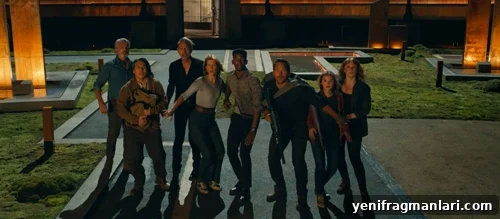
By Jurassic World: Dominion, Wu has spent years removed from frontline danger, confined to labs while others face the fallout. When events finally force him into the field, his physical stumble—tripping as he runs to a helicopter—serves as a metaphor. For once, he is confronted by the consequences of his creations. The moment is quietly significant and also briefly comic, a small humanizing beat in a tense sequence.
9. Redemption
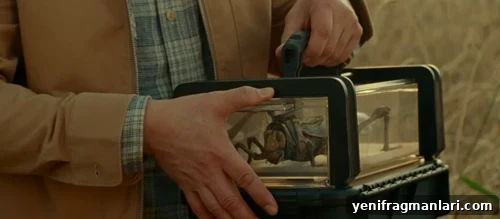
Wu’s journey from bright young scientist to self-reflective, guilt-ridden figure reaches a key note when he attempts to fix a crisis he helped create. Releasing a modified locust into a destructive swarm is meant to be an act of atonement. Though the moment can feel awkward, it introduces a theme of hope: even those who caused harm can try to repair it. In the film’s broader ecological metaphor—locust invasion standing for environmental collapse—this brief redemption offers a cautious optimism.
8. “It needs a mother!”
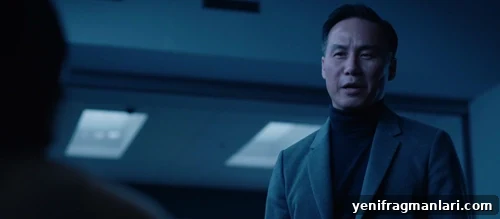
In Fallen Kingdom, Wu works in a hidden lab, producing the Indoraptor for an opportunistic client. When he angrily declares the creation “needs a mother,” it’s the first time we see genuine frustration from him. He’s not merely a buttoned-up scientist—he understands that certain aspects of living creatures can’t be manufactured in isolation. This recognition hints at a deeper respect for the role of nurture and highlights the limits of laboratory control.
7. The Rebrand
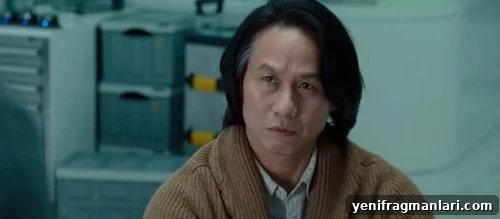
In Dominion Wu’s appearance signals a shift: the slick suits are gone, replaced by a worn cardigan and a more subdued presence. The wardrobe change signals remorse and a desire to move away from past excesses. When a corporate figure insists, “we want control,” Wu replies that true control is an illusion. That line echoes the franchise’s core message—nature cannot be fully tamed—and marks a turning point for his character.
6. Clandestine Conversations
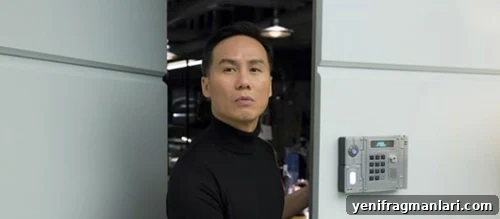
In Jurassic World we first see Wu in a secretive meeting with Vic Hoskins, discussing the military potential of engineered creatures. That scene reveals Wu’s moral ambiguity: he is willing to participate in weaponization, whether for money, prestige, or because he cannot refuse. It complicates our understanding of him and shows how scientific expertise can be co-opted by powerful interests.
5. Monster Is a Relative Term
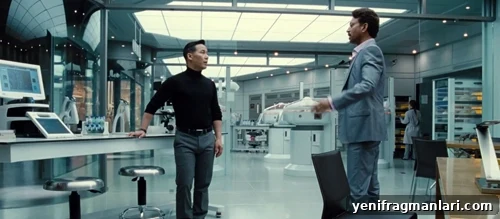
When park owner Simon Masrani chastises Wu about the dangers of his creations, Wu responds with detachment and deflection. This exchange underscores a recurring theme: humans label as “monsters” those beings that challenge our dominance. The films invite the audience to question who the real monster is—those engineered to kill, or the humans who build and exploit them.
4. The InGen Helicopter

As the franchise moved from scientific wonder to corporate spectacle, Wu became the last visible expert amid executives and marketing teams. A sequence showing his involvement in transporting embryos makes clear he isn’t merely a neutral researcher: he can be influenced, compromised, or bought. That scene foreshadows disaster and recalls earlier mistakes—reminding viewers that mishandled genetic material almost always ends badly.
3. He’s Back, Baby
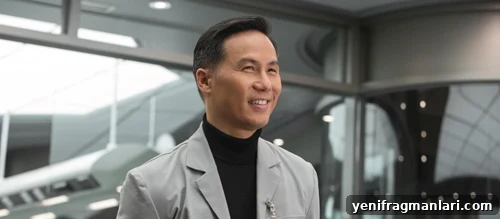
Wu’s return in the 2015 film thrilled longtime fans. Older and more confident, he presents himself as the architect of the Indominus rex. The moment connects the original Jurassic Park to the new era, bridging nostalgia and continuity. Even then, his smugness signals that he has not learned from past errors—and that foreshadowing pays off in later films.
2. “You bred ‘raptors?”
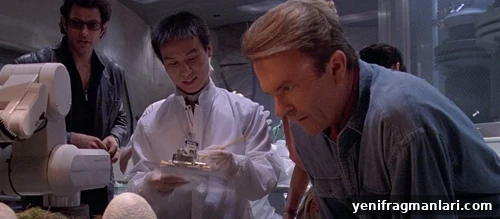
Wu’s nonchalant revelation about breeding velociraptors is one of the franchise’s most potent moments. The raptors, as portrayed in film, became the emblematic predators of the series, and their prominence is directly tied to Wu’s lab work. His casual attitude toward such lethal creatures sets an ominous tone and signals to the audience that dangerous consequences await.
1. “It’s really not that difficult.”
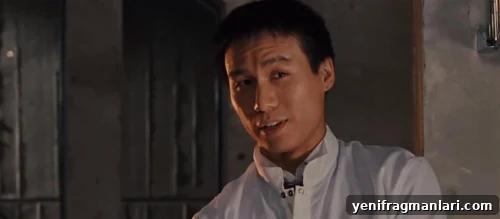
The most defining Wu moment comes early, when the scientists discuss ensuring every dinosaur is female. Wu’s arrogant dismissal of the problem—“It’s really not that difficult”—captures his hubris perfectly. BD Wong’s performance ranges from mocking certainty to condescension, and that overconfidence becomes the linchpin for the franchise’s moral and narrative trajectory. It’s the pride that precedes a long fall.
Dr Henry Wu has evolved from a minor supporting role into one of the most memorable and influential figures in the franchise. His choices, his moral ambiguity and his eventual attempts at redemption give the series a complicated human center amid the spectacle of prehistoric predators.
Which characters or dinosaurs do you enjoy watching most—heroes, villains, or the creatures themselves? Share your thoughts in the comments and tell us which Dr Wu moments stood out to you.