
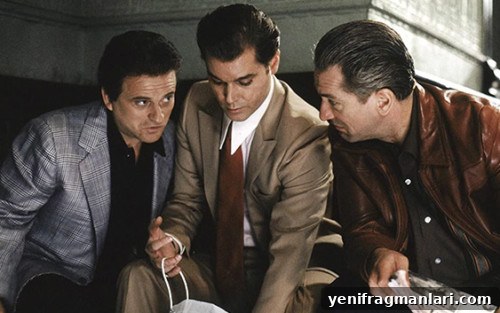
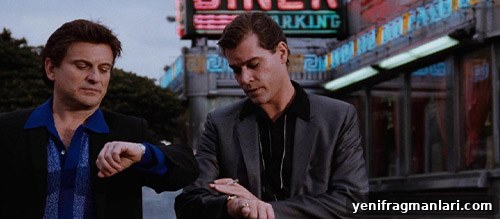
Goodfellas (1990)
Director: Martin Scorsese
Screenwriters: Nicholas Pileggi, Martin Scorsese
Starring: Ray Liotta, Robert De Niro, Joe Pesci, Lorraine Bracco, Paul Sorvino, Frank Sivero, Tony Darrow, Mike Starr, Frank Vincent, Chuck Low, Samuel L. Jackson
Martin Scorsese’s Goodfellas remains one of the most influential and admired American crime films. A vivid, unflinching portrait of mob life, the film follows Henry Hill (Ray Liotta) from his early fascination with organized crime to his full immersion in the violent, seductive world of the Mafia. Scorsese’s direction, Nicholas Pileggi’s source material and the tight screenplay create a film that feels both immediate and meticulously crafted—an enduring landmark in the crime genre.
Goodfellas is notable for its kinetic visual style and precise storytelling. Scorsese abandons the introspective approach seen in earlier character studies in favor of a rapid, documentary-like momentum that tracks decades of change in its protagonists’ lives. The film’s structure moves from Henry’s youthful idolization of mobsters through the rise, excess and eventual unraveling of the life he chooses. Violence and moral collapse are portrayed with a raw honesty that refuses glamorization while also showing why the lifestyle has such magnetic appeal.
The performances are central to the film’s lasting impact. Ray Liotta delivers a breakthrough lead performance as Henry—an electric, conflicted figure whose charm and self-delusion drive the narrative. Joe Pesci is a standout, delivering an explosive, unpredictable turn that earned him an Academy Award for Best Supporting Actor. Lorraine Bracco provides a powerful, nuanced performance as Karen, earning an Oscar nomination and creating one of Scorsese’s most memorable female characters within his mob oeuvre. Robert De Niro, in a supporting role, adds depth and menace, continuing his long and fruitful collaboration with Scorsese.
Technically, Goodfellas excels. The film’s editing and pace create a sense of breathless acceleration as the characters climb higher and the consequences grow heavier. Scorsese’s use of long takes, dynamic camera movement and carefully staged sequences—such as the famous tracking shot through the Copacabana—showcase his mastery of cinematic rhythm. The production design and attention to period detail convincingly evoke the 1950s through the 1980s, grounding the story in specific eras without slowing its narrative thrust.
Sound and music play a crucial role in the film’s tone. The soundtrack weaves classic rock, soul and blues into the fabric of the scenes, underlining emotion and era with carefully chosen tracks. The result is a musical collage that enhances character and setting while amplifying the film’s energy. Scorsese’s instinct for matching music to image is on full display here and remains one of the film’s signature strengths.
Goodfellas also stands out for its lasting influence. It is frequently cited as one of the best films about organized crime and often ranks highly in critics’ lists and audience polls. The film has shaped how subsequent filmmakers portray the Mafia, crime families and the interior life of criminals—balancing glamour and brutality, loyalty and betrayal. In comparison with Scorsese’s later crime films like Casino and The Irishman, Goodfellas remains distinguished by its raw immediacy and stylistic daring; each of these works examines different facets of mob culture, but Goodfellas often serves as the benchmark against which they are measured.
Critically acclaimed on release and beloved by viewers, Goodfellas continues to be a reference point in both popular culture and film studies. Its performances, direction, soundtrack and technical accomplishments cohere into a powerful cinematic experience that captures the highs and inevitable lows of a life built on crime. The film is not only a high point in Scorsese’s career but also a staple of American cinema—one that combines artistry with uncompromising storytelling.
22/24
Written by Christopher Connor
You can support Christopher Connor on Twitter – @chrisconnor96