
Scott Pilgrim vs. the World (2010)
Director: Edgar Wright
Screenwriters: Michael Bacall, Edgar Wright
Starring: Michael Cera, Mary Elizabeth Winstead, Kieran Culkin, Anna Kendrick, Alison Pill, Aubrey Plaza, Jason Schwartzman, Ellen Wong, Chris Evans, Brie Larson
After completing the first two chapters of his acclaimed Cornetto Trilogy, Edgar Wright turned to Bryan Lee O’Malley’s cult graphic novels and created a vivid, genre-bending adaptation aimed at North American audiences. Released in 2010, Scott Pilgrim vs. the World has grown in stature over the years: initially a box-office disappointment, it subsequently found a passionate following and now occupies a firm place in modern cult-cinema conversations. By its tenth anniversary in 2020 the film had been re-evaluated by many viewers and critics, and occasional theatrical screenings and renewed interest helped cement its reputation.
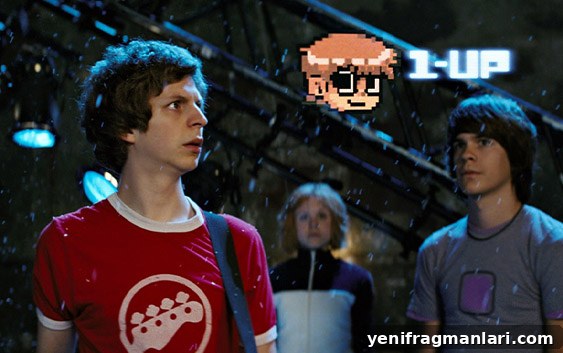
The movie follows 22-year-old Scott Pilgrim (Michael Cera), a slacker and bassist for the struggling garage band Sex Bob-Omb, as he falls for the enigmatic Ramona Flowers (Mary Elizabeth Winstead). To win her heart, Scott must face a sequence of increasingly elaborate battles against Ramona’s seven “evil exes,” each confrontation staged like a chapter in an action-packed video game. Edgar Wright’s lifelong affection for gaming culture—evident throughout his earlier work—drives the film’s kinetic visual style: punchlines land like power-ups, losses feel like respawns, and the editing frequently mimics the rapid-fire logic of classic arcade titles.
Critics who embraced the film recognized its infectious energy and emotional undertow. The New York Times observed that the movie’s “speedy, funny, happy-sad spirit” makes its invented world feel welcoming even when its references are unfamiliar, while Empire Magazine awarded it a five-star review in the UK. Such praise reflects the movie’s rare ability to combine genuine feeling with exuberant formal invention: it’s a romantic comedy, a beat-driven music film, and an arcade-flavored action picture all at once.
Casting is a major asset. Michael Cera brings his trademark awkward charm to Scott, delivering an endearing, empty-headed performance that anchors the more surreal elements. Mary Elizabeth Winstead gives Ramona a tough, mysterious presence that plays well against Scott’s vulnerability. The supporting ensemble is equally strong: Kieran Culkin provides early glimpses of the range he would later be celebrated for, while Chris Evans and Brie Larson appear in smaller but striking roles that play against type. Many cast members have gone on to higher visibility in the years since, but here they gel into a cohesive, quirky community that feels both theatrical and lived-in.
One of the film’s greatest achievements is the way it balances shifts in tone. Early scenes—romantic, awkward, and almost rom-com in sensibility—sit comfortably alongside later set-pieces that fully embrace comic-book absurdity and video-game logic. This juxtaposition is deliberate and effective: the quieter interpersonal moments give the action emotional stakes, while the hyper-stylized fights amplify the characters’ inner conflicts. Wright’s direction keeps the transitions fluid, so the audience accepts sudden changes in register as part of the story’s charm rather than as jarring departures.
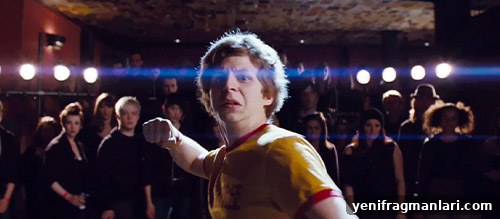
The action sequences themselves are unforgettable. Wright stages fights with comic timing and visual imagination, often translating the book’s inventive panels into kinetic, audio-visual flourishes. The climactic showdown with the antagonist Gideon is a highlight: a dense, sensory experience that blends sound design, rapid editing, and visual effects to create a finale that feels both cathartic and thoroughly cinematic. Many of these sequences are faithful to the source material, demonstrating Wright’s respect for the original comics while also reworking the moments for a uniquely filmic impact.
Music plays an essential role in the film’s identity. Sex Bob-Omb’s raw, garage-band numbers suit the movie’s indie spirit, while Brie Larson’s portrayal of Envy Adams includes a surprisingly polished musical turn—remarkable considering she was just 19 during production. The soundtrack also benefits from contributions by artists like Beck, who supplied original material that underscores key scenes and amplifies the film’s tonal shifts. Interspersed throughout are playful nods to classic video-game melodies, which deepen the movie’s retro-gaming atmosphere without ever feeling gimmicky.
Viewed alongside Edgar Wright’s later work, such as the high-octane Baby Driver (2017), Scott Pilgrim vs. the World marks an important step in his evolution as a filmmaker. It showed that Wright could carry a project without his earlier collaborators and that his distinctive mix of comedy, music, and kinetic visuals could translate into a large-scale feature. Despite initial commercial disappointment, the film’s inventiveness, warmth, and emotional honesty have sustained its appeal: playful, original, and surprisingly tender, it remains one of Wright’s most adventurous projects.
18/24