
This film review was written exclusively for The Film Magazine by Mark Carnochan.

What We Did on Our Holiday (2014)
Director: Andy Hamilton, Guy Jenkin
Screenwriters: Andy Hamilton, Guy Jenkin
Starring: David Tennant, Rosamund Pike, Billy Connolly, Ben Miller, Amelia Bullmore, Lewis Davie, Emilia Jones, Bobby Smalldridge, Harriet Turnbull
Movie advertising can determine audience expectations long before anyone sees a film. Trailers, posters and marketing copy present a promise: a tone, a genre, an emotional register. In the case of What We Did on Our Holiday, the marketing suggested a light, quirky family comedy suitable for everyone, but the finished film is subtler and darker in places than those promotional materials imply. That dissonance between expectation and reality is central to how the film plays with its audience.
At its core, What We Did on Our Holiday follows the McLeod family as they travel from London to the Scottish Highlands to celebrate Grandfather Gordie’s seventy-fifth birthday. Doug (David Tennant) and Abi (Rosamund Pike) are a couple on the verge of divorce; despite their deteriorating relationship they decide to keep their separation from Gordie (Billy Connolly), who is ill. To protect him, they encourage the children to conceal the truth. The extended family situation is complicated by Doug’s brother Gavin (Ben Miller), Gavin’s tightly wound wife Margaret (Amelia Bullmore), and their son Kenneth (Lewis Davie). Into this mix come the McLeod children — Lottie (Emilia Jones), Mickey (Bobby Smalldridge) and Jess (Harriet Turnbull) — who observe and interpret events with the frankness and imagination of youth.
A distinguishing choice in the film is to present much of the story from the children’s perspective. That decision pays off in two important ways: it yields a steady stream of genuine comic moments born of innocent misunderstanding, and it softens the film’s handling of heavier themes. Seeing adult conflicts refracted through a child’s viewpoint gives the drama an emotional clarity that might have been more forbidding if the narrative were confined to adult consciousness. The children’s reactions lend the film warmth and an unmistakable authenticity; their performances are frequently the heart of the picture.
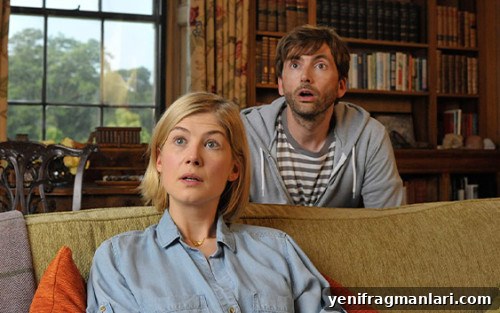
The ensemble cast delivers reliably strong work. Rosamund Pike and David Tennant bring a believable, lived-in chemistry to the roles of Abi and Doug, portraying the exhaustion and awkward kindness of long-term partners unraveling around each other. Billy Connolly’s portrayal of Gordie provides a poignant anchor: his presence in the film is both vulnerable and defiant, and he elicits sympathy with a light touch. Supporting performances from Ben Miller and Amelia Bullmore create a convincing foil to the McLeod household, giving the story texture and domestic friction.
Of particular note are the child actors. Emilia Jones, Bobby Smalldridge and Harriet Turnbull show sharp comic timing and naturalistic instincts that feel beyond their years, especially given this was early feature experience for some of them. Their interactions and small, well-observed moments are essential to the film’s emotional core and provide many of its most memorable beats.
Directors Andy Hamilton and Guy Jenkin, both seasoned television writers and creators, manage to translate their strengths to a feature format. Their background in television is apparent in the film’s rhythm and its emphasis on dialogue and family dynamics; this background helps the film remain focused on character-driven scenes rather than big cinematic set-pieces. The filmmakers also succeed at juggling multiple character arcs — nine central figures are given enough space to develop meaningful, satisfying conclusions without the storytelling ever feeling overcrowded.
However, the film does not entirely escape the limitations of its television roots. The cinematography often feels more like a well-produced TV drama than a cinematic portrait, which can flatten some sequences that might have benefited from a more expansive visual treatment. This aesthetic choice can make the film seem modest when compared with other feature-length productions, though the narrative strengths often compensate for this shortfall.
The film’s tonal choices are also worth discussing. Throughout most of its running time the movie strikes a convincing balance between comedy and pathos, using the children’s perspective to navigate difficult emotional territory with a light touch. Yet the ending pushes toward an unexpectedly upbeat resolution that slightly jars with the film’s earlier restraint. The finale attempts to wrap the characters’ journeys in a hopeful bow, and while that approach will resonate with viewers who prefer closure and optimism, it may feel abrupt to those who appreciate the film’s more ambiguous emotional notes.
Overall, What We Did on Our Holiday is a pleasant and often surprising family drama that defies some of its marketing promises. It’s not a broad, family-friendly comedy in the usual sense; instead it offers a sincere, character-driven story with genuine laughs and quietly felt emotional moments. The performances, particularly from the younger cast, and the directors’ ability to balance multiple storylines make the film a worthwhile watch for viewers interested in family dynamics, humane comedy and character-led storytelling.
18/24
Written by Mark Carnochan
Support the author: Twitter – @MarkJurassic