
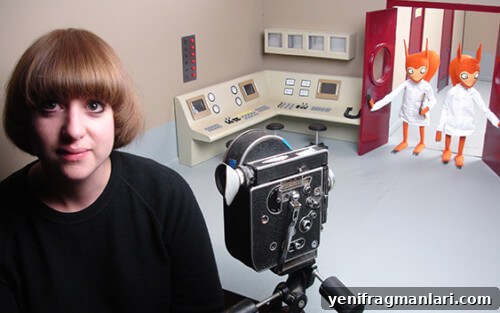
Short film Squirrel Island was one of our 10 Picks from the Aesthetica Short Film Festival 2017 for its striking combination of action-espionage tone and sweet, handcrafted animation. Equally compelling is the film’s origin story. We spoke with screenwriter, director, sculptor, animator and artist Astrid Goldsmith about the long journey to release, her motivations, and where the project has led her creatively.
“End to end – beginning to finish – it took around 8 years.”
Squirrel Island was largely made in Astrid Goldsmith’s garage-turned-studio. She created most of the sets, puppets and props herself. Goldsmith holds an MA in Animation from Norwich University of the Arts and is the founder of Mock Duck Studios in Folkestone, Kent. Before making her own film she worked as a model maker for commercial clients such as Duracell. The finished short was released in 2016 after nearly a decade of work. We began by asking how it felt to see the film on the festival circuit.
How many festivals has Squirrel Island been shown at?
Around 30. It has screened at major international festivals including Clermont-Ferrand, Warsaw, and Brest European Short Film Festival, so it’s doing really, really well. I made it almost entirely on my own, so I didn’t know how it would be received. The film has no dialogue or written language and is narrative dense, so I worried about whether the story would translate. With all filmmaking there’s that question: this is in my head, can other people feel it too? The festival response has been a huge affirmation — exactly the validation a creative person hopes for.
Was the film a true labour of love?
Absolutely. From start to finish it took around eight years, though there were long breaks when I had to work commercially to fund the production. I’m used to tight deadlines that don’t allow the time to do things as carefully as you’d like, so for this film I refused to impose those restrictions on myself. I wanted the time to craft every element properly.
Was it difficult to stay motivated for so long?
No — I think finishing is the key. Having invested so much time, you owe it to yourself to see the project through. I was single-minded about completing it. Near the end, I ran a Kickstarter campaign to fund post-production: editing and sound. That was the first time I shared the film with other people, and it was very gratifying to hear positive feedback. I love the look of ungraded 16mm, but other people have different standards, so I wanted to make something that would sit well on the festival circuit.
How has the festival experience felt after all that work?
It’s been great. Aesthetica has a strong international reputation, and it was a thrill to be included in their programme. I also enjoy the informal moments — overhearing viewers’ reactions in the lobby or even the toilets gives you honest feedback that’s very valuable.
Given the long hours and budget limits, did you rely on recycled materials?
Yes, the lack of a big budget forced creative solutions. Most sets were made from recycled wood and salvaged materials like pieces of kitchen cabinets. I wouldn’t call the film an environmental campaign, but the experience has made me rethink processes and aim for more sustainability in future projects. Filmmakers do have a responsibility to consider recycled materials where possible.
The story centers on a grey squirrel arriving on an island of red squirrels — a clear allegory for forced displacement. Were squirrels a particular interest of yours or was there a larger idea behind the choice?
I wouldn’t call myself an activist, but you do become invested in the subject you write about. The film draws on real-life stories. Early in development I watched a BBC documentary about red and grey squirrels that included an interview with a man who had shot thousands of grey squirrels on an estate. His enthusiasm for extermination was chilling. Grey squirrels didn’t choose to be introduced here; they are innocent creatures in the circumstances. There is a thorny ethical dilemma around protecting native species, but presenting the grey squirrel as the protagonist felt important and necessary, even if it ruffled some viewers’ feathers.
Did audiences generally understand your perspective after you explained it?
Often people respond with the obvious question: what would you propose instead — sending them back to their original country? The film intentionally raises those difficult questions rather than offering simple answers.
There’s an immigration allegory in the film. Was that intentional?
Yes, but I didn’t plan to make it so explicit. The film premiered in 2016 during heightened attention to the migrant crisis, and festivals began programming it in immigration-themed strands. That amplified those themes more than I originally expected, but that’s been welcome. When you spend years on an animation, you want it to touch on something enduring and meaningful, and these themes have resonated strongly.
The film includes playful meta moments — the grey squirrel knitting a red squirrel outfit, for example. What inspired those choices?
Process-based in-jokes are common in stop-motion and model-making communities. I didn’t want to overdo it, but some moments arise naturally from the materials and techniques you use. The knitting sequence is intentionally ridiculous — an obvious, imperfect disguise — and it underlines the film’s playful espionage tone.
What cinematic influences shaped the film’s style?
There are nods to action cinema and Cold War conspiracy films: analogue bunkers, beige colour palettes, and a wink to characters like Rambo. I even referenced small, odd details from action movies — for instance, the knitting motif echoes a surreal moment in Demolition Man. The result felt like spy and action tropes reimagined with squirrels.
Did you grow attached to the characters after spending so much time with them?
Yes — every puppet had a name. Naming them helped with shoot logs and gave them personality. I once heard Ray Harryhausen react strongly when someone called his creations “monsters”; he insisted they were misunderstood creatures. That idea stuck with me: if you want audiences to empathize, you must imbue your characters with depth and humanity.
How did you store sets and puppets during the long process?
They lived all around my studio in the garage — it was a world of mess. If a puppet lay around for months it collected dust and needed cleaning before shooting. Over the course of production I made roughly 40 sets and 40 puppets; many were damaged or destroyed during filming, which is normal in stop-motion.
Mock Duck Studios and Astrid Goldsmith demonstrate a DIY sensibility that belies the high quality of the work. Squirrel Island combines meticulous craftsmanship, thoughtful allegory, and strong visual design — qualities that are rare in first-time filmmakers. We asked Astrid what she planned next.
What are your plans going forward?
Shortly after Squirrel Island I made another 16mm short called Polymer, a two-and-a-half-minute monster film about sea pollution. I’m also writing and developing a stop-motion feature. I’ve completed storyboards and concept art, but I know a feature will be a very long process, so I’m exploring funding opportunities while continuing to develop it independently if necessary.
Additionally, I’ve been working on a graphic novel — a collaboration with my father, who is a poet. It’s an alternative theory of the universe titled “The Age of Remnants.” There’s no release date yet, but finishing that book is my next priority.
Astrid Goldsmith’s path suggests a creative career that will expand beyond a single short film. With follow-up shorts, graphic work, and plans for a feature, Squirrel Island looks set to be the catalyst for a distinctive body of work in stop-motion and animation.
You can support Astrid, Squirrel Island and Mock Duck Studios:
Website: mockduck.co.uk
Mock Duck Studios Twitter: @mockduckstudios
Squirrel Island Twitter: @Squirrelfilm