

Terrence Malick is widely regarded as one of American cinema’s most distinctive auteurs. In a film landscape dominated for decades by studio-driven storytelling, Malick’s singular vision—rooted in both philosophy and film studies—has set him apart. His work blends lyrical voice-over, natural lighting, roaming camera movement, and a deep interest in existential and spiritual questions. Over a career spanning nearly fifty years, Malick has produced films that are instantly recognisable for their tone and approach; critics and viewers often describe similar works as “Malickian.” For newcomers, his filmography can feel daunting, but there are clear entry points that reveal the range and rewards of his cinema. Below are three recommended starting films and an overview of what makes Malick’s work essential.
1. Badlands (1973)
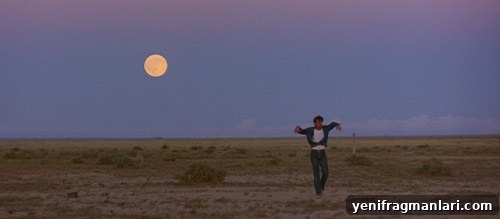
Malick’s debut feature, Badlands, announced a fresh and unconventional voice during the American New Wave of the 1970s. Framed as a crime story inspired by real events, the film combines a straightforward plot structure with a lyrical sensibility that already hints at Malick’s future concerns: the beauty of landscapes, reflective voice-over narration, and the collision of innocence and violence.
In Badlands, Martin Sheen plays a small-town drifter who imagines himself as a movie-star archetype while committing violent acts, and Sissy Spacek provides a plaintive, childlike voice-over that shapes the film’s haunting intimacy. Though it is Malick’s most traditionally plot-driven film, it demonstrates his talent for transforming genre material into a poetic meditation on youth, identity, and the American landscape. For viewers new to Malick, Badlands is one of the most accessible introductions to his aesthetic.
2. The Thin Red Line (1998)
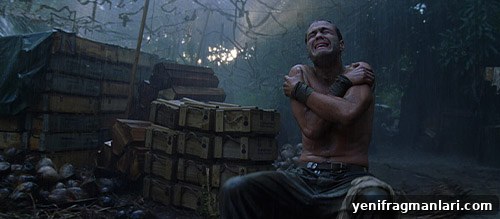
After an extended hiatus from feature filmmaking, Malick returned with The Thin Red Line, a contemplative adaptation of James Jones’ novel about the Battle of Guadalcanal. The film assembles an ensemble cast and repurposes the war movie format into a meditative inquiry about nature, violence, and human fragility. Rather than foregrounding combat spectacle, Malick focuses on interior reflection—using landscape, fragmented narration, and intimate close-ups to question whether meaning or grace can persist amid chaos.
Released the same year as more conventionally kinetic war films, The Thin Red Line challenged audience expectations with a quieter, more philosophical approach. Its deliberate pacing and philosophical voice-overs make it a very different kind of war film—one that redefined what the genre could achieve and remains a key work for understanding Malick’s evolution as a filmmaker.
3. To the Wonder (2012)
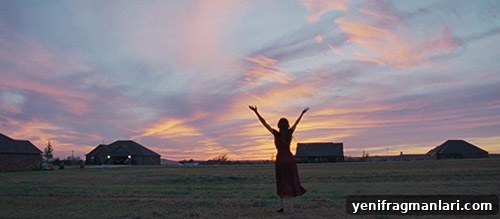
To the Wonder marks the beginning of what many critics call Malick’s most experimental period. After a phase of narrative-driven films and a transitional return that explored broader formal risks, this film pushes his signature techniques—voice-over, elliptical editing, and immersive natural cinematography—toward a near-avant-garde expression. Emmanuel Lubezki’s cinematography bathes the film in luminous natural light, turning ordinary domestic and landscape scenes into contemplative, often transcendent moments.
The story follows a couple who meet in France and relocate to the United States, tracing the tensions that emerge as love, faith, and doubt intersect. Rather than a conventional plot, the film relies on impressionistic fragments and emotional resonance. For viewers prepared to surrender to its flow, To the Wonder offers a powerful example of how Malick transforms cinematic form into a vehicle for feeling and spiritual inquiry. It is polarising—beloved by some and frustrating to others—but it clearly demonstrates how his later work prioritises mood, rhythm, and philosophical rumination over traditional storytelling.
Approaching Terrence Malick’s films depends on what you seek: narrative clarity, visual poetry, or philosophical provocation. Badlands provides a familiar dramatic arc filtered through Malick’s lyrical eye. The Thin Red Line expands his vision into grand, contemplative territory, while To the Wonder shows the director moving fully into nontraditional, almost metaphysical cinema. Across these stages, Malick’s films reward viewers who are willing to experience cinema as an immersive, meditative act rather than a purely informational one.
Malick’s filmmaking is rooted in a disciplined craft—his background in philosophy and film theory informs every decision—yet his cinema often feels spontaneous and elemental. If you are new to his work, start with the film that matches your tolerance for experimentation. For a gateway into his poetic realism, begin with Badlands. If you’re ready for a deeper emotional and visual immersion, The Thin Red Line offers philosophical depth. And if you want to see Malick’s most recent formal experiments, To the Wonder provides a clear example of his late-career aesthetic.
Each of these films demonstrates why Terrence Malick remains a singular presence in American film: a director who blends philosophical inquiry, rigorous visual composition, and uncompromising artistry to create movies that ask more questions than they answer—and that linger long after the credits roll.