
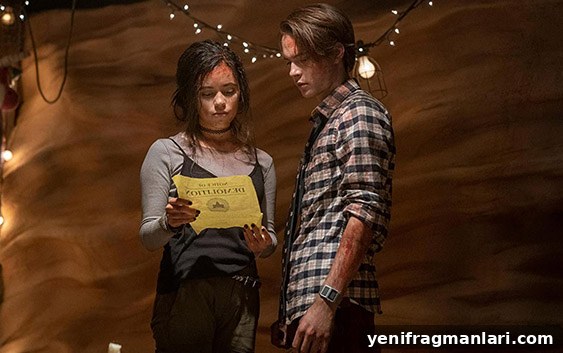
The Babysitter: Killer Queen (2020)
Director: McG
Screenwriters: McG, Dan Lagana, Brad Morris, Jimmy Warden
Starring: Judah Lewis, Emily Alyn Lind, Samara Weaving, Hana Mae Lee, Bella Thorne, Robbie Amell, Andrew Bachelor
Netflix’s slate often swings between surprising gems and forgettable misfires. McG’s 2017 film The Babysitter landed on the positive side of that balance—a darkly comic horror that helped the director regain some critical favor after a string of less successful features. Its blend of irreverent humor, stylized violence, and energetic pacing earned it a cult following, even if it never became a mainstream phenomenon. When The Babysitter: Killer Queen arrived three years later, on September 10, 2020, it faced the familiar sequel dilemma: reproduce what made the original work, while offering fresh ideas that justify revisiting the story.
Set two years after the first film’s ordeal, Killer Queen picks up with Cole (Judah Lewis), who is still haunted by that night. His parents are skeptical, worried about his mental state and inclined to seek professional help. Melanie (Emily Alyn Lind) remains his closest ally—the only other person who knows the truth—and persuades him to join a weekend beach getaway she and her friends have planned. The reunion of familiar faces quickly reawakens Cole’s deepest fears, pulling him back into the macabre world he hoped he’d left behind.
The sequel reunites much of the original cast: Judah Lewis and Emily Alyn Lind return as Cole and Melanie; Ken Marino and Leslie Bibb play Cole’s uneasy parents; Chris Wylde appears as Melanie’s father; and the demonic cult from the first film is back in the form of Samara Weaving, Hana Mae Lee, Bella Thorne, Robbie Amell and Andrew Bachelor. Their chemistry remains a highlight—many of the returning performers seem genuinely invested in their roles, and the script takes the opportunity to expand on their backstories, offering a deeper look into motivations and histories that were only hinted at before.
That continuity is both a strength and a weakness. On one hand, bringing back the same cast helps preserve the original’s tone and connects the two films visually and thematically. On the other hand, the familiar beats occasionally feel too familiar: repeated jokes and repeated visual flourishes sometimes undercut the sequel’s attempts to surprise. Still, Killer Queen largely manages to walk the line between homage and reinvention, delivering several effective callbacks while pushing the story into new territory.
Newcomers add fresh energy, most notably Jenna Ortega as Phoebe Atwell. Her character grows into an unexpectedly compelling presence: she starts off as a slightly awkward addition, but the film gradually reveals a more complex past that enriches the central mystery. Other new players—Juliocesar Chavez as Diego, Jennifer Foster as Boom Boom, and Maximilian Acevedo as Jimmy—vary in impact; some feel underused, while others seize brief moments to leave an impression.
One major change from the first film is location. The original largely confined itself to Cole’s home, generating an intimate, claustrophobic atmosphere that amplified the tension. Killer Queen shifts the setting to a lakeside weekend, which opens opportunities for inventive set pieces and gore-filled set pieces but also introduces problems. The lake environment is visually bland at times and leans on familiar horror-by-the-lake tropes. That blandness exposes a few technical shortcomings—occasional green-screen work and limited CGI stand out—diminishing the film’s ability to sustain sustained scares. The sequel’s tone skews more toward action and broad comedy than pure horror, a direction that fits McG’s strengths but makes the movie feel less frightening and more like a stylized action-comedy with horror trappings.
Where Killer Queen succeeds, it is in knowing what fans enjoyed about the first installment and building on those elements. The ensemble remains playful and charismatic, the pacing is brisk, and the script peppers in clever flourishes that reward viewers familiar with the original. When it stumbles, it’s usually due to overreliance on past jokes or an occasionally shallow use of new characters. Yet even with those flaws, the film rarely becomes dull; it leans into its maximalist instincts and provides an entertaining ride for viewers who appreciate dark humor and fast-cut set pieces.
Sequels are notoriously difficult to execute, especially when the original developed a devoted fanbase. The Babysitter: Killer Queen does not eclipse its predecessor, but it accomplishes the more modest task of expanding the story while preserving the spirit that made the first movie enjoyable. Fans of the original will likely find this follow-up satisfying: it’s a lively, occasionally uneven continuation that leans into spectacle, sharp performances, and a mischievous tone. For viewers seeking visceral scares and psychological dread, it may underdeliver; for those who came for the original’s whip-smart blend of comedy and carnage, Killer Queen offers a worthwhile second serving.
15/24