
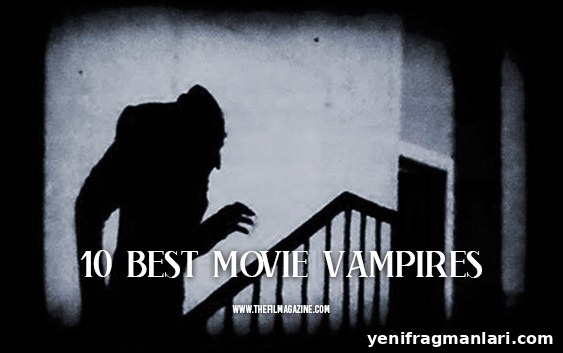
Vampires have captivated readers and viewers for over a century. From early literary origins to countless film adaptations, they satisfy our curiosity about immortality and our fascination with a creature that looks human but hungers for blood. On screen, vampires have taken many shapes—terrifying and tragic, seductive and monstrous, heroic and ruthless. This list aims to highlight ten of cinema’s most memorable vampire portrayals, honoring their influence, characterization, and lasting impact beyond the shadow of the most famous name in the genre.
In this The Film Magazine Top List, we count down the 10 Best Movie Vampires, ranking each by legacy and characterization from ten to one.
Tell us your favourite movie vampires in the comments and follow us on Twitter for more lists.
10. Aro – The Twilight Saga (2008-2012)
The Twilight series redefined mainstream vampire fiction for a generation, and while its softer, romantic take on vampires divided audiences, Aro stands out as one of the franchise’s most chilling creations. As leader of the Volturi, Aro combines political cunning with the supernatural ability to read minds, making him a formidable antagonist who enforces vampire law and consolidates power by recruiting and eliminating rivals.
Played by Michael Sheen, Aro brings a calculating, charismatic menace to a world otherwise focused on romance. His appetite for dominance—and, ultimately, human blood—reminds viewers that even in a romanticized vampire universe, danger can be close at hand.
Recommended for you: Twilight Movies Ranked
9. Blade – Blade Trilogy (1998-2004)
“Some motherf***ers are always trying to ice-skate uphill.”
Blade is a unique figure in vampire cinema: a half-human, half-vampire whose mission is to hunt and destroy vampires. Originating from Marvel Comics, Blade became a mainstream action icon on film—ruthless, relentless, and morally complex. His relentless quest for vengeance and protection of humanity positions him as an anti-hero whose violent methods still attract viewer sympathy.
Less a gothic monster than an action protagonist, Blade’s legacy lies in blending superhero tropes with vampire myth, influencing both action cinema and modern vampire storytelling.
8. David – The Lost Boys (1987)
Joel Schumacher’s The Lost Boys captured 1980s youth culture through the lens of horror-comedy, and David—played by Kiefer Sutherland—is its unforgettable ringleader. Sporting a punkish look and dangerous charisma, David embodies teen rebellion and menace. He’s seductive and violent, a character who helped make the film a cult classic and established a template for the “cool” vampire gang in popular culture.
David’s mix of swagger and threat made him an unlikely heartthrob and remains one of the era’s most memorable vampire performances.
Recommended for you: Top 10 Joel Schumacher Movies
7. Selene – Underworld (2003-2016)
Len Wiseman’s Underworld reimagined vampires as sleek, lethal warriors locked in an age-old battle with werewolves. Selene, played by Kate Beckinsale, became the franchise’s defining face: cool, fierce, and visually striking in her signature leather and combat gear. She’s less about gothic seduction and more about action-driven vengeance, combining martial prowess with vampire abilities.
Selene’s influence lies in modernizing the vampire archetype—adding high-octane choreography and stylized visuals while retaining the gothic intensity that keeps the character compelling.
6. Viago, Vladislav, Deacon – What We Do in the Shadows (2014)
Taika Waititi and Jemaine Clement’s mockumentary What We Do in the Shadows offers a comedic, affectionate take on vampire life. The central trio—Viago, Vladislav, and Deacon—balance ancient habits with modern absurdities as they navigate chores, relationships, and nightclub etiquette. Their antics reveal the human side of immortality and poke fun at vampire lore while still honoring it.
Rather than scaring viewers, these characters charm through humor, timing, and a surprising warmth that broadened the genre’s possibilities and inspired a successful TV adaptation.
5. Eli – Let the Right One In / Låt den rätte komma in (2004)
John Ajvide Lindqvist’s unsettling Swedish tale turns the vampire myth into a poignant, violent study of loneliness and dependence. Eli, portrayed by Lina Leandersson, appears as a fragile child but is a ruthless predator who forms a complex bond with a bullied boy, Oskar. Their relationship humanizes Eli while revealing the brutal costs of survival.
Let the Right One In is notable for blending tender coming-of-age themes with visceral violence, and Eli’s character remains one of film’s most haunting and morally ambiguous vampire figures.
Recommended for you: 10 Perfect Horror Movie Double Bills
4. Louis de Pointe du Lac – Interview with the Vampire (1994)
Anne Rice’s lush novels translated to a lavish, introspective film in Interview with the Vampire. Brad Pitt’s Louis is a tortured soul: transformed against his will, he struggles with the immortality that robs him of moral certainty. Louis contemplates bloodlust, guilt, and the loss of humanity, offering a melancholic and philosophical take on the vampire condition.
This performance and the film’s careful exploration of vampire rules and consequences made Louis a defining figure in modern vampire cinema—elegant, tragic, and unforgettable.
3. Count Orlok – Nosferatu (1922)
F.W. Murnau’s silent classic Nosferatu defined much of the visual language of vampire cinema. Count Orlok’s gaunt, rat-like appearance and slow, haunting movements created a template for cinematic horror that still resonates. His fear of sunlight, predatory hunger, and eerie presence shaped audiences’ expectations of what a vampire could be—truly monstrous rather than seductive.
Nearly a century on, Count Orlok remains an essential, chilling milestone in the evolution of filmed monsters.
2. Lestat de Lioncourt – Queen of the Damned (2002) / Interview with the Vampire (1994)
Lestat—Anne Rice’s charismatic antihero—appears in multiple film adaptations and remains one of fiction’s most magnetic vampires. Portrayed by Tom Cruise and later Stuart Townsend, Lestat is audacious, hedonistic, and unapologetically dangerous. He lives loudly, seduces and destroys with equal relish, and even transforms humans into vampires, demonstrating both his power and his inability to conform to human morality.
Part rock star, part aristocrat, Lestat’s decadent charm and violent impulses have cemented him as a cultural touchstone in vampire storytelling.
1. Dracula
When people picture a vampire, they often picture Dracula. Bram Stoker’s creation codified much of what we now take for granted in vampire mythology: aristocratic allure, nocturnal predation, aversion to sunlight, the use of coffins and native earth, and the charismatic, manipulative leader with devoted followers. Dracula’s influence spans countless adaptations, from Bela Lugosi’s iconic 1931 performance to modern reinterpretations across film and television.
His cultural power is unmatched: charming yet terrifying, elegant yet monstrous, Dracula remains the archetype every other vampire is measured against.
Recommended for you: Where To Start with Universal Classic Monsters
These ten cinematic vampires demonstrate the genre’s wide range—from camp and comedy to existential dread and pure terror. Which movie vampire is your favourite? Share your picks in the comments, and follow us on Facebook and Twitter for more recommended reads and lists.