
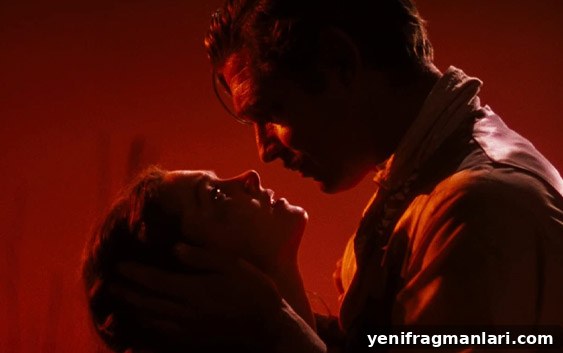
Gone with the Wind (1939)
Director: Victor Fleming
Screenwriter: Sidney Howard
Starring: Vivien Leigh, Clark Gable, Leslie Howard, Olivia de Havilland, Hattie McDaniel
“Look for it only in books, for it is no more than a dream remembered. A civilization gone with the wind…”
With the death of Olivia de Havilland leaving no surviving central cast members, Gone with the Wind has taken on an even stronger identity as a historical artefact. More than eighty years after its original production, the film has moved from contemporary spectacle toward cultural relic—an object to be studied and debated. The question that remains is how we should appraise this jewel of classic Hollywood: should it be preserved and celebrated as a towering cinematic achievement, or regarded as an outdated, harmful relic? The film has always been polarizing; audiences and critics alike have argued passionately about its virtues and its faults since 1939. Controversy—particularly over race and representation—has kept the film in public conversation, ensuring it remains relevant even as it ages. Understanding its enduring appeal and its persistent problems is essential if we are to evaluate how storytelling, aesthetics, and ideology intersect in classic cinema.
Adapted from Margaret Mitchell’s 1936 novel, an unabashedly romantic and historically partial account of the American Civil War from a Confederate viewpoint, David Selznick’s 1939 film traces the lives of two plantation families: the Wilkes at Twelve Oaks and the O’Haras at Tara. The story centers on Scarlett O’Hara (Vivien Leigh), the spoiled, determined daughter of Gerald O’Hara (Thomas Mitchell). Scarlett’s obsession with Ashley Wilkes (Leslie Howard)—a quiet, idealistic man already engaged to Melanie Hamilton (Olivia de Havilland)—drives much of the plot. At the famous Twelve Oaks barbecue, Scarlett is publicly rebuffed, and the Civil War begins as the young men eagerly enlist. Humiliated, Scarlett vows to hurt those she believes have wronged her and marries for stability rather than love. From there the film follows her through the ravages of war and Reconstruction, her ruthless survival instincts, her manipulations, and her three marriages, leading to a final loss of the love she has always pursued.
Visually, Gone with the Wind explains why it became an instant classic. Its vibrant Technicolor, grand production design, and epic scale distinguished it from nearly everything else on screen in the late 1930s. The production spared little expense: the film features dozens of speaking roles and thousands of extras, with some scenes using hundreds of people—and even hundreds of dummies—to achieve mass effects. The burning of the Atlanta depot, shot with multiple Technicolor cameras and an enormous controlled blaze, remains one of the film’s most arresting set pieces. Beyond these statistics, the commitment to detail and spectacle turns many sequences into immersive cinematic experiences: costumes, sets, and large-scale staging all work together to support the storytelling and sweep viewers into the drama of Scarlett’s life.
Color and shadow are both used to memorable effect. The verdant fields of Tara before the war, the blood-red hues of Confederate defeat, and the burnt-orange sky behind Rhett Butler’s confession of love create images that have endured in popular memory. Equally effective are the low-lit, shadow-drenched moments—the desperation of childbirth with scarce medical help and the harrowing image of a starving Scarlett gnawing on a raw radish—where darkness heightens emotional intensity and raw human struggle.
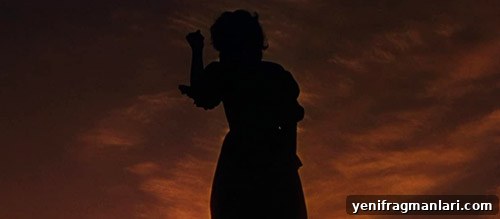
“I’m going to live through this and when it’s all over, I’ll never be hungry again. No, nor any of my folk. If I have to lie, steal, cheat or kill. As God is my witness, I’ll never be hungry again.”
All of that visual ambition would mean little without the performances. Calling Gone with the Wind a melodrama is accurate: nearly four hours of tragedies and reversals may verge on the operatic. Yet the principal cast provides texture and nuance that keep the melodrama anchored. Vivien Leigh won the Academy Award for Best Actress and Hattie McDaniel won Best Supporting Actress; the film ultimately earned eight Oscars, including Best Picture. McDaniel’s win was historically significant—she was the first Black actor to be nominated and to win an Academy Award. Though the character of Mammy is constructed from racist stereotypes, McDaniel’s warm, spirited performance makes her one of the movie’s most humane figures and a moral center amid the chaos. Her achievement opened a door in Hollywood that had been rigidly closed for many performers of color.
Leslie Howard and Clark Gable offer portrayals of two very different romantic ideals. Ashley Wilkes, as played by Howard, is soft-spoken and genteel; his weakness and indecision make him frustrating to the audience even while Howard’s performance renders him sympathetic. By contrast, Clark Gable’s Rhett Butler is roguish, self-aware, and charismatic—flawed but magnetic. Rhett’s moral complexity, blunt honesty, and protective streak make him unexpectedly modern and emotionally substantive, turning what might have been a mere cad into the film’s most compelling moral force. His famous parting line—“Frankly, my dear, I don’t give a damn”—has become one of cinema’s best-known closing moments precisely because it lands with the emotional weight the performance builds.
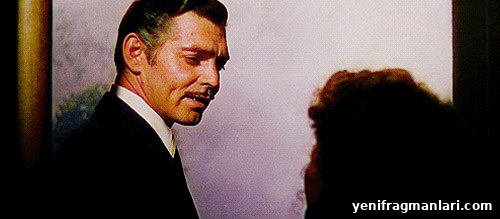
“Frankly my dear, I don’t give a damn.”
Vivien Leigh’s Scarlett O’Hara deserves special attention. Casting the role was contentious, and Leigh’s portrayal remains central to the film’s legacy. Director Victor Fleming may not have grasped all of Scarlett’s complexities, but Leigh committed to a full-bodied, unflinching performance. Scarlett is bratty and flirtatious in youth, self-absorbed and calculating in adulthood, and often cruel in pursuit of her goals. Yet Leigh balances those traits with a vulnerability and drive that keep her watchable and, in many ways, compelling—one of cinema’s most memorable and paradoxical heroines. While Scarlett often resists traditional feminine roles of her society, her motivations and actions raise uncomfortable questions about what she represents.
Scarlett’s arc is itself problematic. She is at her most admirable during the misery of war and early Reconstruction when resourcefulness and stubbornness are virtues. But as she reclaims wealth and power, her cruelty, exploitation, and manipulation become harder to excuse. The film’s larger ideological trouble emerges here: much of Scarlett’s behavior is framed as a defense of Tara, and the story’s sympathy for the Old South—its romanticizing of a society built on slavery and hierarchy—becomes increasingly explicit. The film repeatedly portrays Southern life as noble and tragic, while glossing over the moral atrocity of slavery. This implied nostalgia and the way the narrative rationalizes certain abuses make the film an insidious example of propaganda in plain clothes.
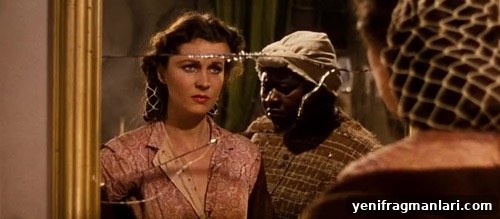
The result is an emotionally rich but morally fraught work. Scarlett’s terrible acts—exploiting labor, profiting from others’ suffering, manipulating relationships—are presented within a framework that asks the viewer to pity the South’s losses. That framing is deeply troubling: it invites sympathy for a social order underpinned by slavery and elides the experiences of the people who suffered most. The film’s propaganda-like elements operate subtly, woven into melodrama and romance so that their implications can be easy to miss until they are confronted directly.
So what should be done with Gone with the Wind? Banning or destroying the film is neither productive nor wise. Erasure risks losing an opportunity to study how influential narratives were constructed and how they shaped public perceptions. At the same time, uncritical exhibition perpetuates harmful stereotypes and can retraumatize viewers. A responsible approach recognizes the film’s historical significance and artistic achievements while also contextualizing its racism and ideological biases. Presenting the film with critical commentary, educational framing, or content warnings can help viewers better understand both its artistry and its harms.
Gone with the Wind remains a complex artifact: a landmark of production design, performance, and cinematic craft, yet also a troubling example of storytelling that romanticizes an oppressive past. It reveals how powerful film can be in shaping cultural memory and how crucial it is to confront the full scope of what such works represent. The film both illuminates and weaponizes history; preserving it while teaching its context offers the best chance to learn from the past and to understand how narratives influence society.
19/24