
Donnie Darko (2001)
Director: Richard Kelly
Screenwriter: Richard Kelly
Starring: Jake Gyllenhaal, Maggie Gyllenhaal, Jena Malone, Drew Barrymore, Mary McDonnell, James Duval, Patrick Swayze
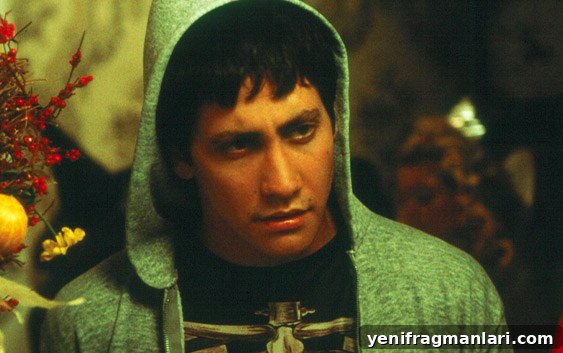
Richard Kelly’s debut feature, Donnie Darko, has become a defining cult classic since its release. Made on a modest budget and receiving a muted box office response at first, the film found a passionate audience over time. It blends psychological drama, dark humor, and speculative science fiction to explore adolescent alienation, fate, and the nature of reality. Jake Gyllenhaal’s breakthrough performance as Donnie anchors the film with vulnerability and quiet intensity, while the supporting cast delivers memorable, textured turns.
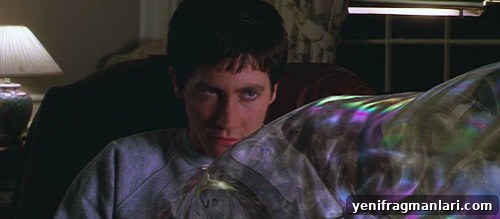
The story follows a troubled teenager who survives an improbable accident when a jet engine crashes into his bedroom. After this incident, Donnie begins experiencing vivid visions of a towering, enigmatic figure in a skeletal rabbit costume named Frank. Frank’s prophecies and cryptic instructions set Donnie on a course that intersects with a local girl, Gretchen Ross (Jena Malone), his unconventional school, and an obsession with questions about time and causality. The narrative unfolds through a mixture of intimate character moments and increasingly strange, dreamlike sequences.
Donnie Darko works on multiple levels. On the surface it is a coming-of-age story about a lonely teen grappling with mental health, family expectations, and first love. Beneath that, it asks larger questions about destiny and free will, and whether the boundaries of time can be bent or understood. Kelly’s script keeps the film deliberately ambiguous: some viewers prefer to accept a literal time-travel framework, while others read the events as psychological manifestations of a disturbed mind. The film rewards repeated viewing and close attention, but it also preserves the power of uncertainty—part of its lasting appeal is that it invites interpretation rather than forcing a single, definitive reading.
Stylistically, the movie balances eerie atmosphere with relatable, often funny moments. The high school setting and teenage characters ground the more outlandish plot elements, creating a striking contrast that enhances both the humor and the unease. The casting choices contribute to this balance: Gyllenhaal’s intense yet sympathetic Donnie, Jena Malone’s resilient Gretchen, and Patrick Swayze’s unsettlingly charismatic motivational speaker each add distinct textures to the film’s social world.
Music is central to the film’s identity. A selection of late 20th-century rock and a minimalist piano score help shape the mood and give the movie an enduring sonic signature. The haunting piano rendition of “Mad World” is especially iconic, underscoring the film’s melancholic and reflective moments. These musical choices amplify the emotional resonance of key scenes and remain closely associated with the movie’s cultural legacy.
Beyond its narrative and sonic strengths, Donnie Darko speaks to larger cultural anxieties. It pairs personal dread with broader social commentary—on the influence of charismatic figures, on political currents of its setting, and on the ways communities address mental health and responsibility. The film’s critique of hollow self-help rhetoric and its portrayal of institutional responses to trauma feel relevant in many contemporary contexts, without turning the movie into a simple polemic.
Another reason the film endures is its emotional honesty. Even when confronting cosmic or metaphysical questions, Donnie Darko remains deeply invested in the human experience: grief, love, confusion, and the small moments that remind us the world can still be beautiful. The film’s finale resists tidy closure, but it offers a profound emotional payoff—one that affirms the character’s humanity and leaves viewers with much to think about.
For viewers drawn to films that combine mood, mystery, and thematic depth, Donnie Darko continues to be a rich and rewarding work. Its mixture of genre elements, memorable performances, and enduring soundtrack secure its status as a modern cult favorite. Whether you approach it as an unsettling psychological portrait or a mind-bending science fiction puzzle, the film invites curiosity and repeated reflection.
22/24