
Back in July 2020 I spotted a post by Kidcassidyfilms about Jacques Rivette’s Out 1. The post highlighted the film’s staggering runtime—around 13 hours—and its critical reputation. The more I read, the more I wanted to see it. The length was intimidating, but the film’s mystique and rarity only increased my curiosity.
Out 1 premiered in a work-in-progress form at France’s Maison de la Culture and was quickly trimmed from its roughly 13-hour original to a four-hour version, Out 1: Spectre. The full cut then vanished from circulation for years—restored and shown at the Berlin International Film Festival and Rotterdam in 1990, resurfacing again between 2004 and 2007 before finally receiving a DVD and Blu-ray release in 2015. Its intermittent exhibition over five decades made the film feel like a rare artifact I was eager to experience.
I bought the Blu-ray and left it on my shelf for months. The idea of dedicating an entire day to a single film was daunting—these days we complain about three-hour epics like Gone with the Wind, Lawrence of Arabia, or The Irishman; imagine a movie longer than all three combined. Still, Rivette insisted Out 1 was intended for the big screen. I settled for my 23″ bedroom TV and prepared a single-sitting experiment: the 13-hour cut split into eight parts.
I kept a diary of the day to capture the experience of watching this marathon film.
6:06am
Woke with a headache and went back to sleep.
10:10am
Started Part 1: From Lili to Thomas.
11:40am
Finished Part 1—about 90 minutes down. Part 1 introduces many characters and establishes a mood rather than providing a clear plot. It’s engaging, but deliberately elusive.
11:55am
Lunch, then Part 2: From Thomas to Frédérique. This section opens with a brief recap—useful given the length and the restoration’s division into parts.
1:42pm
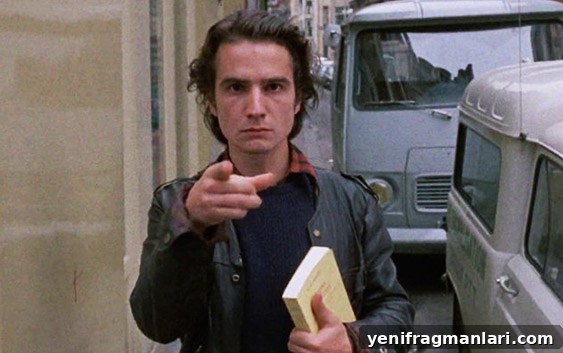
Finished Part 2. Because the film stretches scenes and subplots over such a long duration, progression is slow and patient. That can be testing, but it also allows characters to breathe. Jean-Pierre Léaud’s Colin stands out so far—his performance is magnetic and recalls some of the obsessive modern detective energy seen in later films like Under the Silver Lake.
2:06pm
Part 3: From Frédérique to Sarah. The film’s long takes and slow-building subplots can be demanding—at times I found myself losing focus when the drama groups’ scenes dominated.
3:53pm
Finished Part 3. Rivette lingers on scenes, often stretching an idea just past the point where the viewer expects a cut and then shifting direction to renew attention. It’s a deliberate strategy that can both frustrate and reward.
4:13pm
Ordered pizza to arrive later. Now starting Part 4: From Sarah to Colin.
6:11pm
Pizza arrived. Beginning Part 5: From Colin to Pauline—halfway through the film. Part 5 felt the weakest so far; it slowed many plot threads almost to a halt, though it regained momentum toward the end.
9:53pm
Part 6: From Pauline to Émilie felt like a slog. It wasn’t poorly made—the performances, costumes, and cinematography remain strong—but sections like this test one’s patience.
10:20pm
Part 7: From Émilie to Lucie. With roughly three hours left, the end feels within reach and that small psychological relief makes a big difference.
12:22am
Final part: From Lucie to Marie. Just over an hour to go—thrilling after such a long commitment.
1:35am
It’s over. After about 13 hours of screen time and more than 15 hours including breaks, I completed Out 1 in a single sitting. This dwarfs my previous longest film—The Irishman—by a huge margin.
Immediately after finishing, I struggled to crystallize an opinion. I wasn’t blown away in the way some critics describe a masterpiece, but I never found myself bored or irritated. Maintaining a consistent level of craft across 13 hours is an achievement in itself: Rivette’s direction, the performances (Léaud especially), costume design, and a subtle but effective use of color all contribute to a remarkable piece of filmmaking.
Next morning
After sleep, my view softened: the film left me thinking and wanting to revisit certain sequences. Initially underwhelmed, I now appreciate how the narrative threads—seemingly disparate at first—interweave like traffic at a Paris intersection: on the surface ordinary, but driven by intricate mechanisms underneath. That complexity is the film’s strength.
Was it worth the time? Thirteen hours is a substantial portion of a day. I spent roughly 15 hours and 25 minutes watching, not including sleep; the experience consumed a full day of my schedule. Time is precious, but everyone devotes it to their passions. For me, cinema is worth that investment.
Would I watch Out 1 again? Yes—but not in one sitting. The fatigue of a single continuous viewing is real, and festival screenings typically split the film over two days for good reason. Still, the film is worthy of the time it demands. It’s challenging, often slow, but ultimately rewarding and close to the landmark status critics attribute to it.