
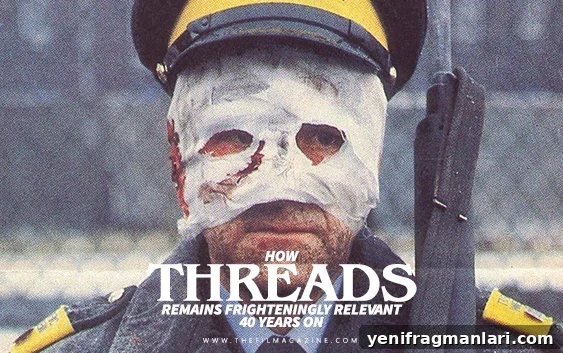
The year is 1984 and fears of nuclear annihilation, fuelled by the Cold War, were at a peak. On Sunday 23 September, a night later remembered as “The Night When Nobody Slept,” families across Britain sat glued to their televisions in stunned silence. BBC Two premiered Threads, a made-for-television film that presents the nightmarish consequences of nuclear war in England. Using a faux-documentary approach combined with the naturalism of British kitchen-sink drama, Threads delivers an unrelenting, bleak vision of a post-apocalyptic world. Decades on, the film remains potent: a stark, uncompromising reminder of the catastrophic human cost of nuclear conflict and a cautionary work still relevant today.
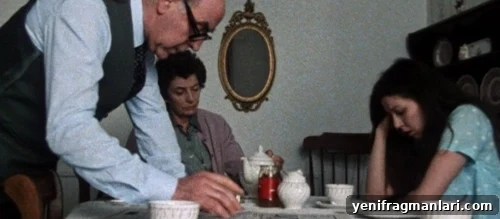
Threads opens in deceptively ordinary fashion, following the everyday lives of Jimmy (Reece Dinsdale), Ruth (Karen Meagher) and their families in Sheffield. Ruth discovers she is pregnant and she and Jimmy plan to marry. They strip old wallpaper from their shared flat while Ruth’s mother knits tiny garments. Jimmy spends time with friends in the local pub, enjoying what he calls his last days of freedom. The domestic details give the film its affecting realism, even as news reports in the background grow more ominous about an escalating international crisis. Then the bombs fall, and normal life is obliterated.
The film was co-written by Barry Hines and directed by Mick Jackson. Hines, known for portraying the social and economic realities of northern working-class life, brought authentic dialogue and lived-in characters to the screenplay. The result is people who feel real — ordinary reactions that make the unfolding disaster more devastating. When a distant mushroom cloud appears, one character shouts, “Jesus Christ! They’ve done it… They’ve done it!” while another simply exclaims, “Bloody hell!” Those colloquial responses amplify the horror through their unvarnished truth.
Jackson’s direction enhances the film’s realism. Shot on location in Sheffield with handheld cameras and natural light for much of the runtime, Threads achieves a terrifying immediacy. Jackson consulted scientists before filming to portray the aftermath of nuclear attack as accurately as possible, allowing the film to balance technical detail with human drama. The result is both convincing and deeply unsettling.
Threads traces the indomitable — and ultimately fragile — spirit of ordinary people suddenly forced to survive in a shattered society. For viewers at the time, the film echoed genuine fears from the Cold War era. One near-miss the year before had painfully underscored the possibility of accidental escalation, intensifying the atmosphere of dread that coloured life in the 1970s and 1980s. Such real-world anxieties help explain the intense reactions of many who first saw Threads on television.
Contemporary viewers may not all share the same visceral fear of nuclear war, but Threads still resonates. Its portrayal of social collapse after catastrophe speaks to modern anxieties about climate breakdown, pandemics, and the fragility of infrastructure. The COVID-19 pandemic, for example, has sharpened public awareness of how quickly supply chains and public services can strain, and watching Threads now often feels eerily familiar. Jackson’s handheld camera work and the film’s graphic practical effects — particularly the depiction of radiation sickness — continue to unsettle.
The film’s buildup to the initial strikes mirrors collective panic seen in other crises. Supermarkets empty as people hoard supplies. Newspapers run guidance on how to protect oneself. Small, desperate acts — like propping mattresses against a door to make a shelter — underline the helplessness of ordinary civilians in the face of overwhelming force. When official narration calmly announces successive detonations and the scale of casualties, the true horror of Threads begins in earnest.
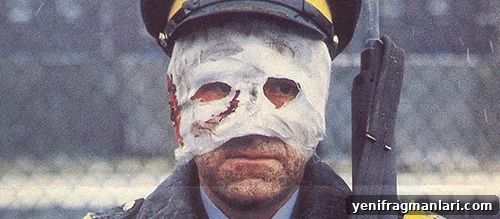
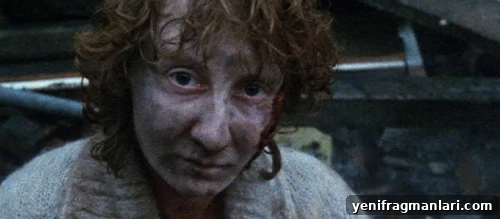
The second half of Threads becomes quieter in dialogue and more harrowing in visuals. Time passes between intertitles, which list the mounting hardships faced by survivors, and the camera lingers on scenes that show the slow collapse of society. Ruth emerges as the central figure: from the two extended families introduced early on, she alone survives the initial attacks. She walks through ruined streets past people horribly disfigured by radiation, and the film spares no detail in its grim observations. Threads rejects sensationalism; its power comes from relentless realism and refusal to provide comforting closure.
Made on a modest budget and shot over a short schedule, Threads mixes staged material with archive footage and model work to depict devastation on a broad scale. Miniatures and hand-painted backgrounds create long views of a landscape cremated by fire and ravaged by collapse. As Ruth gives birth alone in a makeshift shelter and her child grows up scavenging in a world eroded by fallout, the contrast between the pre-war domesticity and post-war survival is heartbreaking.
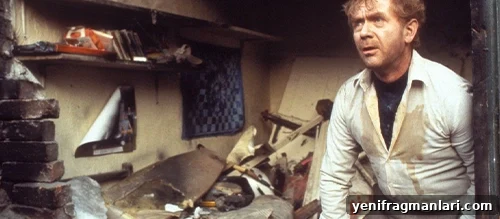
The film ends without comfort. In its final scene a later generation struggles in a crude facility reminiscent of medieval times; a young woman presents a stillborn, deformed child and the frame freezes on her silent, wordless scream. There is no uplifting resolution — only the chilling suggestion that nuclear catastrophe would damage humanity for generations. The final image echoes the film’s first: a spider spinning a fragile web, a metaphor for the delicate bonds that hold society together and how easily they can be severed.
Threads poses a stark question to viewers: having seen this vision, do we accept such a future? For most the answer is an emphatic no. The film’s enduring legacy lies in its unflinching depiction of post-apocalyptic reality and its continued relevance as a warning about the human cost of nuclear weapons and social breakdown.
Written by Eleanor Wise
Recommended for you: 100 Unmissable BBC Films
You can support Eleanor Wise in the following places:
Website: filmstowatchbeforeyoudie.com
Instagram: @filmstowatchbefore