
This article was written exclusively for The Film Magazine by Jack Cameron.
Voice of Silence (2020)
Director: Hong Eui-jeong
Screenwriter: Hong Eui-jeong
Starring: Yoo Ah-in, Yoo Jae-myung, Moon Seung-ah, Lee Ka-eun
Voice of Silence marks the impressive feature debut of South Korean writer-director Hong Eui-jeong. Presented in the Glasgow Film Festival’s focus on contemporary Korean cinema, the film positions itself as a crime drama that refuses to rely on conventional genre beats. From the opening scene, Hong establishes an off-kilter tone that blends quietness with a subtle sense of unease.
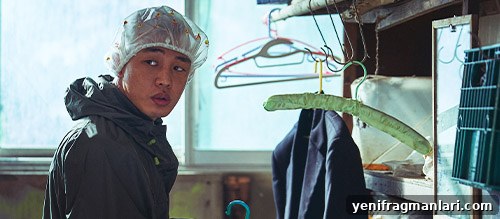
The film begins with two men, Chang-bok (Yoo Jae-myung) and Tae-in (Yoo Ah-in), arriving at a warehouse. Their truck appears to be loaded with vegetables, and they methodically prepare the space—laying out plastic sheeting and string—behaving as if this is ordinary, routine labor. The camera slowly reveals the unexpected: a beaten man hanging from a rope. Despite the brutal context, the two men’s calm, almost mundane demeanor undermines the expected sense of menace. That contrast—the ordinary made strange, and the unsettling softened by routine—becomes the emotional engine of the story.
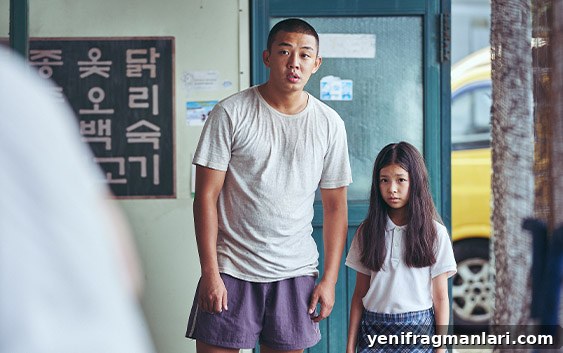
When the pair are ordered to kidnap an eleven-year-old girl, Cho-hee (Moon Seung-ah), and hold her for ransom, Hong resists depicting the crime in sensational terms. Instead, the abduction unfolds with a peculiar gentleness. Cho-hee’s arrival in Tae-in’s sparse, sunlit environment feels less like the start of a thriller and more like the beginning of a bittersweet summer story. The kidnappers’ pragmatic, matter-of-fact approach turns what should be horrifying into something oddly domestic. This tonal shift is risky, but it’s also the film’s most original choice: the audience is forced to reconcile sympathy and disgust within the same beat.
Visually, Voice of Silence is lush and evocative. Hong luxuriates in the Korean landscape, filming long, warm summer days, verdant fields and luminous sunsets. The cinematography celebrates texture and heat: the air seems to hum, the colors feel tactile, and the countryside becomes a third character in the film. Some of the most striking images are quiet and simple—Cho-hee strapped to Tae-in’s back as they bicycle beneath pink and purple skies—moments that fuse innocence and unease into a single, unforgettable tableau.
Hong’s tonal balancing act also affects the film’s darker elements. In the second half, the narrative introduces more threatening figures and hints at brutal business beneath the surface. Rather than staging explicit violence, the director suggests horrors off-camera and relies on implication. This restraint can be more disturbing than graphic depiction; the film asks viewers to imagine what lies beyond the sunlit exteriors. That off-screen suggestion is one of Hong’s strengths, turning omission into a storytelling device that amplifies tension without sacrificing mood.
Yet the film is not without flaws. Its final act loses some of the momentum and coherence established earlier. The strange, melancholic register that drives the first two acts becomes harder to sustain as the plot demands resolution. By the time the story reaches its conclusion, the narrative feels unresolved—deliberate ambiguity that sometimes reads as diffusion rather than design. The result is a finale that fizzles compared with the rich, fully imagined middle of the film.
Tae-in’s silence—which gives the film its title—both anchors and limits the story. Yoo Ah-in gives a compelling physical performance: his gestures, breathing and small vocal sounds convey emotion without words, making the character enigmatic and sympathetic in turns. The choice to keep Tae-in mute strengthens the film’s themes of voicelessness and miscommunication, but it also keeps him at a distance from the audience. After a while, that distance can undermine emotional engagement, making it harder to fully invest in his choices despite the strength of the acting.
On balance, Voice of Silence is a remarkable debut. Hong Eui-jeong demonstrates a keen visual eye and a bold willingness to subvert crime-story conventions. The film’s blend of warmth and menace, beauty and moral disquiet, announces a fresh voice in South Korean cinema. While the ending may disappoint some viewers, the movie’s haunting atmosphere and precise craftsmanship make it worth watching—especially for those interested in films that challenge expectations and blur the lines between genre and mood.
17/24
Written by Jack Cameron
You can support Jack Cameron in the following places:
Twitter – @JackCam86118967
Contently – Jack Cameron